


Chambord Citadel makes extra sense as soon as you realize what it was constructed to do. This story appears at how the colossal constructing was meant to impress and the way that impacts the best way you discover it now.
There’s one thing about Chambord Citadel.
A bit just like the sleek Chenonceau, see it as soon as, bear in mind it all the time.
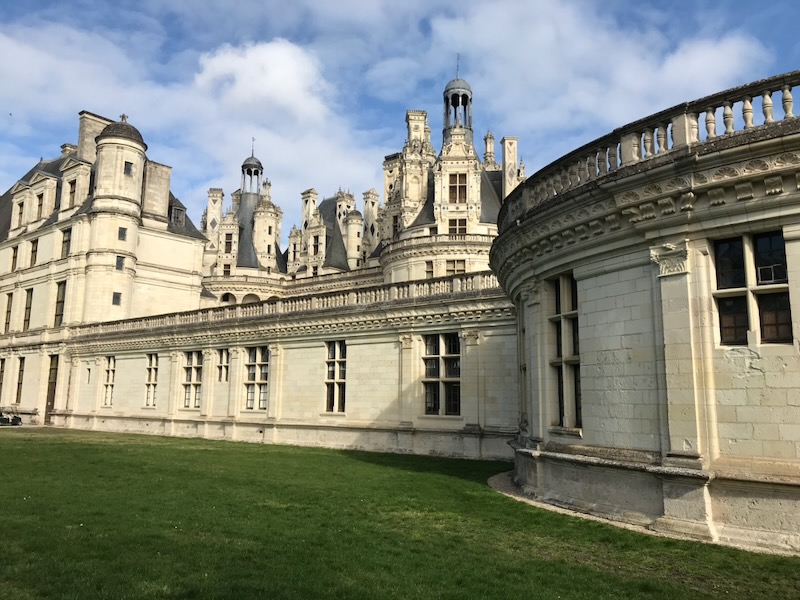
Maybe it is the lengthy method, alongside miles of seemingly countless looking forest. Or the sheer measurement of the château, the Loire Valley’s largest. Or maybe it is the silhouette, adorned with tons of of chimneys and huge roofs of carved stone that stand out in opposition to the sky.
Most likely, although, it is the famend double-helix stairway, which two folks can use with out ever crossing one another’s path and which “might” have been impressed by Leonardo da Vinci.
Regardless of the cause, the Château de Chambord is as magnificent as it’s memorable.
Just a bit looking lodge…
Chambord wasn’t actually designed as a citadel to be lived in, and as quickly as you stroll in, you may perceive that. Go to in winter and you will freeze, the cavernous rooms chilly regardless of its 365 fireplaces, most of them extinguished.
However then, Chambord was by no means meant as a everlasting royal residence.
King François I had one thing else in thoughts: he wished a brand new château that will ship a sign of energy and authority and that was formidable in scale. It must also be distinctive, lined in inimitable element.
In 1519, his creation would start to take form, turning into one of many area’s most visited monuments, its profile recognizable world wide.
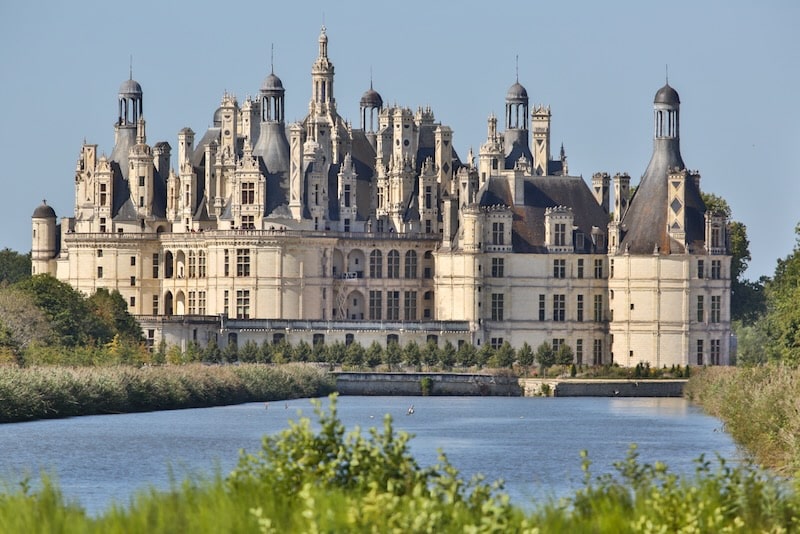 Beneath all of it, Chambord Citadel was constructed to ship a message
Why François I wanted Chambord
François I used to be younger when he ascended the throne younger and his declare to energy wasn’t precisely overwhelming (his accession adopted the extinction of the primary Valois line). His authority would rely partly on how he weighed up in opposition to different European rulers.
That comparability grew to become apparent in 1519, when François competed with Charles of Habsburg for election as Holy Roman Emperor. Each campaigned closely, however the electors selected Charles, who grew to become Charles V. François now had a rival of comparable age, whose territories surrounded France and whose status was far higher than his personal.
It’s in opposition to this background that he conceived Chambord Citadel, not as a army showcase however as an architectural response, designed to place himself because the emperor’s equal.
Chambord additionally can be supreme for looking, thought the king, an necessary consideration for a courtroom tradition constructed across the hunt. The encircling forests had been wealthy in wildlife and supplied huge open areas suited to mounted hunts and huge courtroom gatherings.
The structure of energy at Chambord
Earlier in his reign, at 25, François had led his military to struggle in Italy, the place he got here into direct contact with the artwork and structure of the Italian Renaissance. Though the army campaigns had combined success, the expertise left a deep impression on the younger king.
He returned dwelling decided to convey Renaissance concepts to France and to claim himself as a cultured ruler on an equal footing with Europe’s main sovereigns.
Chambord’s design is the results of a deliberate combine (some would say jumble) of types drawn from French medieval structure and the Italian Renaissance.
The château’s hold, or donjon, is sq., organized round a centralized plan that was uncommon in France on the time. From this core prolong 4 equal arms in a sample known as a Greek cross — a design beforehand used primarily in church buildings.
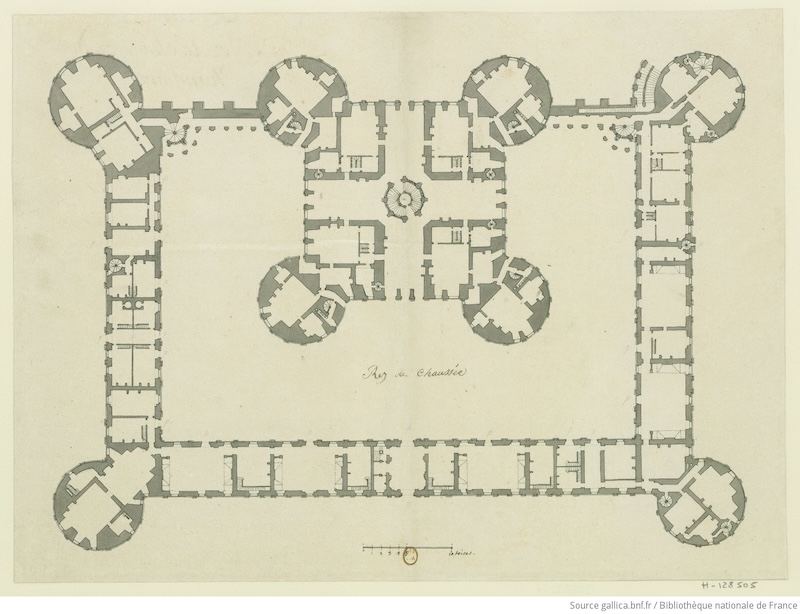 The so-called Greek Cross architectural plan
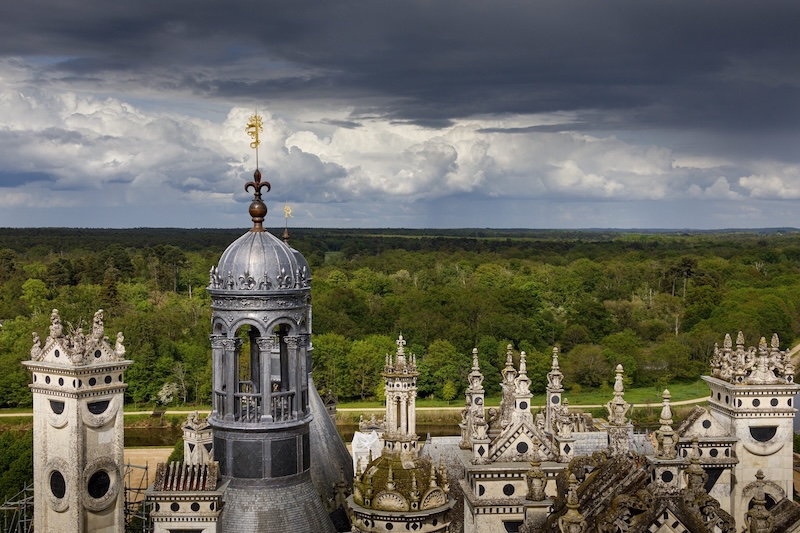
Alongside the roof is a dense skyline of chimneys, every lower from pale Loire limestone. Every chimney is completely different, and lots of are ornamental somewhat than useful.
Some historians recommend François I meant the roof as a symbolic crown, seen above the forest cover.
Whether or not that was François I’s intent, the impact is unmistakable: Chambord trumpets its authority from afar.
WHEN FRANÇOIS INVITED HIS RIVAL TO CHAMBORD
François I didn’t construct Chambord only for looking. By the late 1530s, he wanted a stage on which to reassert his authority after years of rivalry with Charles V.
François was particularly bitter after his defeat on the Battle of Pavia in 1525 and his subsequent seize by Charles V’s forces. Taken to Spain, he was launched solely after agreeing to go away his two younger sons as hostages for a number of years.
In December 1539, François obtained Charles V at Chambord whereas the château was nonetheless unfinished. The go to was a diplomatic transfer. By surrounding the emperor with ceremony and architectural glory, François was positioning himself as an equal somewhat than a former prisoner.
Charles might have been impressed, however relations between the 2 did not notably enhance.
How Chambord was used
Inside, Chambord is stuffed with passageways and secondary stairs, options that had been designed for ceremony greater than consolation. Rooms are massive, typically sparsely adorned, and infrequently heated for lengthy durations.
As you wander round these open areas, do not forget that in these days, monarchs did not essentially keep in a single place. François would arrive right here along with his massive retinue, arrange his furnishings and tapestries, and repack the whole lot to maneuver onto the subsequent cease as soon as the looking was over.
Consider Chambord extra as a stage set than a house, and it is going to be simpler to know the constructing correctly.
PRO TIP ➽ Chambord Citadel has produced a wonderful Histopad, or iPad, which reveals you what rooms might have seemed like within the sixteenth century. If you happen to use the Histopad throughout your go to — and it’s value doing — consider it as a software for orientation. It would let you know the place you’re, what the room as soon as seemed like, and the way areas had been used at a given second in time.
What it gained’t do is aid you determine what actually issues, or why sure particulars had been designed.
interpret Chambord from the within
The hold homes greater than 60 rooms open to the general public, together with the royal residences and the chapel.
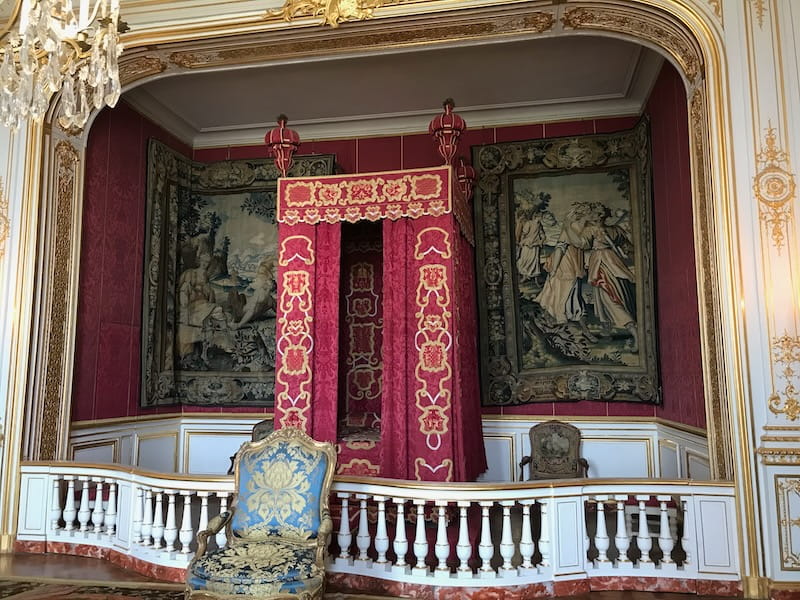 This ceremonial bed room of Louis XIV comes greater than a century after François I started constructing the citadel. Like his predecessor, Louis used the château solely briefly, and the bed room served primarily to sign royal presence throughout quick visits somewhat than as a spot of on a regular basis residing ©OffbeatFrance
The citadel’s 365 fireplaces typically symbolize the times of the yr – as a result of they definitely do not assist a lot with the heating. Individuals right here hardly ever warmed up in winter, and most of the fireplaces had been hardly ever or by no means used. That hasn’t modified at present.
Chambord additionally boasts 84 staircases, if you happen to rely every type, from the well-known double-helix staircase to secondary spiral stairs and repair stairs, to not point out these used to entry terraces and towers. No, Chambord wasn’t designed for livability, nevertheless it was full of symbols which often gave it a mystical sheen.
6 Should-see options of Chambord Citadel
These options are necessary as a result of they reveal how Chambord was designed to be understood — as a political assertion, not a snug dwelling. Search for them even if you’re utilizing the Histopad.
1. The double-helix staircase core
The double-helix staircase is among the first issues folks rush to see at Chambord.
François I could have loved such innovations as a technique to impress company, but additionally to subtly showcase the sophistication of French engineering.
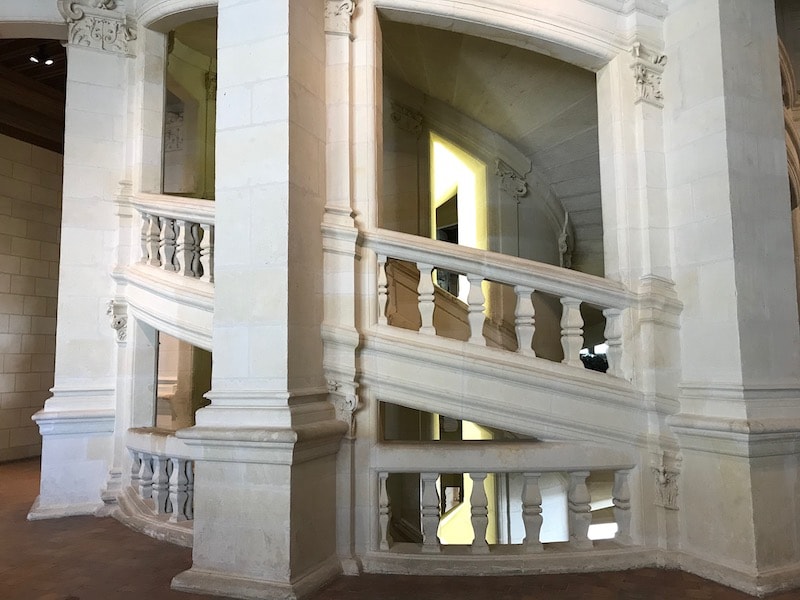 Chambord’s double helix stairway ©OffbeatFrance
Stand on the base of the central staircase and look straight up. The hole core runs vertically via the constructing to the lantern on the roof. The château’s total plan revolves round it and two folks can go up and down with out ever assembly – however they’ll see each other via the openings.
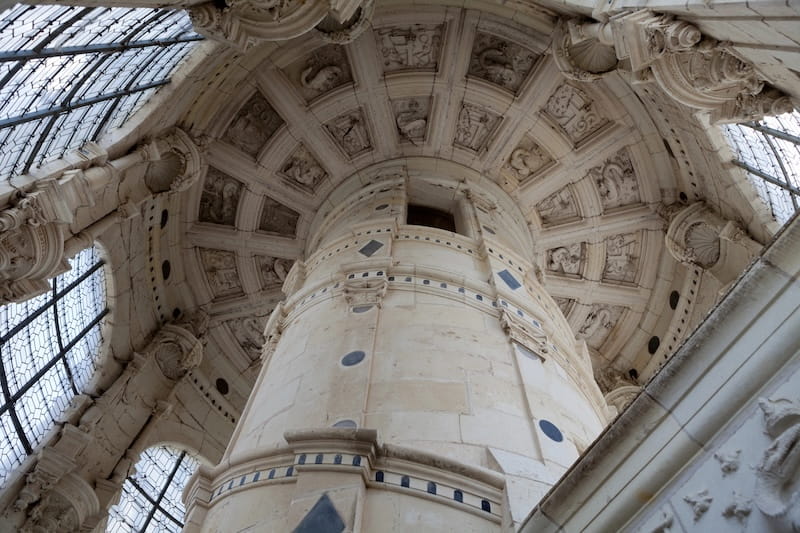
Some like to say Leonardo designed it – he had in any case been a visitor of François I earlier in life. However there isn’t any proof that he had a direct hand in it, though it is not a stretch of the creativeness that he might need one way or the other impressed it.
2. The lantern tower above the staircase
At roof stage, the octagonal lantern caps the staircase shaft and turns it into greater than a pathway – a vertical monument.
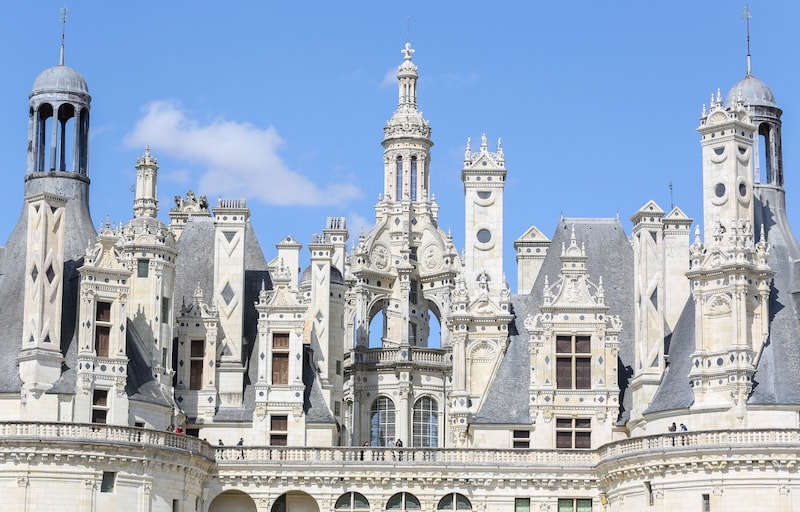 The lantern tower is the tall one proper within the middle
From right here, François I may seem above his company, silhouetted in opposition to the sky. The king fairly actually occupied the middle of the constructing — a political message of his energy.
3. The roof terrace: the “stone metropolis”
Stroll the roof terraces and observe the density of chimneys, turrets, and stair towers – you may get near the chimneys.
No two are precisely alike. Many are purely ornamental, for the reason that constructing was by no means effectively heated. The roof features as a sculpted skyline — principally exhibiting off surplus wealth and technical savvy.
4. The salamander ceiling within the François I residences
Throughout vaulted ceilings and corridors you’ll discover the salamander — François I’s private emblem — repeated many instances. This emblem stood for the king’s declare to rule with ethical pressure and management over adversity.
Search for carved and painted salamanders paired with topped “F” monograms.
Its motto was “Nutrisco et extinguo” — “I nourish the nice hearth and extinguish the dangerous.”
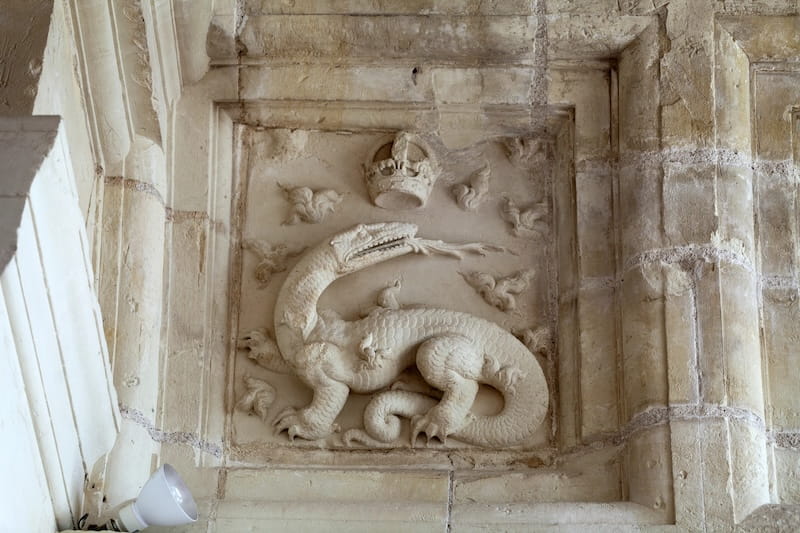 The salamander seems tons of of instances at Chambord, typically somewhat completely different from one carving to the subsequent however all the time recalling the royal presence
5. The Greek-cross plan of the donjon
From any higher stage, discover how the 4 wings radiate symmetrically from the middle. This plan was virtually unprecedented in secular French structure on the time and borrowed from sacred buildings.
By utilizing a church-like plan for a royal residence, François I made the road between sacred authority and kingship much less inflexible, in an age of spiritual pressure.
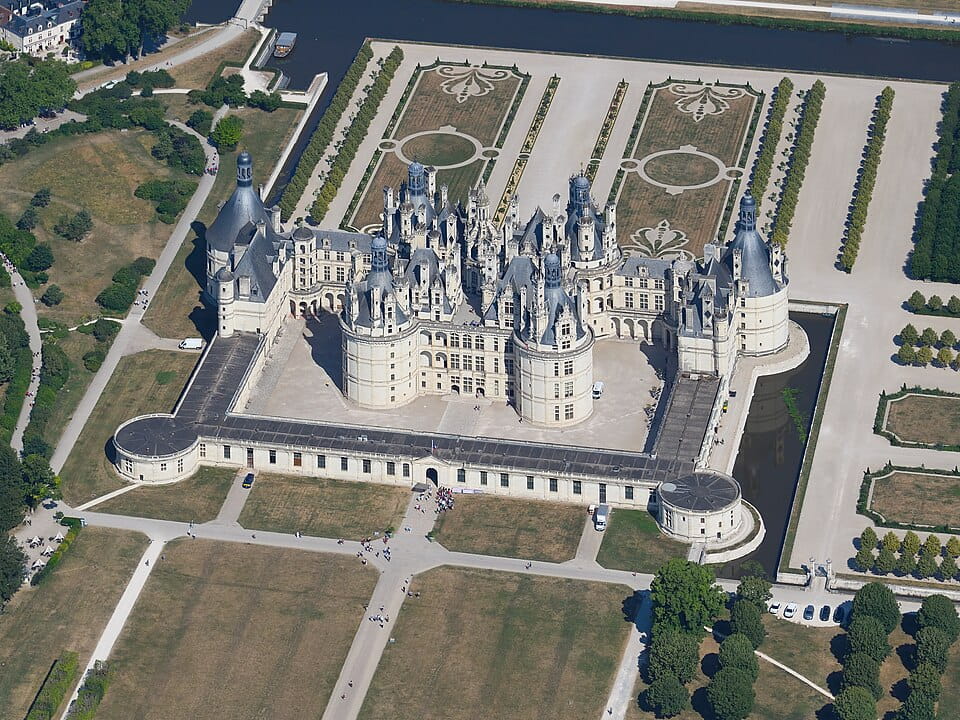 Aerial view of Chambord from the southeast, with the Greek cross form completely seen. Picture by Carsten Steger, CC BY-SA 4.0
6. The unfinished really feel of many rooms
Massive areas exist with minimal ornament or later additions.
This isn’t neglect. It displays how the constructing was used so do not be stunned on the lack of gilding and décor we have come to affiliate with French châteaux.
Chambord after the kings: Revolution to WWII
After François I and the early Bourbon kings, Chambord wasn’t used commonly.
Building was lastly accomplished below Louis XIV, and Chambord served for courtroom visits and ceremonial occasions somewhat than each day life. In 1670, Molière’s Le Bourgeois Gentilhomme was first carried out right here for the Solar King and his courtroom.
Then, within the 18th century, Chambord was used extra as lodging for high-ranking figures somewhat than a royal residence. Inside areas had been organized for short-term use, a bit like a luxurious lodge, I am imagining. As earlier than, Chambord, impermanent, tailored to the instances.
The French Revolution marked a rupture. Chambord was looted, its furnishings bought, and far of its inside stripped of something of worth. The constructing survived largely due to its scale and isolation, nevertheless it did not serve a lot use after it was emptied.
Preservation got here with state possession within the twentieth century, and all these empty rooms would lastly show helpful. When World Warfare II broke out, Chambord grew to become certainly one of a number of websites used to cover priceless artwork treasures evacuated from Paris.
Chambord as a wartime refuge
In August 1939, as struggle approached, French authorities started transferring main works from Paris museums to guard them from bombing and seizure. Chambord was chosen due to its measurement, location, and lack of furnishings.
Hundreds of crates handed via the château, together with works from the Louvre. Some stayed solely briefly earlier than being transferred elsewhere as situations modified. After the struggle, the collections had been returned to their unique museums between 1945 and 1949.
This episode marked a ultimate shift in Chambord’s function: from royal assertion to nationwide safeguard. In the present day, exhibitions on the château current this historical past below the title Chambord, 1939–1945, specializing in the safety of cultural heritage somewhat than royal show.
Sensible data to your go to
Due to its reputation, Chambord Citadel is among the simpler ones to succeed in by public transportation, though there are many different choices.
Attending to Chambord Citadel
Chambord is in Loir-et-Cher (Centre-Val de Loire). By automotive it’s about two hours from Paris. Rail connections run to Blois-Chambord station, and you may guide your ticket right here; from the station you’ll be able to catch the Remi shuttle twice a day, or take a taxi to Chambord Citadel (bear in mind to reserve!)
Guided excursions and extras
Guided visits run in English and different languages, together with deeper entry to hidden staircases and lofts. The Histopad is an non-obligatory add-on.
Advance entry tickets can embody precedence entry.
THESE CHAMBORD TOURS ARE HIGHLY RATED
Gardens and grounds
Chambord sits inside a 13,500-acre property of forest and gardens. The gardens had been restored within the twenty first century following historic layouts, whereas the broader property stays a managed pure reserve. You may stroll or cycle round it or use the canal that crosses the park.
VISITOR TIPS ➽ Arrive early to keep away from peak crowds. Begin with the central staircase and terraces, then transfer via the interiors. Permit time to stroll within the gardens and forest paths. Parking and fundamental amenities can be found on web site.
Earlier than you go…
Chambord will not be merely a big Renaissance château.
It was designed to be a political and architectural assertion, and venture royal authority somewhat than home consolation. It displays how François I used structure for diplomacy, whereas later in historical past , its use from royal lodging to wartime artwork storage reveals how the constructing’s use advanced every time political wants modified.
I’ve all the time discovered Chambord extra attention-grabbing for what it represents than for the way it appears (there are prettier and extra trendy châteaux).
Initially constructed to trumpet royal authority, it later grew to become tied to certainly one of France’s biggest royal failures. I discover that episode, and the person at its middle, in a separate Substack piece for readers who wish to go deeper into French historical past.
FURTHER READING ON THE CHATEAU DE CHAMBORD
Did you get pleasure from this text? I would love if you happen to shared it!

