


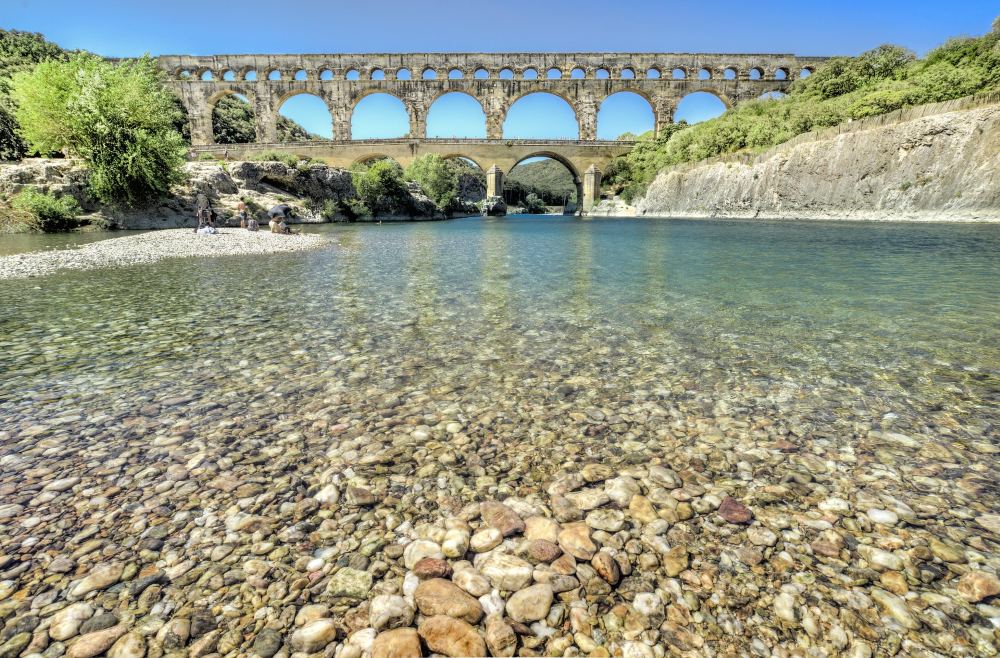
After I was small, you might drive all the way down to the river and park kind of beneath it.
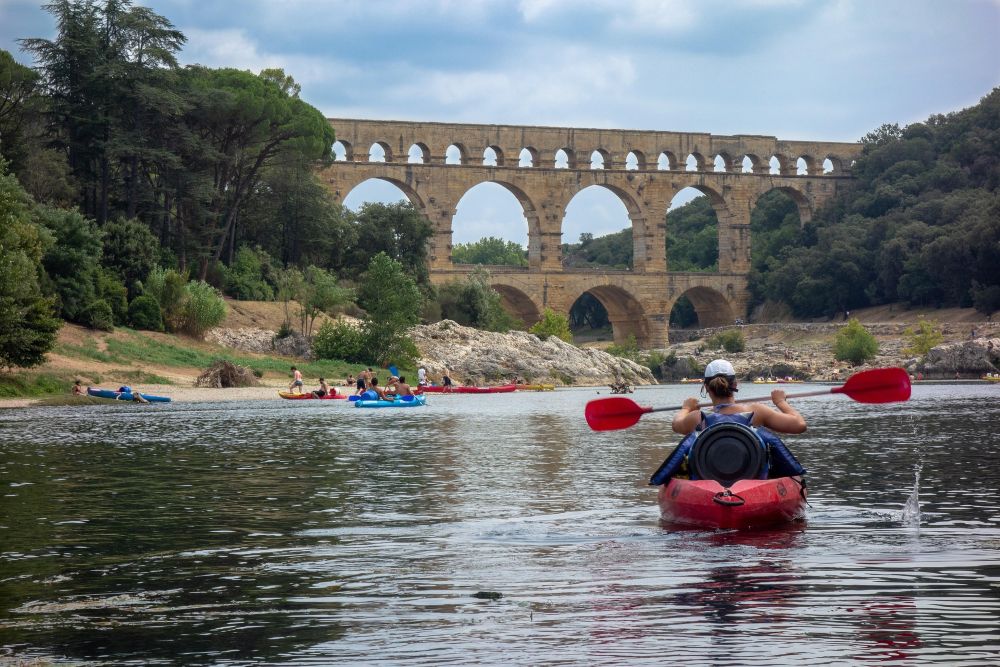
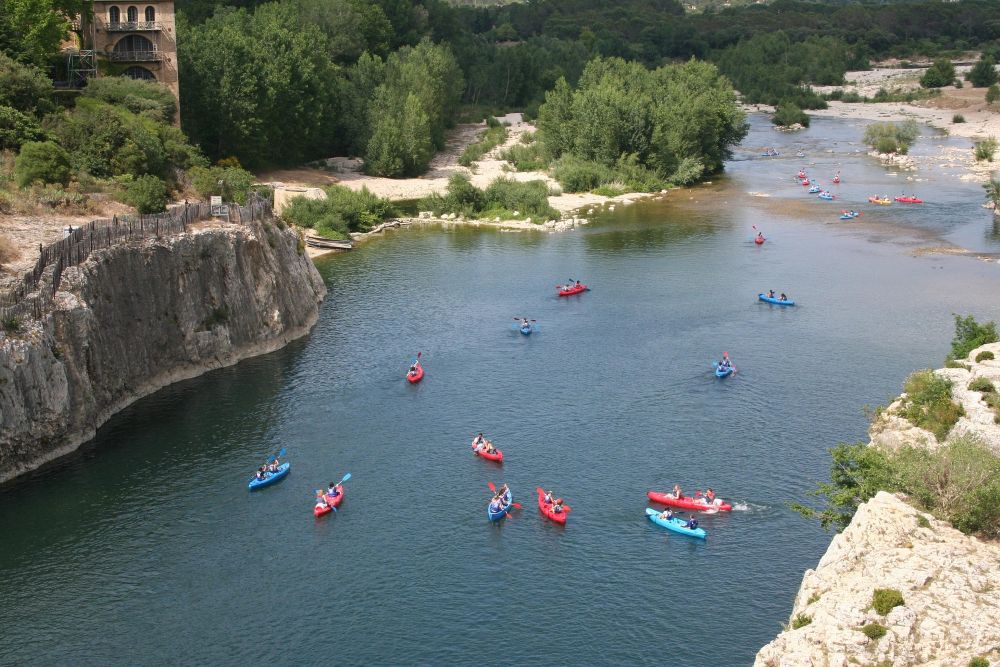
That was regular. My mother and father took us to swim within the Gardon river within the shadow of a Roman aqueduct, we rented kayaks and paddled below the arches, we ate our sandwiches on the pebbles, and none of us thought it outstanding. It was merely the river everyone went to.
It took me years to grasp what we had been swimming below.
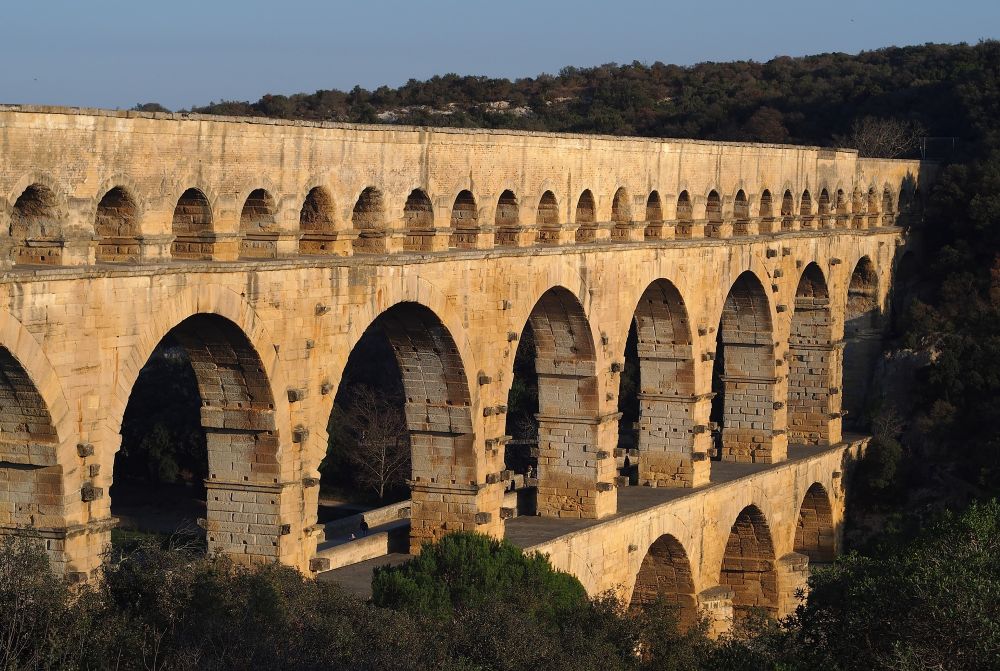
Pictures are not any assist, and that’s a part of the issue. There’s nothing within the body to measure it in opposition to: no homes, no street, no energy strains, simply three tiers of honey-coloured stone and a inexperienced river. It may very well be forty ft tall. It may very well be 4 hundred.
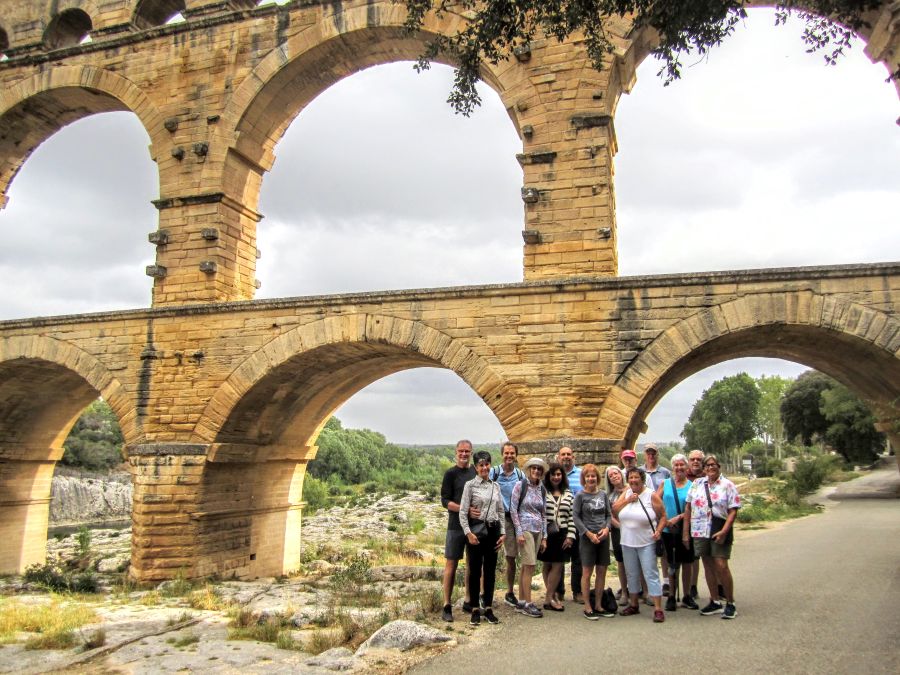
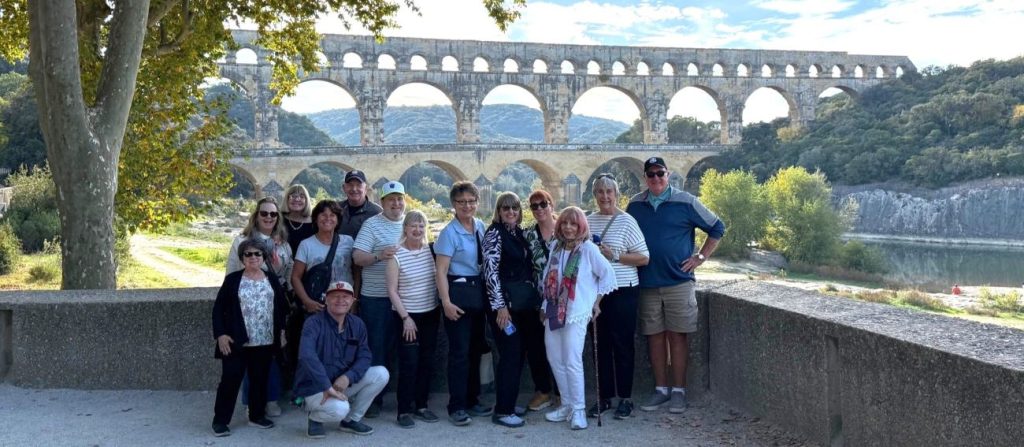
You then stroll out onto the decrease tier, and also you discover the individuals on the far finish, and the way small they appear in opposition to the arches standing above them.
It’s a hundred and sixty ft excessive — the tallest bridge the Romans ever constructed anyplace. Standing beneath it’s the solely technique to know that, and I’ve watched individuals go quiet there extra typically than nearly anyplace else we take them.
It was by no means a bridge
What you’re looking at is a fraction. About 9 hundred ft of a construction that ran for roughly thirty miles.
Nîmes, or Nemausus to the Romans, was a rich provincial metropolis that needed extra water than it had. The Romans discovered what they wanted on the Fontaine d’Eure, a spring close to Uzès, and determined to deliver it throughout the nation to town.
In a straight line, the 2 are solely about twelve miles aside. The aqueduct they constructed runs almost thirty, looping north and east across the limestone hills of the garrigue. They didn’t take the great distance as a result of they had been misplaced. They took it as a result of water solely flows downhill, and the terrain gave them nearly nothing to work with.
The Pont du Gard is just the place the place the valley of the Gardon received in the best way.

Right here is the quantity that stops individuals.
Throughout these thirty miles, from the spring to town, the aqueduct drops about forty-one ft. That’s the whole fall, roughly the peak of a four-storey constructing, unfold over a marathon’s distance.
Throughout the Pont du Gard itself, the 9 hundred ft you might be standing below, the water channel falls about one inch.
Take into consideration what that requires. Too steep, and the water arrives sooner than the channel can carry it, tearing on the stone. Too shallow, and it stops, silts up and stagnates. The margin is nearly nothing. And it was surveyed by males working with a plumb line, a wood trough of water and a sighting body. No devices we’d recognise, and no technique to verify their work till they opened the gates and discovered.
It delivered tens of millions of gallons a day to the fountains and baths of Nîmes, and it did it for one thing like 4 hundred years.
How they constructed it
The Pont du Gard went up in the midst of the primary century AD, in all probability through the reign of Claudius, although you’ll nonetheless see it credited to Agrippa a number of many years earlier. Estimates counsel maybe a thousand males and round 5 years of labor.
The stone got here from a quarry a number of hundred yards downstream, which is its personal form of engineering choice. The most important blocks weigh shut to 6 tons, and so they had been hauled and levered into place with cranes turned by males strolling inside treadwheels.
The arches are dry. No mortar. The stones had been minimize so exactly that they maintain by weight and friction alone, and so they have held by way of eight centuries of neglect, a number of floods that submerged the decrease tier fully, and the elimination of a few of their very own materials by individuals who needed constructing stone.
Look carefully on the piers and you will note blocks jutting out of the face at intervals, apparently at random. They aren’t injury. They had been left there intentionally to hold the wood scaffolding, and no one ever bothered to chop them off. Two thousand years later, the builders’ working platform continues to be connected to the factor.
Three tiers: six arches on the backside, eleven within the center, thirty-five alongside the highest. The water ran by way of a coated channel on the very high stage, a stone field barely large sufficient for a person to stroll alongside, which was the complete level of all that masonry beneath.
The way it died
Slowly, and from the within.
An aqueduct is a machine, and a machine wants sustaining. The Romans deliberate for this. At intervals alongside the route they constructed settling tanks and regulation basins, small stone chambers the place the water may very well be held, diverted or shut off altogether so {that a} part of the channel may very well be drained and labored on dry. On the Nîmes finish, the water arrived in a distribution basin referred to as the castellum, which continues to be there at the moment, the place it was divided between the general public fountains, the baths and a handful of personal homes.
So the system may very well be stopped. And whereas it was stopped, crews walked the empty conduit, scraping out the limescale that the laborious native water left behind on the partitions.
When the administration that paid for these crews started to disintegrate within the fourth century, the scraping stopped.
The deposits constructed up. In locations they reached greater than a foot thick, narrowing the channel till it choked. By across the sixth century, the water had stopped arriving in Nîmes, and it by no means began once more.
What adopted was worse than neglect. Native builders took the stone. Medieval lords ran a toll throughout the second tier and minimize away a part of the piers in order that carts might go, which weakened the construction so badly it almost got here down. For many of a thousand years, the best surviving monument of Roman Gaul was a quarry with a tollbooth on it.
Saved by admiration
Two issues rescued it.
The primary was sensible. Within the 1740s a street bridge was constructed alongside the decrease tier, and having a use once more meant having a motive to maintain it standing.
The second was that folks began to seek out it stunning. Rousseau got here in 1738 and wrote about wandering throughout the tiers feeling like an insect, wishing he had been born a Roman. Travellers started making detours to see it. By the 1850s, below Napoleon III, it was correctly restored, and in 1985 it went onto the UNESCO World Heritage listing.
It now receives effectively over 1,000,000 guests a yr, which makes it one of the vital visited monuments in France.
What has modified, and what hasn’t
You can’t park below the arches any extra, and that’s the proper choice.
The positioning is correctly sorted now. Vehicles keep up high in an actual parking zone, there’s a flat, quick stroll all the way down to the monument, there are correct bathrooms, and the museum is genuinely good. All of it’s an enchancment, and I say in order somebody nonetheless somewhat nostalgic for the outdated chaos.
However the half I care about has not modified in any respect. Go in July or August and you’ll discover French households unfold alongside the banks for the complete day: parasols, coolers, kids shrieking within the shallows, grandparents in folding chairs, all of them treating a two-thousand-year-old surprise of the traditional world as if it had been the native seaside.
We name it a river day. Individuals are sometimes stunned by it, and I really like watching that shock. No person is being disrespectful. It’s merely that right here, historical past isn’t stored behind glass. It’s the place the place you go swimming.
And the kayaks are nonetheless there. Paddling downstream and passing beneath is, I promise you, the very best angle on the factor.
What to do once you get there
Stroll out on the decrease tier. Free, flat, and the one technique to really feel the peak.
Cross to the opposite financial institution and look again. The 2 sides give fully completely different views, and most guests solely ever see one.
The river. Swimming is allowed and inspired. Leaping off the bridge isn’t, and has not been for years.
One thing to eat. There’s a correct restaurant on the location, and a café for espresso and ice cream, which issues greater than it sounds on a scorching afternoon.
The garrigue paths. Wild thyme, rosemary, holm oak, cicadas, and an olive tree by the doorway that’s round a thousand years outdated.
The museum, on the left financial institution, if time permits. It explains the entire thirty-mile system.
The climb to the highest tier, Be warned that there are plenty of stairs. The trail goes up from the location to the extent of the best tier, the place you’ll be able to look by way of the gate into the water channel itself. To go inside it and stroll the coated conduit the water really ran by way of, you have to e-book the official guided tour. Neither is important to benefit from the day, however it’s value realizing the choice is there.
Methods to go to
Getting in. Entry to the location is free. You pay for parking, at the moment €9 per automobile no matter how many individuals are in it, and individually for the museum and the guided tour. Test present costs and hours earlier than you go, since they shift by season.
When to return. Spring and autumn, with out a lot argument. April by way of June and September into October offer you heat days, manageable crowds and the countryside at its greatest. The stone turns gold in low mild, so in case you are travelling with a digital camera, plan for early morning or the final two hours earlier than sundown. In July and August it’s scorching, busy and filled with households, which is both precisely what you need or precisely what you don’t.
Winter word. The museum, cinema and exhibition areas shut for roughly 4 months over winter, and shut on Monday mornings for upkeep year-round. The monument itself stays open.
Accessibility. Higher than you would possibly anticipate. The method is flat and paved, and the cultural buildings have lifts. The one exception is the third-tier tour, which entails eighty steps and tough floor on the best way again. If you’re questioning how a lot strolling our personal excursions contain, that’s all set out on our FAQ web page.
How lengthy. An hour in the event you solely wish to see it. Half a day if you’d like the far financial institution, the paths, the river and lunch on the restaurant. A full day in the event you deliver a picnic and a towel and deal with it the best way the French do.
What to pair it with. Avignon and Nîmes are each shut, and which one you select depends upon what you might be after. Avignon for the Palace of the Popes, the ramparts and the bridge within the music. Nîmes for extra Rome: the amphitheatre, the Maison Carrée, and the castellum the place this aqueduct’s water lastly arrived. If you’re staying in Le Grau-du-Roi, as our vacationers do, Nîmes is a direct prepare journey away and prices a few euro every method, which makes it an incredible post-tour day journey.
Why they bothered
Right here is the half I like most.
Nîmes didn’t want this. Town had wells and a spring of its personal, and no one was dying of thirst. What the aqueduct paid for was baths, public fountains and water working on the street: consolation, and show, and a method of claiming that Rome had arrived and meant to remain.
So that they constructed a thirty-mile machine, correct to an inch, out of stone minimize so effectively it wanted no mortar, largely so {that a} provincial metropolis in southern Gaul might have nicer plumbing.
They constructed it to final, as a result of it didn’t happen to them that it might ever must cease. No person standing on that scaffolding within the yr 50 imagined an finish to the empire that had despatched them there. They had been constructing the everlasting world.
The empire went — the aqueduct continues to be standing over a river filled with swimming kids, and it’s nonetheless, two thousand years later, probably the most astonishing factor most of our vacationers see all week.
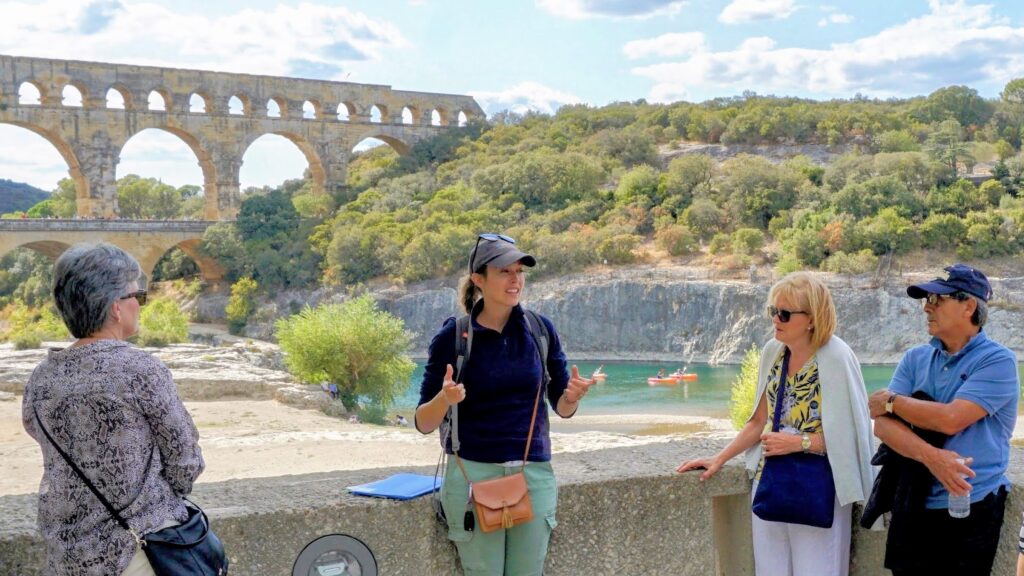
The Pont du Gard is a cease on our 8-Day South of France tour, the place certainly one of our native guides walks you thru the way it was constructed while you’re standing beneath it, which, as I stated at the beginning, is the one method any of it is sensible. Teams are small and there’s time to look. Questions about the tour? We’re all the time blissful to speak.
À bientôt ! Julia

