


From coal mining to the Louvre: how this former mining city turned house to certainly one of France’s most uncommon museums, and what to see while you go to
Ever since a “department” of the Louvre Museum opened within the former mining city of Lens in northern France, I have been wanting to go to what can solely be termed an incongruous marriage of substance and place.
The exquisiteness of the Louvre? In a northern mining city?
And when you hear the story and perceive the “why” behind the choice, it should all begin to make sense.
IF YOU’RE IN A MUSEUM MOOD
Lately, France has tried to make tradition extra accessible past Paris, to offer individuals who do not reside within the capital an opportunity to get pleasure from main nationwide collections.
The opening of the Louvre-Lens in 2012 is a results of this cultural coverage − not solely to share cultural treasures with northerners, but in addition to assist revitalize a area whose economic system had crashed after coal mining ended.
The legacy of Lens
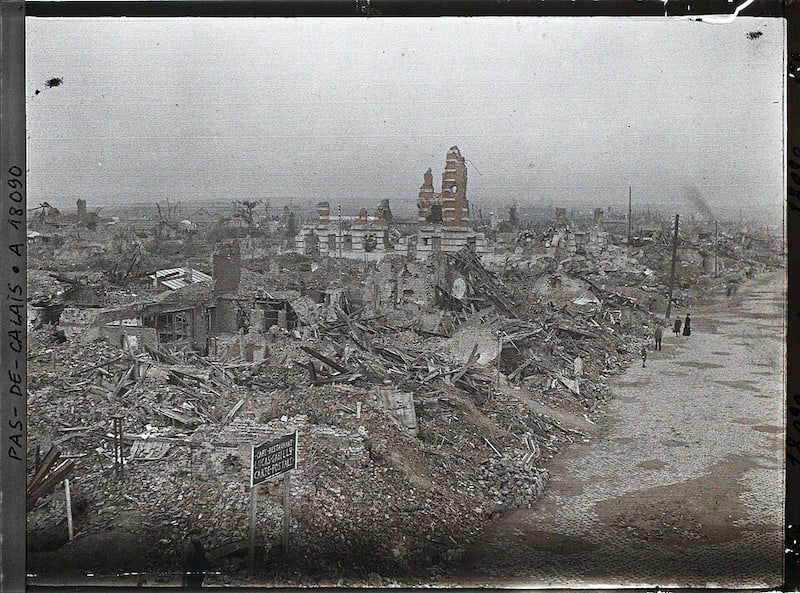
The town of Lens, like many northern cities, was devastated by German forces throughout World Warfare I. Little was left.
Lens was a significant coal-mining heart on the time, and retreating German forces additionally destroyed mine infrastructure.
The town was rebuilt afterwards, which explains a lot of the Artwork Deco character you see right now.
Then got here World Warfare II. In 1944, Allied bombing destroyed about 1000 buildings in Lens and killed greater than 500 folks. The town needed to rebuild once more.
The final coal was extracted right here in 1960, and the mine buildings had been demolished within the Eighties. For a number of a long time the positioning was primarily wasteland, surrounded by the economic panorama left by the mines.
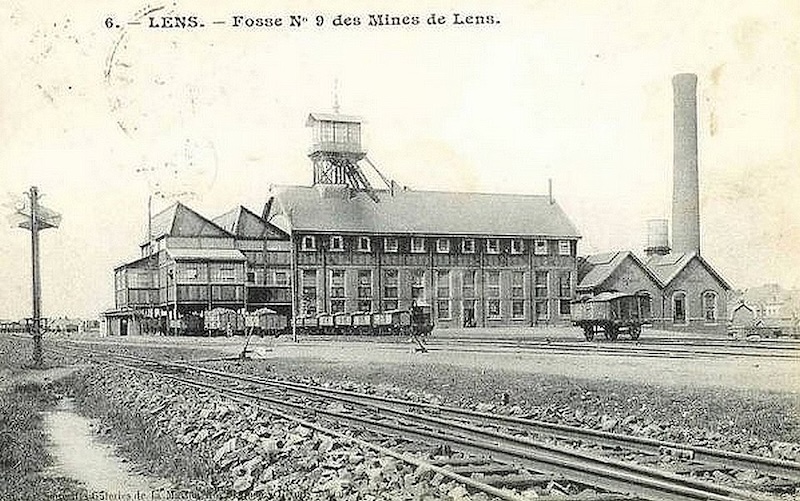
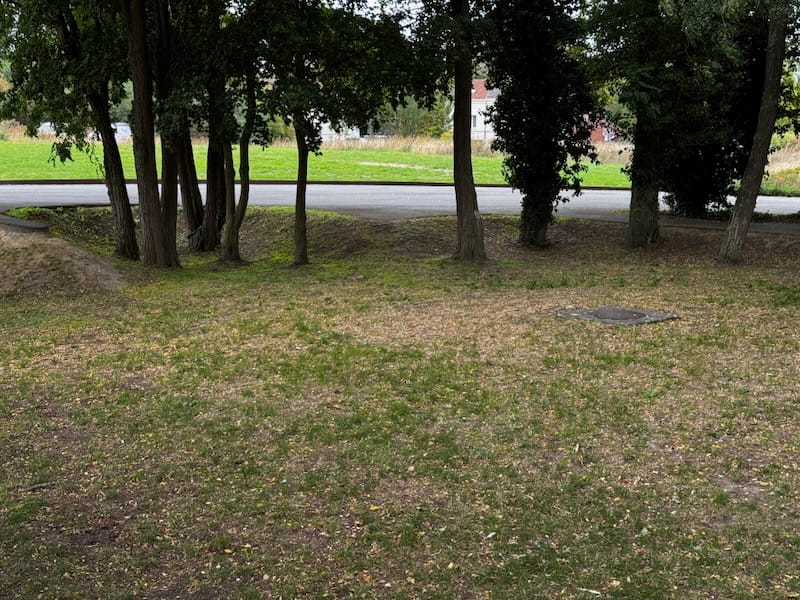 Prime: Pit #9 of the Lens Mining Firm, the place the museum now stands. Above: What’s left – a manhole
Then, in 2003, the French Ministry of Tradition commissioned a examine of museum attendance. It discovered that Parisian museums attracted a disproportionate share of tourists. (We’re not shocked.)
The choice to decentralize a number of the Louvre’s assortment adopted. As soon as the choice was made, the query was the place to place the brand new Louvre.
A number of cities in northern France needed it, together with Boulogne-sur-Mer, Calais, Arras, Amiens, Valenciennes and Lens. Lens was the one one of many cities with no main museum, and it will definitely received out – not simply because it wanted a museum however for a number of different causes:
- the previous mining website supplied one thing uncommon in a metropolis: loads of land
- its location was near the key roads between Paris and Lille
- there was loads of native assist, each political and native
Lens itself lies within the coronary heart of the historic mining basin of the Pas-de-Calais, which itself is a UNESCO World Heritage Website.
Right this moment the Louvre-Lens is house to certainly one of France’s most uncommon museums: fairly than a grand Renaissance palace crammed with masterpieces, we have now a low, modest glass-and-aluminum constructing set in a park proper the place the mine’s Shaft #9 was.
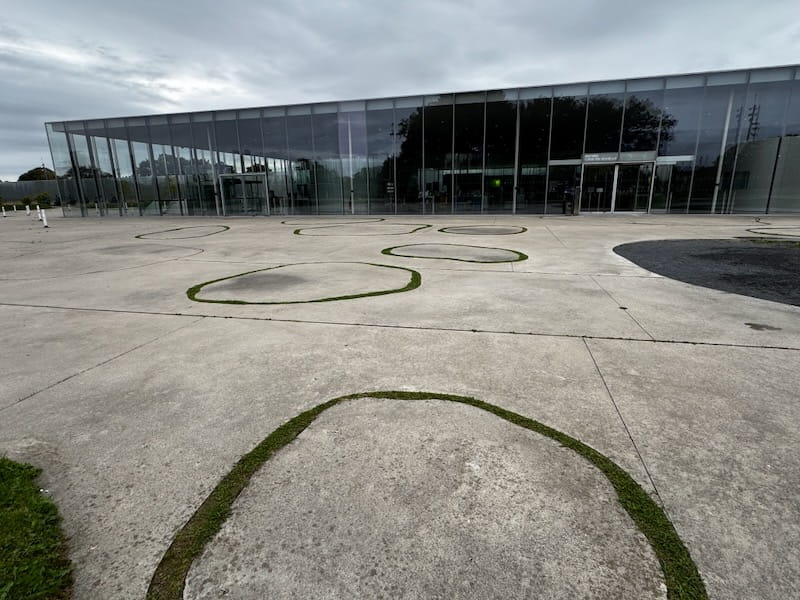 The gleaming exterior of the Louvre-Lens Museum ©️OffbeatFrance
And it’s standard, usually cited as probably the most visited museums outdoors Paris.
The constructing – a murals in itself
Shortly I will introduce you to a (very subjective) record of 11 important artistic endeavors on the Louvre-Lens, however I might be completely justified in including a twelfth merchandise to the record: the constructing itself.
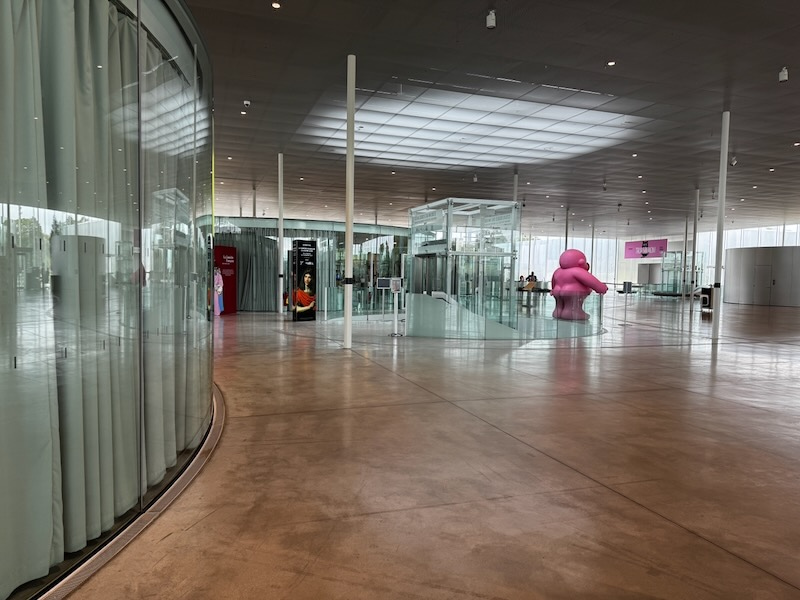 The Louvre-Lens foyer: the structure is filled with curves inside and appears geometric and linear outdoors – however these exterior partitions are subtly curved as properly. Stand inside at an excessive nook and look outdoors, and you will see what I imply ©️OffbeatFrance
A serious contest was launched, attracting 124 architectural groups, with the successful proposal submitted by the Japanese agency SANAA, based by Kazuyo Sejima and Ryue Nishizawa.
Their temporary was virtually the alternative of a monumental Louvre: make it easy, open to nature and accessible, particularly in a metropolis not accustomed to internet hosting a significant museum.
The gleaming silver construction, all straight strains and angles (or so they appear), is tough to see from the road; you will need to stroll up the light slope towards it.
A lot of the constructing is glass, in order that from outdoors you may see in and, from inside, you may see the park. That meant one thing on this former mining metropolis, and authorities needed native residents to really feel that the constructing belonged to them.
The museum opened in December 2012, with particular efforts to contain native folks. Right this moment, the Louvre-Lens has one of many highest proportions of tourists from its native and socially deprived communities amongst French museums.
Past the constructing: the Galerie du Temps
The Louvre-Lens will not be a smaller model of the Louvre in Paris.
The Louvre in Paris is organized largely by creative themes, durations, and departments, so guests transfer between separate galleries and collections. The Louvre-Lens takes a unique strategy: its Galerie du Temps is organized chronologically, so you may transfer via 5000 years of artwork in a single open house.
That makes it doable to see connections between cultures and eras which can be normally separated in Paris, and I’ve to say it really works superbly.
This results in a number of discoveries and moments of enchantment, as sculptures and work are combined collectively, with solely time weaving between them.
Whenever you enter the gallery, you will discover just a few issues:
- the house is large, about 3000 sq. meters (about 32,000 sq ft)
- the ground slopes very gently downward, giving an impression of house
- the sunshine is pure, from slats within the excessive ceiling, bathing the paintings in a heat glow
- there is not a lot on show, by museum requirements, just some 250 works, which supplies you time to watch and avoids overwhelm, making the gathering simpler to digest.
You will additionally see a “steered” route with footsteps taking you thru the displays, however frankly? Let your intuition lead you: go searching, see one thing you’re keen on, and make a beeline for it. You may all the time double again.
11 works to search for on the Louvre-Lens
This Gallery (generally referred to as “River of Time”) is the rationale I am right here.
Strolling together with my educated information, Godeleine Vanhersel, we recognized 11 artistic endeavors you must make a degree of discovering. After which go on to find many extra your self.
Whereas loads of the works in Louvre-Lens are drawn from the Louvre in Paris, the gathering is being elevated often by loans from different museums.
Prepared for the record? We have tried to characterize as many eras and kinds as doable…
1. A chunk of the Roc-de-Sers
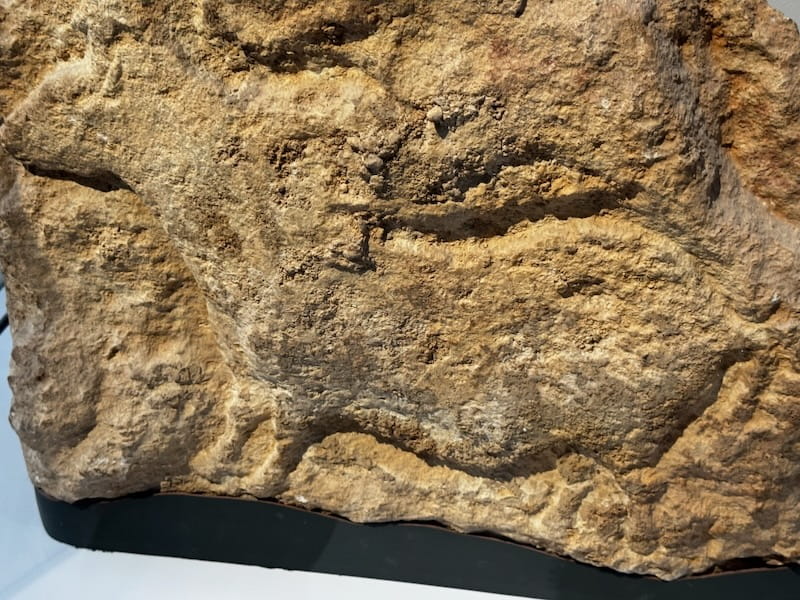 Carved horse, about 20,000 years outdated, from the Roque de Serre cave close to Angoulême. The bas-relief reveals the small horse in movement; prehistoric horses stood solely about 1.3–1.4 meters on the shoulder ©️OffbeatFrance
We begin in the beginning – about 20,000 years in the past.
This small horse – they had been smaller then – is a part of a carved part of cave wall from the Roc de Serre close to Angoulême. The animal is represented in bas-relief (protruding barely from a flat background), and you can also make out its legs, stomach and physique as if it had been shifting throughout the stone (it is positively clearer in particular person than from my {photograph}).
The cave was found in 1927, and a part of the wall had already been damaged. Happily, the break got here slightly below the animal’s legs, leaving the horse remarkably intact. Talking of the legs, the sculptor (or sculptress, we do not know) distinguished one leg from the opposite, giving a definite impression that the animal is strolling.
This uncommon merchandise additionally reveals us how artwork historical past does not start with the Greeks or the Egyptians ᠆ it begins a lot earlier.
2. The statue/monolith of the Mas-Capelier
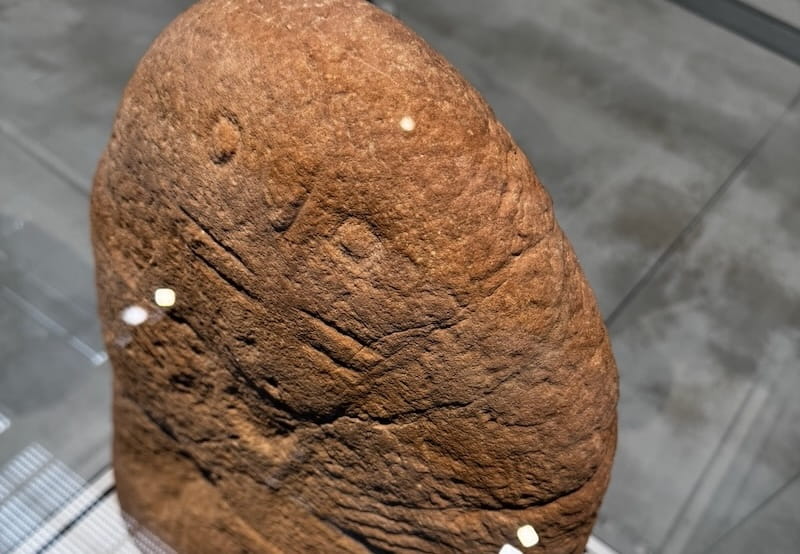 Statue-menhir of the Mas-Capelier, about 3000 BCE, certainly one of some 220 carved standing stones present in southern France. The determine is recognized as feminine from particulars together with the pendant beneath her chin and the round form representing a breast ©️OffbeatFrance
Transfer ahead a number of thousand years and search for this prehistoric standing determine, relationship to round 3000 BCE, certainly one of 220 or so examples of carved women and men found close to the junction of the Aveyron, Tarn and Hérault departments.
At first look she seems virtually schematic: a face, palms, belt and very quick legs. However transfer nearer and a triangular pendant beneath her chin suggests jewellery, whereas a small round form on the chest represents a breast, particulars that helped archaeologists establish the determine as feminine.
One minute, it is only a easy block of stone. After which an artist touches it, and it begins to look human.
3. Statue of Nakhthorheb
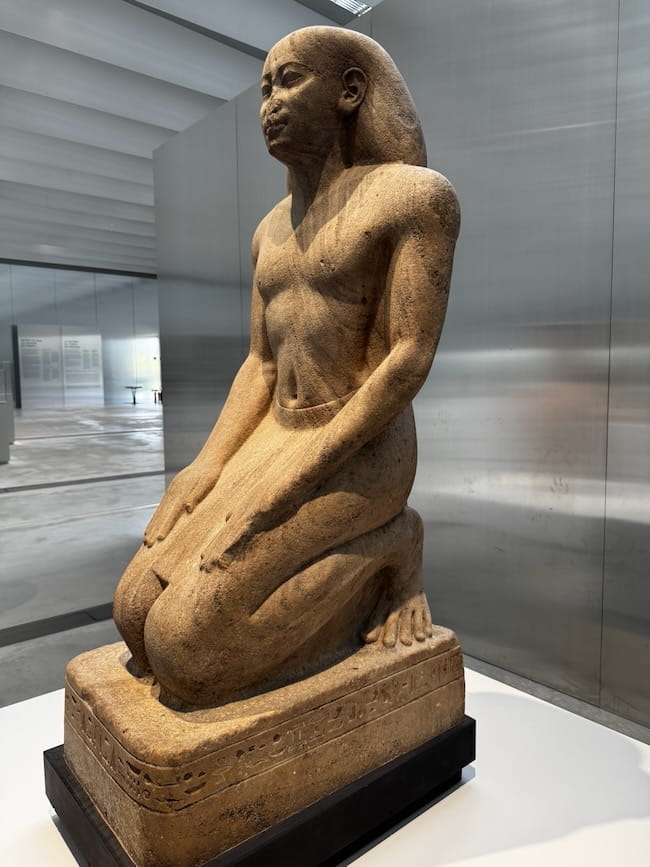 Statue of Nakhthorheb, an Egyptian priest and magician. The hieroglyphs reveal his excessive standing on the royal courtroom and clarify why he was permitted to have a statue positioned in a temple, an uncommon privilege for a person ©️OffbeatFrance
This Sixth-century BCE Egyptian statue seems so easy: Nakhthorheb is kneeling in prayer, carrying little greater than a loincloth, his arms near his physique. However you may’t all the time decide a person by his garments.
The statue is carved with hieroglyphics (alongside the again pillar as properly) and so they inform us loads about him, together with that he’s positioned below the safety of the traditional Egyptian deity Thoth.
Nakhthorheb was a priest and magician and held an vital place on the royal courtroom. He was influential sufficient to have a statue of himself positioned in a temple — one thing extremely uncommon for a person.
However that is not why it ended up on the Louvre in Paris, its authentic cease ⎻ it arrived in 1816, earlier than hieroglyphs had been deciphered, so it was saved for its creative high quality fairly than for its inscriptions.
The physique is kind of refined, the six-pack muscle tissue clearly delineated, scary each mild and shade.
And, like many Egyptian sculptures, the face is idealized fairly than making an attempt to seize an precise picture of somebody.
4. Funeral ensemble of Djedkhonsuiuefankh
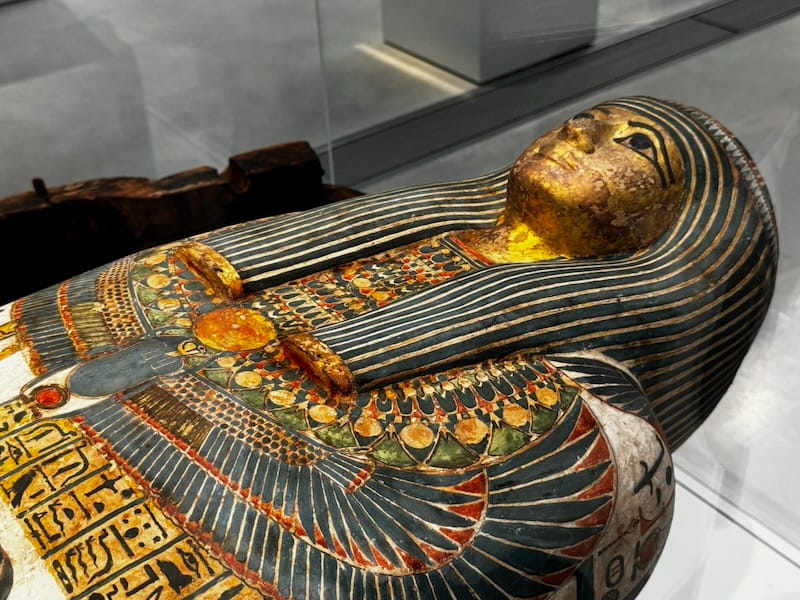
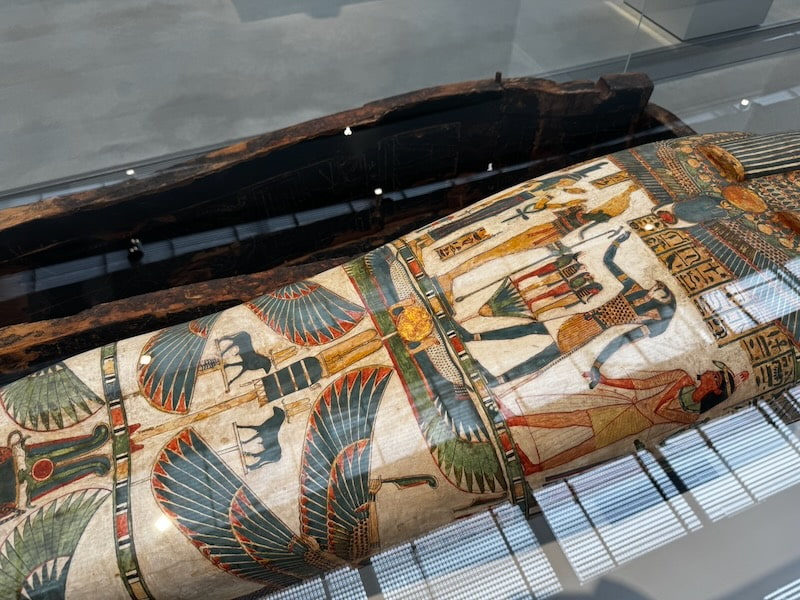 Funeral ensemble of Djedkhonsuiuefankh, together with painted cartonnage made to cowl the mother. The imagery reveals Osiris, Isis and Horus; the gold-covered face displays the Egyptian perception that gold was related to the flesh of the gods ©️OffbeatFrance
This was certainly one of my favourite items, largely as a result of I would by no means seen one earlier than. This was the adorned overlaying made for a mummy, made with a method referred to as cartonnage — layers of cloth lined with plaster and painted, made to suit across the mummy.
It wasn’t merely ornament, however a part of a system of perception: ancient Egyptians believed that the afterlife required preserving the physique, and the cartonnage was a part of their strategy to loss of life and resurrection.
Osiris, god of the afterlife, seems alongside Isis and Horus. Horus takes the hand of the useless man, suggesting that he’s being admitted into the dominion of Osiris.
The gold overlaying on the face carries one other message. In historical Egyptian perception, gold was related to the flesh of the gods, whereas blue steered divine hair, offering an inkling about what the Egyptians hoped would occur after loss of life.
5. The Sphinxes from the Serapeum of Memphis
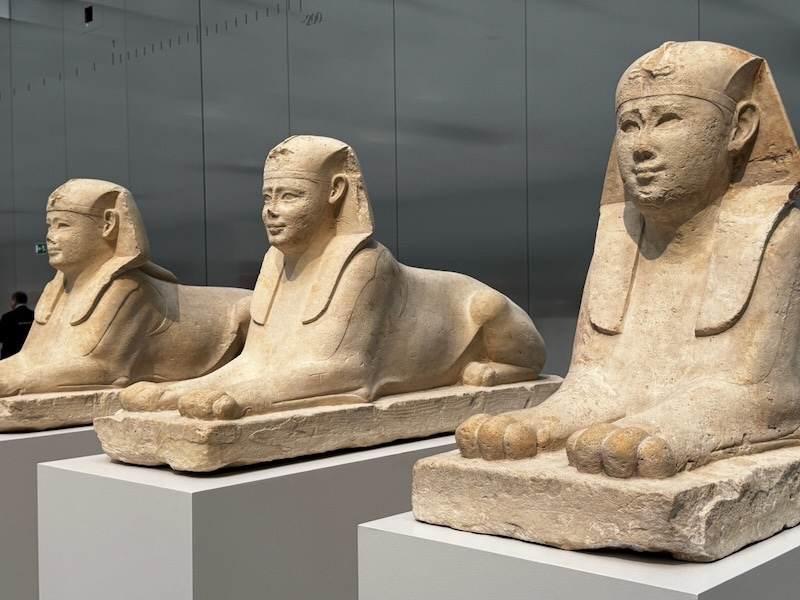 Egyptian sphinxes, 4th century BCE, discovered within the Serapeum at Saqqara, the burial complicated for the sacred Apis bulls. Their human heads and lion our bodies mix royal energy with the power of the animal ©️OffbeatFrance
This group of sphinxes reveals us one other facet of historical Egypt.
They date from the 4th century BCE and got here from the Serapeum at Saqqara, an historical Egyptian burial complicated close to Memphis, south of recent Cairo, related to the sacred Apis bulls.
The Apis bull was thought to be sacred and when he died, he was mummified and buried within the Serapeum.
The sphinxes, royal creatures with a lion’s physique and a pharaoh’s head, had been a part of the monuments alongside the strategy to the complicated.
The very first thing of notice is {that a} sphinx with a human physique and animal head represents a deity. The reverse, a lion’s physique with the top of a pharaoh, is a robust royal creature related to the temple.
And there’s an entertaining element that has nothing to do with the official spiritual that means. Search for the graffiti while you go to ᠆ it was left by guests way back, who visited historical Egypt properly earlier than mass tourism arrived.
6. Heroic statue of (perhaps) Julius Caesar
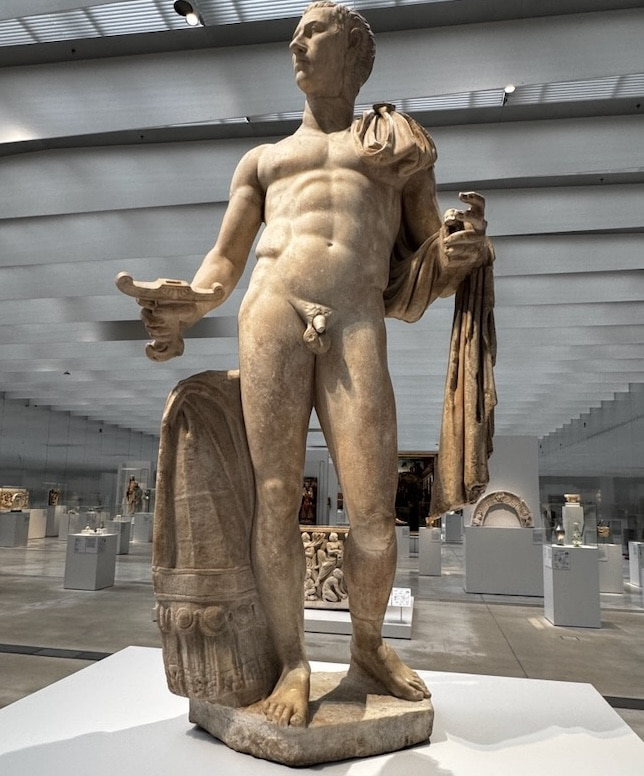 Possible portrait of Julius Caesar within the 1st century BCE. Not confirmed, however artwork historians typically think about its identification believable. The pinnacle doesn’t belong to the unique physique, illustrating how historical sculptures had been generally assembled or altered over time. The determine wears the army cloak of a Roman normal and holds a sword scabbard ©️OffbeatFrance
This statue is historically recognized as Julius Caesar, though nobody has been in a position to verify it.
The attention-grabbing factor is that it isn’t merely a matter of a well-recognized face and deciding whether or not it resembles the Caesar we have now seen in books.
Roman sculpture inherited closely from Greek sculpture, and the connection between the top and physique can inform us one thing about how a statue was constructed, besides that on this case, the top and the physique most likely come from completely different sculptures.
Irrespective of, however there’s one thing else to note: the house between the arm and the physique.
In prehistoric sculpture, the arms and physique usually stay related as a result of separating them would weaken the stone. Greek sculptors developed methods that allowed way more open house, and Roman sculptors inherited them.
It’s a small element, nevertheless it helps clarify how sculpture modified technically in addition to artistically.
7. Musical contest between the god Apollo and the satyr Marsyas
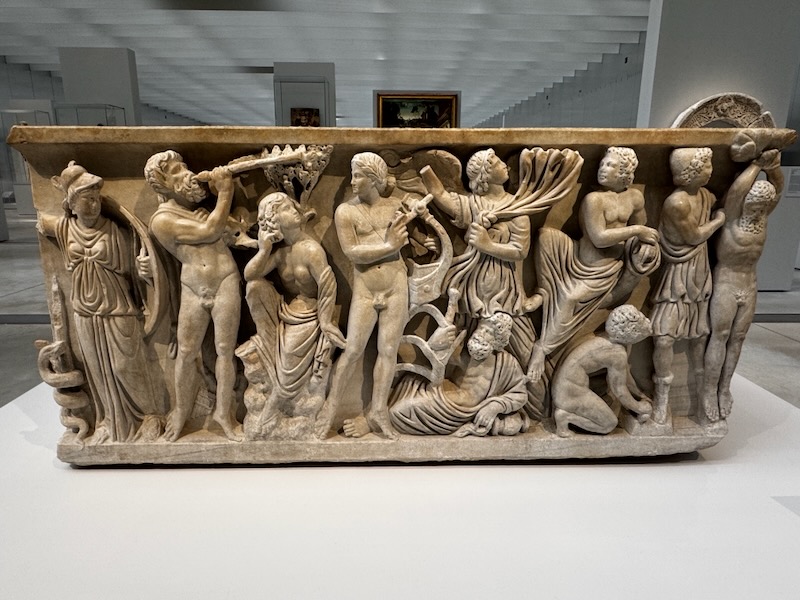 Sarcophagus depicting the competition between Apollo and Marsyas, Roman. Marsyas challenged Apollo to a musical contest after taking on Athena’s flute. Apollo received, and Marsyas was punished by being flayed alive. The scene contains Athena, Aphrodite and a winged Victory, who crowns Apollo ©️OffbeatFrance
This is among the items I lingered over and represents a narrative from Greek mythology involving Apollo and Marsyas.
Marsyas was a satyr who challenged Apollo to a musical contest. He performed the flute; Apollo performed the lyre.
Apollo received.
The punishment for Marsyas was horrific. He was flayed alive.
The sarcophagus reveals the story unfolding, together with the figures making ready to hold out the punishment.
Search for the winged feminine determine of Victory. Regardless of the wings, she is not an angel. In historical artwork, a winged girl usually represents Victory, and right here she is related to Apollo’s triumph.
There may be additionally an attention-grabbing technical element: take a look behind the sarcophagus and you will see the again of it’s largely unfinished, as a result of it will have stood towards a wall.
So Roman sculpture may very well be extremely detailed the place viewers may see it however a lot much less involved with elements they could not.
8. The Saint-Louis chessboard
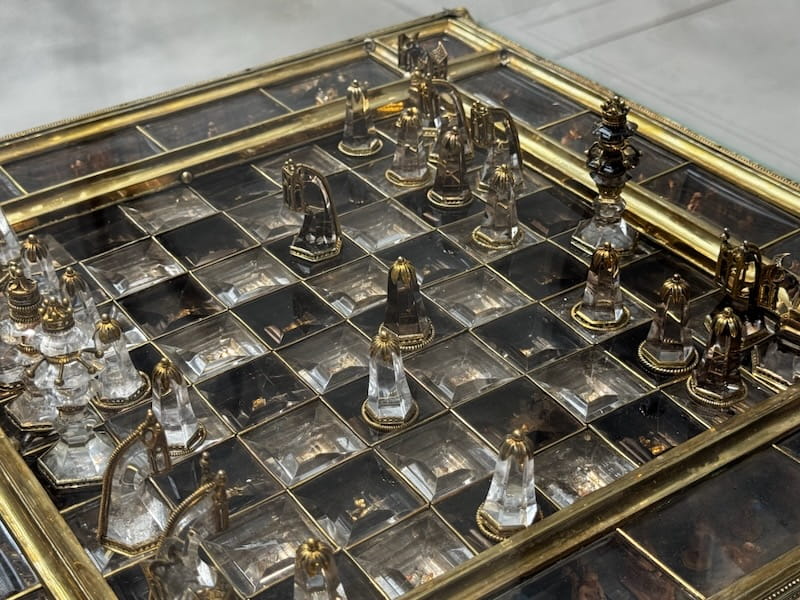 Late Fifteenth-century European chess set, assembled from items made in Germany, France, and Italy. It as soon as belonged to Gabrielle d’Estrées, mistress of King Henry IV ©️OffbeatFrance
As I mentioned, this record is completely subjective so that is my favourite piece, a chess set made out of rock crystal, smoky quartz and gilded silver, with tiny carved figures across the board.
The chessboard was made in Germany round 1490, and the Louvre dates the items to the identical century. It is referred to as the Saint-Louis chessboard, however the title is deceptive, because the set was made greater than two centuries after the king died.
I like the main points. There are tiny flowers below the clear crystal on every sq.. The tiny figures across the board are carved from boxwood, an exceptionally arduous wooden that made it doable to provide tiny swords and spears.
After which there’s the lacking piece. Can you see what’s not there? Maybe you will need to go see for your self…
The chess set ultimately entered the French royal collections and survived the French Revolution. Louis XVIII later gave it away to his valet, and it handed via non-public palms and the Musée de Cluny earlier than reaching the Louvre.
So this isn’t only a chess set - it traces the historical past of European craftsmanship, royal accumulating, the French Revolution and the motion of artistic endeavors between museums.
9. Arcimboldo’s 4 Seasons
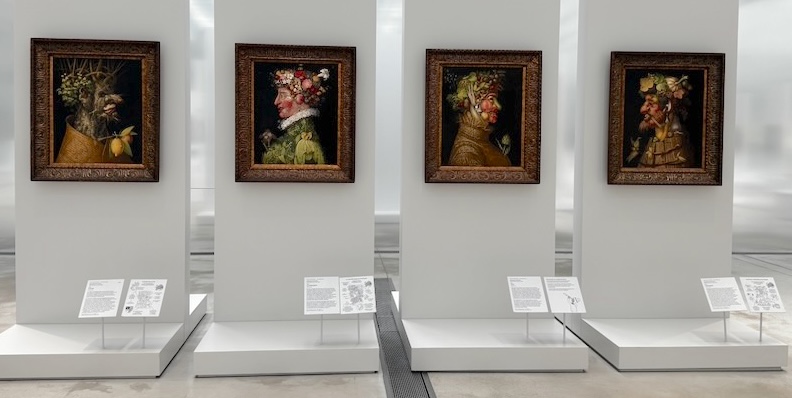 The 4 Seasons, Giuseppe Arcimboldo, Sixteenth century. Spring, summer season, autumn, and winter additionally symbolize the cycle of human life ©️OffbeatFrance
You will have seen these earlier than, Giuseppe Arcimboldo’s 4 Seasons — Spring, Summer time, Autumn and Winter — which flip human faces into preparations of vegetation, fruit, greens and different pure objects.
Whereas the apparent joke is that Arcimboldo was excellent at portray faces out of meals, his Sixteenth-century viewers noticed fairly a bit extra right here.
The seasons may characterize a lot:
- cyclical time, after all
- the 4 phases of human life: spring as youth, summer season as maturity, autumn as maturity and winter as outdated age
- the 4 components
- completely different temperaments
- the geographical attain of the Habsburg empire, which commissioned him, displaying off unique vegetation and produce
I can not do them justice right here however every of those deserves an in depth look, by which you will maintain discovering one thing new because the minutes go by.
10. Goya’s portrait of Luis María de Cistué y Martínez
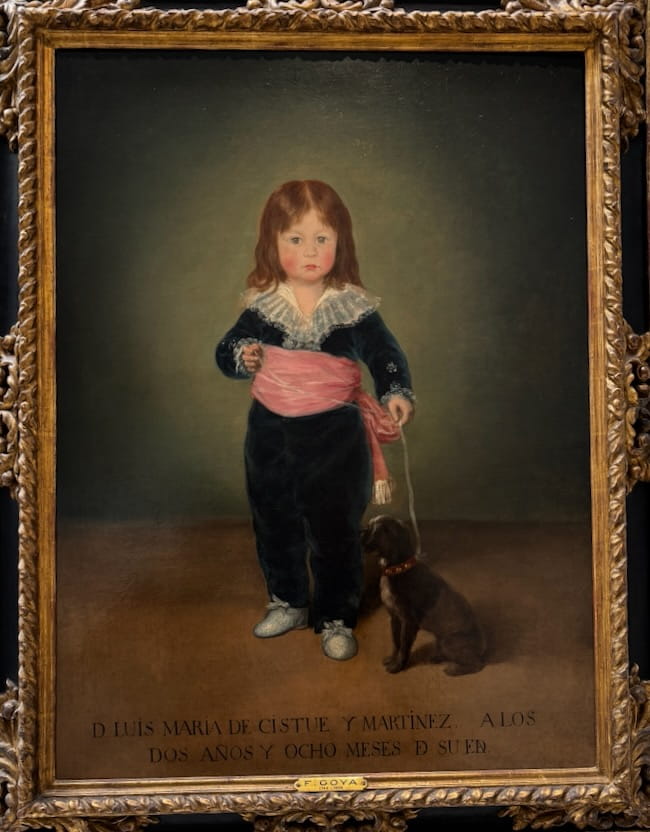 Portrait of Luis María de Cistué, Francisco de Goya, 1791. The aristocratic boy wears blue velvet, lace, and a pink sash; his uneasy expression offers the formal portrait an uncommon sense of persona ©️OffbeatFrance
Goya’s portrait of little Luis María de Cistué y Martínez is simple to stroll previous, and I would hate so that you can do this.
The inscription says he was solely 2 years and eight months outdated, which is tough to imagine while you see how severely he stands there in his lace collar and pink sash. He is not smiling and he seems straight at us. A small canine beside him is wanting up at him, most likely hoping the sitting will finish quickly to allow them to go and play.
My information identified one thing I might have missed. Goya offers the boy virtually no house round him. The brown and inexperienced background seems like a wall and a ground at first, however you may’t inform the place one turns into the opposite, so there’s nothing to have a look at however the baby.
The portray as soon as belonged to Yves Saint Laurent, who liked it and drew on it for his personal designs. In 2009, after his loss of life, his associate Pierre Bergé donated it to the Louvre.
11. Cupid and Psyche by Canova
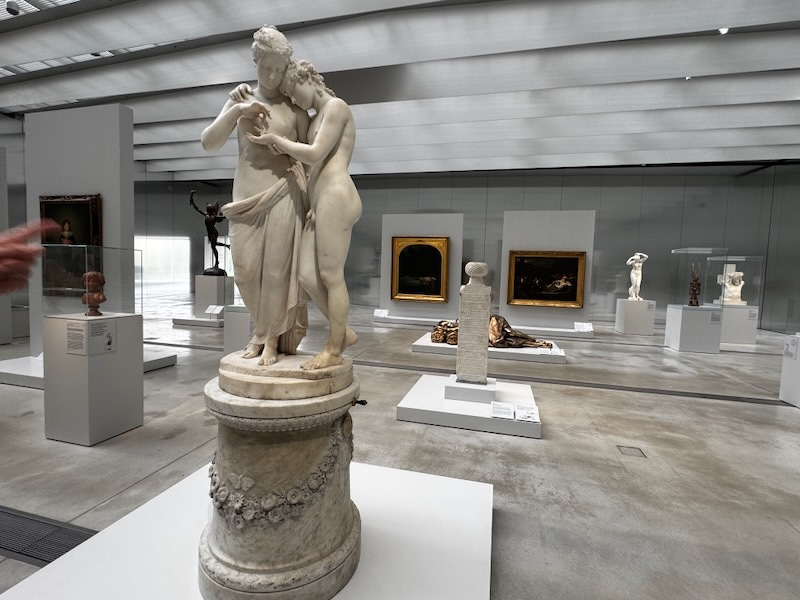 Cupid and Psyche, Antonio Canova, about 1797. Each are a butterfly resting in Cupid’s hand ©️OffbeatFrance
Chances are you’ll know Canova’s different Cupid and Psyche, the reclining one in Paris. It is a completely different composition, with the 2 standing shut collectively and a butterfly. In Greek, psyche means each soul and butterfly, which is why it seems right here.
The sculpture belonged to Napoleon’s brother-in-law, Joachim Murat, who handed it on to Napoleon, and it entered the Louvre in 1822. There may be loads of room round it, so stroll all the best way round.
Have a look at the best way the figures are organized: Cupid’s wings rise above Psyche whereas the 2 our bodies kind an virtually round motion.
Then have a look at the material round Psyche ᠆ it appears to be slipping, a small motion that provides an erotic ingredient to the sculpture with out making it specific.
And that is precisely the type of work that advantages from seeing it in Lens fairly than in a listing of well-known works.
You could have house round it, so you may stroll round it and evaluate it with different sculptures close by.
And you’ll take your time.
PRACTICAL INFORMATION
- Getting there: Take the high-speed TGV line to Arras or Lille and alter there, or take the one every day direct practice between Paris-Nord and Lens simply previous midday. Do examine as a result of practice service does change. The direct practice takes a great hour, and add quarter-hour for the connection from Arras. You may as well get right here from different cities nevertheless it takes longer. Test the schedules for the most recent particulars. The Louvre-Lens is a 25-min stroll from the station, however you may reserve a taxi.
- How lengthy to remain? You will get via the Gallery in half a day, but when there is a momentary exhibition, you would possibly determine to spend just a few further hours. Add a few aspect journeys and you may simply fill two days.
- The place to remain: My favourite is the Louvre-Lens Lodge, proper throughout the road from the museum (the beds are a dream). In any other case, you may evaluate resorts and guesthouses in Lens.
- The place to eat: For a superb lunch throughout your museum go to, reserve a desk at L’Atelier du Cerisier, in your proper earlier than you attain the museum’s entrance.
- Extra data: Test with the vacationer workplace for tour listings and particular occasions.
- Finest for: vacationers focused on historical past, artwork, structure and industrial heritage.
Additionally in or close to Lens
Whereas the museum could be what will get you to Lens, there’s extra to see when you arrive:
- Hunt for Artwork Deco: Lens has a powerful Artwork Deco heritage, provided that a lot needed to be rebuilt after World Warfare I
- Climb a terril: At Loos-en-Gohelle, you may climb Terril 74, one of many two huge conical slag heaps left by coal mining. From the highest (among the many highest in Europe) on a transparent day you may see the Louvre-Lens and Vimy Memorial.
- Search the Ring of Reminiscence: If you happen to misplaced an ancestor throughout World Warfare I, search for their title among the many almost 580,000 troopers listed on the round memorial of the Anneau de la Mémoire.
- Go to Notre-Dame-de-Lorette: Subsequent door you will discover France’s largest army cemetery and the Basilica of Notre-Dame-de-Lorette and an ossuary, in honor of the hundreds of French troopers who died within the battles for the hill throughout World Warfare I.
- Stand earlier than the Canadian Nationwide Vimy Memorial: This big construction commemorates the greater than 11,000 Canadians killed or presumed useless in France who don’t have any identified grave.
Earlier than you go…
One of the best factor concerning the Louvre-Lens is not that it allows you to see well-known works with out going to Paris (though that is actually a great factor).
It is that the museum adjustments the way you see them.
A prehistoric horse sits within reach of Egyptian sculpture. Roman artwork sits close to Renaissance portray. A Sixteenth-century portrait made out of greens will not be remoted in a room devoted to at least one artist. A Fifteenth-century European chess set turns into a part of a a lot larger theme about craftsmanship and accumulating.
These connections between themes and eras – much more than the well-known title on the constructing – are what attracted me within the first place.
Did you get pleasure from this text? I would love if you happen to shared it!

