


Arras appears like a superbly preserved historic metropolis, however a lot of what you see was rebuilt after World Conflict I. This information explores the squares, city corridor, abbey, citadel, historic neighborhoods and different particulars that reveal the surprises hidden on this northern French metropolis.
Stroll into the grand sq. surrounding the city corridor of Arras in northern France and also you could be in for a couple of surprises.
First, this grand sq. is definitely the smaller of Arras’s two nice squares, though it appears so huge that I assumed in any other case.
And people beautiful previous façades lining the sq.? They’re medieval.
Kind of.
By the tip of World Conflict I, roughly three-quarters of Arras had been destroyed, with some assessments placing the determine at round 80%.
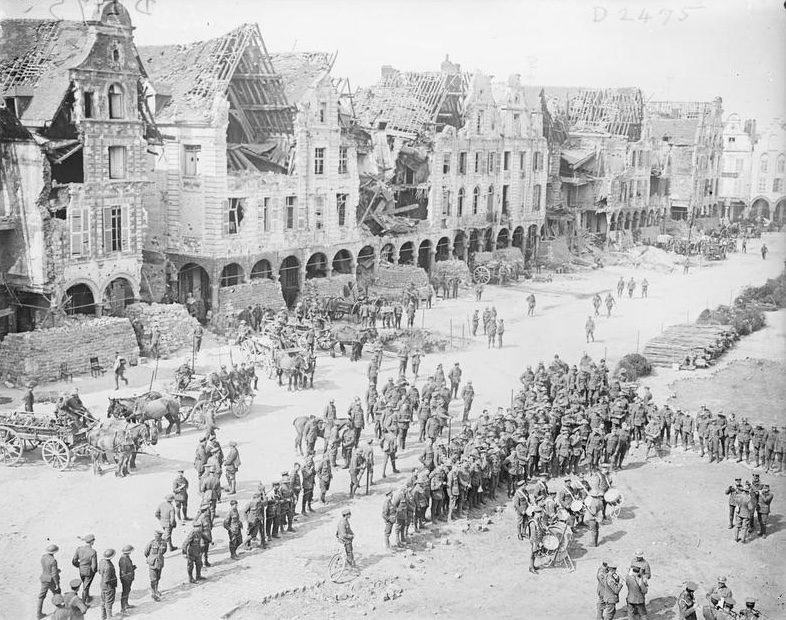 The destruction of Arras throughout World Conflict I, by John Warwick Brooke, Public area, through Wikimedia Commons
When it got here time to rebuild, native inhabitants did not need to exchange their misplaced metropolis with a contemporary one. They liked Arras and needed it again.
The result’s uncommon. The middle appears centuries previous, however a lot of what you might be seeing was really reconstructed within the Twenties.
QUICK FACTS ABOUT ARRAS
- Inhabitants: 40,000
- Area: Hauts-de-France
- Département: Pas-de-Calais (62)
- Recognized for: Flemish-Baroque squares, World Conflict I reconstruction, the belfry, Vauban’s Citadel and underground quarries
- Historic industries: Tapestry weaving and the grain commerce
- Main landmark: The Belfry and Hôtel de Ville
- Main attraction: The Boves and Wellington Quarry
- Royal connection: François I used to be Depend of Angoulême earlier than turning into King of France
- UNESCO standing: World Heritage: the Belfry (2005) and the Citadel, a part of Vauban’s fortifications (2008)
That barely idiosyncratic vibe is what makes Arras fascinating - the façades look so medievally related, but the buildings behind them do not essentially match; architectural particulars are jumbled; and within the midst of all this folly, the Twenties quietly made their entrance.
Then there’s every thing beneath your toes, a hidden metropolis. Or two.
Simply once you suppose you have deciphered Arras, it appears to soften away.
IF YOU’RE SHORT ON TIME, FOCUS ON…
- The historic middle: Place des Héros and Grand’Place, wanting carefully on the façades and home indicators.
- The civic middle: Belfry and Hôtel de Ville, together with the interiors in the event that they’re open.
- Navy Arras: the Citadel.
- Underground Arras: Boves and Wellington Quarry.
You may get tickets from the Vacationer Workplace simply contained in the Hôtel de Ville.
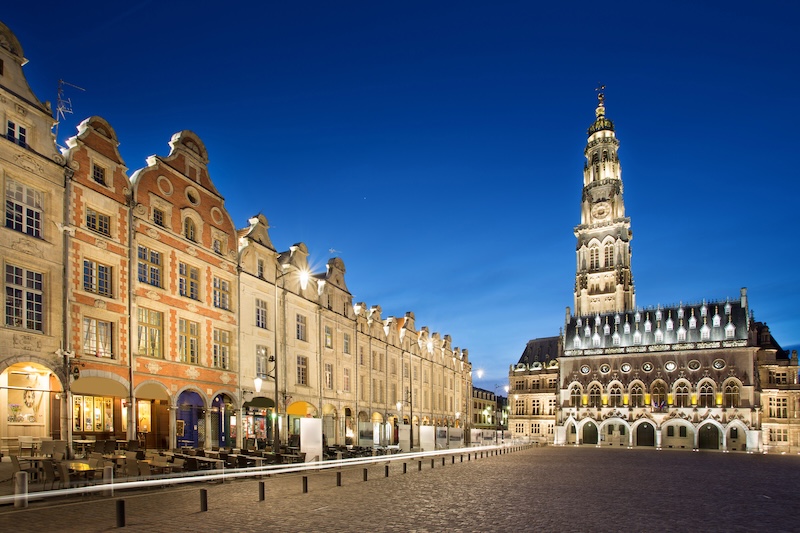 Place des Héros at night time
MORE HISTORIC CITIES IN NORTHERN FRANCE
The 2 nice squares
The historic coronary heart of Arras is constructed round two huge squares: the the Grand’Place, and the smaller Place des Héros, which collectively are surrounded by 155 homes.
They date again to the twelfth century, taking form as Arras’s markets expanded. The town was affluent, and at one level held as many as three markets per week.
The 2 squares had completely different features.
The Place des Héros, initially the Petite Place, was the on a regular basis market, the place residents purchased meals and different requirements.
The Grand’Place was the bigger industrial market, significantly related to grain {and professional} merchants.
Place des Héros
The Place des Héros is the plain place to start (the “small” sq. I mistook for the bigger one).
Most homes have brick-and-stone façades, arcades, tall home windows and elaborate gables influenced by Flemish structure. They’re harmonious and type a magnificently coherent entire.
However here is the essential half: earlier than World Conflict I, solely three main monuments in Arras have been protected as historic monuments: the Belfry, Saint-Vaast Abbey and the cathedral.
The homes across the squares weren’t.
After the conflict, nevertheless, Arras needed its historic look again. Pierre Paquet, the architect liable for town’s historic monuments, discovered a technique to make that doable.
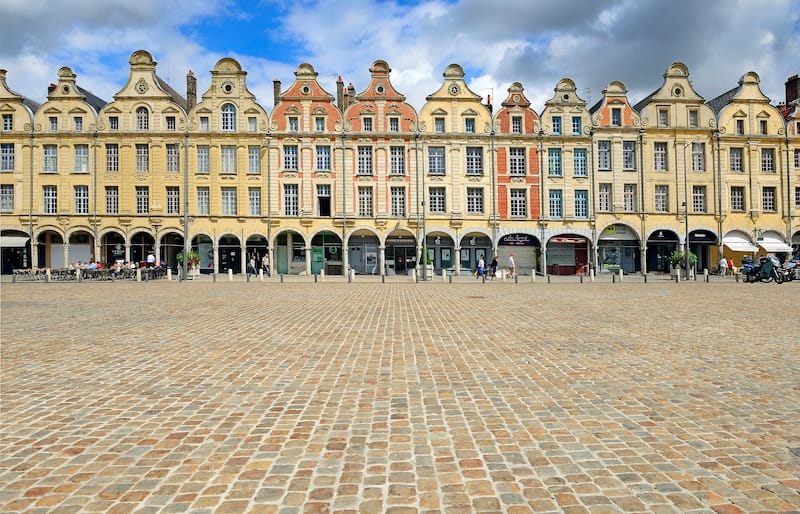 The rebuilt façades of the Place des Héros
In 1919, whereas the buildings have been nonetheless ruins, he had the façades labeled as historic monuments - the interiors, alternatively, could possibly be modernized.
That meant the exteriors needed to be rebuilt the way in which they seemed like earlier than the conflict, in what known as à l’identique, whereas the house owners had far more freedom inside.
That is why the Place des Héros appears so remarkably uniform whereas the buildings behind these façades will be extra trendy.
The architects additionally had assist. A photographer had documented the façades earlier than the conflict, so there was a beneficial file of buildings that now not existed.
The photographic marketing campaign was significantly beneficial as a result of the architects have been attempting to reconstruct particular person façades, not simply create a generic model of an previous Arras. Additionally they had plans, archives and engravings to work from, however not every thing had been documented so a certain quantity of “knowledgeable judgment” was referred to as for.
Grand’Place
In case you comply with the Rue de la Taillerie you will attain the Grand’Place, the bigger of the 2 squares — about 17,000 sq. meters, in contrast with roughly 6,000 for the Place des Héros.
This was the skilled and grain market. By the 18th century, it was one of many largest grain markets in northern France.
The sq. additionally served as a significant public area and is lined with arcades, as is its smaller sibling. These arcades have been sensible in addition to ornamental, sheltering retailers and pedestrians and making a lined area across the market.
Sovereigns have been welcomed on the sq. throughout their joyeuses entrées (elaborate ceremonies by which a brand new ruler formally entered town), and navy parades occurred right here. It’s nonetheless used at this time for main occasions within the metropolis.
At one level, a railway even reached the sq. in order that grain could possibly be loaded and unloaded instantly.
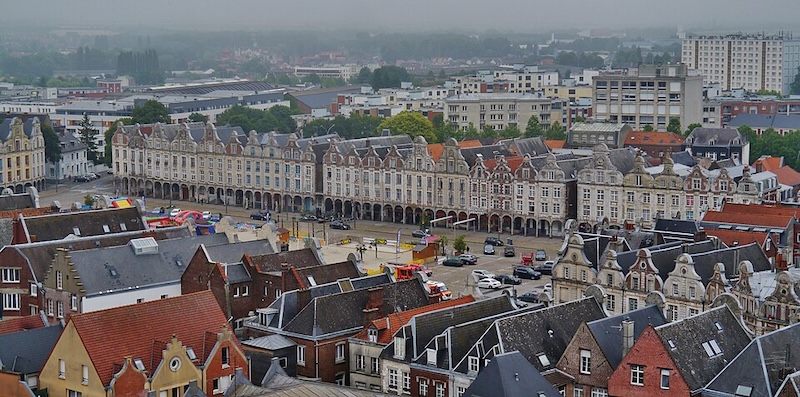 Grand’Place as seen from the belfry
At the moment, the big paved middle could make the sq. appear virtually too massive for its environment, but crowded with parked automobiles. That’s altering: town is redeveloping the central space, with plans for extra pedestrian area and greenery.
After I visited, the work was nonetheless underway, and the sq. felt slightly empty in contrast with the Place des Héros (to not point out an outsized marquee that appeared distinctly misplaced right here). The renovations ought to deliver again terraces and make the sq. really feel extra like a spot to linger, a bit just like the smaller sq. subsequent door.
If you stroll across the Grand’Place, use the identical trick as within the Place des Héros: do not simply admire the façades as a bunch however have a look at particular person buildings, their gables and their ornamental particulars. They’re remarkably completely different, but there’s a unity there.
One home deserves explicit consideration.
Maison des Trois Luppars
The Maison des Trois Luppars is the oldest home on the Grand’Place, and the one one with a stepped gable as an alternative of a Flemish Baroque one. It’s now a resort.
Its current brick construction dates to 1467, though there was an earlier constructing right here.
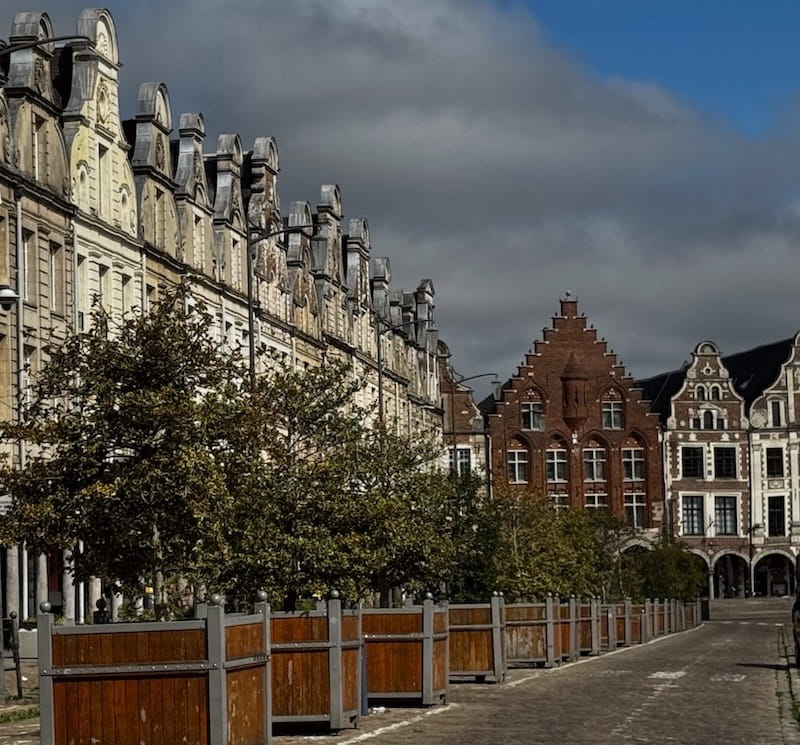 The Maison des Trois Luppars on the Grand’Place ©️OffbeatFrance
The home is unusually elaborate as a result of its structure was additionally a standing image. It has a brick façade, with pointed sandstone arches and home windows are organized in travées brugeoises, additionally discovered within the Flemish cities.
The home additionally has a outstanding political historical past.
In 1435, the sq. hosted a papal nuncio throughout negotiations that led to the Treaty of Arras, an essential step in ending Burgundy’s alliance with England in the course of the Hundred Years’ Conflict.
The treaty itself was signed at Saint-Vaast Abbey.
So one of many buildings you would possibly dismiss as a fairly previous home was as soon as the setting for essential European diplomacy.
BEFORE ARRAS WAS FRENCH
Arras was not at all times a part of France.
For hundreds of years it belonged to the County of Artois and was a part of the Burgundian and later Habsburg Netherlands; town grew to become definitively French in 1659, when the Treaty of the Pyrenees transferred Artois to France.
The supplies
The façades can assist let you know by which interval the unique homes have been constructed.
The extra elaborate brick-and-stone homes typically date from the late Sixteenth and seventeenth centuries, when Arras was a part of the Spanish Netherlands and Flemish Baroque structure influenced town.
The extra restrained, typically completely stone façades typically belong to the 18th century, after Arras grew to become French.
Home indicators
Earlier than avenue numbering got here into use within the 18th century, homes in Arras have been recognized by names and symbols.
In case you look, you will see that a few of these previous identifiers are nonetheless on the façades.
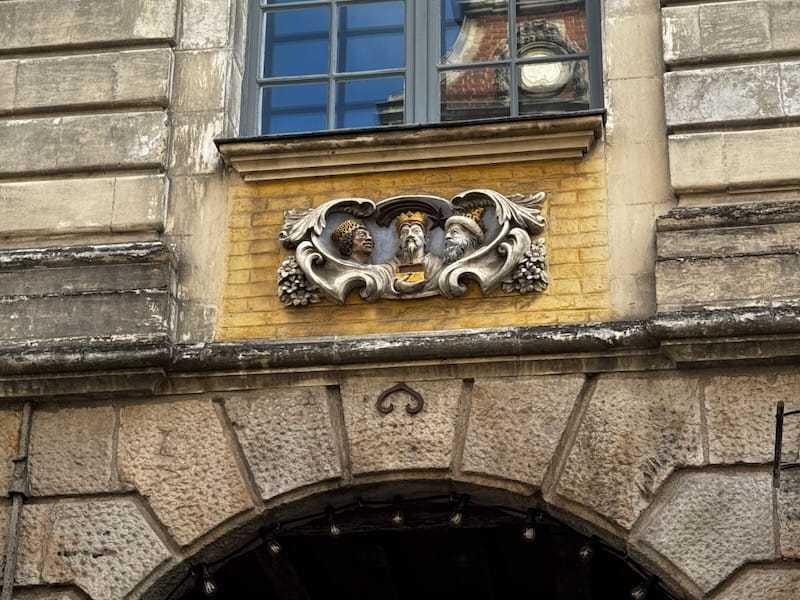 On the Rue de la Taillerie, which hyperlinks the 2 nice squares, search for Les Trois Rois (the Three Kings) at No. 8. The sculpted cartouche reveals the three Magi ©️OffbeatFrance
Seek for a unicorn, a mermaid, shells, non secular figures and symbols related to trades. A farrier, for instance, may determine his enterprise with a horseshoe that required no clarification. On the Grand’Place, these are sometimes agricultural - sheaves of wheat, crossed palms, cereals, all recalling the sq.’s unique operate as a grain market.
There was even a rule about how indicators could possibly be displayed: they could not simply dangle from a projecting bracket over the road, presumably due to the hazard of them swinging within the wind over the busy squares. You may spend hours searching for these indicators and figuring out them.
The belfry and Hôtel de Ville
The belfry and Hôtel de Ville, or city corridor, type the architectural and civic middle of Arras, and are finest visited collectively.
The belfry
The Arras Belfry is one among 23 in northern France listed on the UNESCO World Heritage website Belfries of Belgium and France. UNESCO describes these towers as symbols of the emergence of municipal energy and the civic freedoms received by medieval cities.
That is precisely the case in Arras.
In 1194, Philippe Auguste granted Arras a charte de franchise, giving town better municipal autonomy. Its officers, the échevins, now had the facility to manage town’s justice, economic system and authorities, in different phrases, self-government.
The town additionally acquired the best to its personal civic bell — it may mark civil time independently, so round 1463 town started constructing its belfry, which might solely be accomplished practically a century later, in 1554.
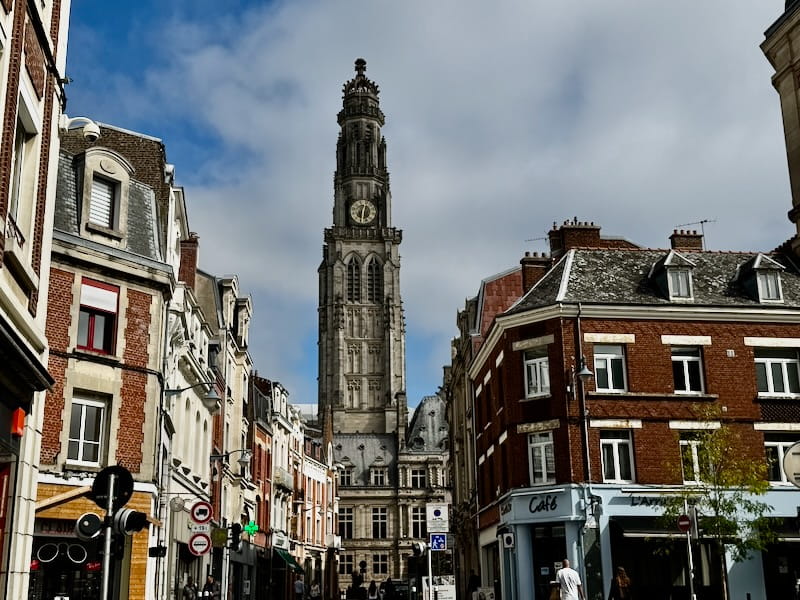 A facet view of the belfry from the streets of Arras ©️OffbeatFrance
The tower begins with a sq. base and turns into octagonal increased up. Search for the 4 clock faces and the picket slats by which the sound of the bells can escape.
The bells every had sensible makes use of. The three massive bells beneath the clock may announce an approaching enemy or a fireplace, in addition to sign particular civic occasions. The Cloche du Lait was related to marking time associated to the working day; Joyeuse introduced the arrival of sovereigns for his or her joyeuses entrées; and the Retraite marked curfew.
Above them is a 37-bell carillon which performs a standard music from northern France.
On the prime, you will see the crown related to Charles V and, more often than not, the golden lion of Arras. When the belfry was accomplished within the mid-Sixteenth century, Charles V was nonetheless sovereign, so an actual royal crown was positioned above the tower.
The lion usually sits above the crown and acts as a climate vane however is at the moment away for restoration and gilding; its tail was broken and is being repaired and is anticipated again round April 2027.
The climb is less complicated than you would possibly anticipate. An elevator takes you a lot of the manner up, adopted by a round steel staircase to the viewing stage. I’ve vertigo, so I wasn’t completely wanting ahead to that half, however the view made it worthwhile and the ascent was simple.
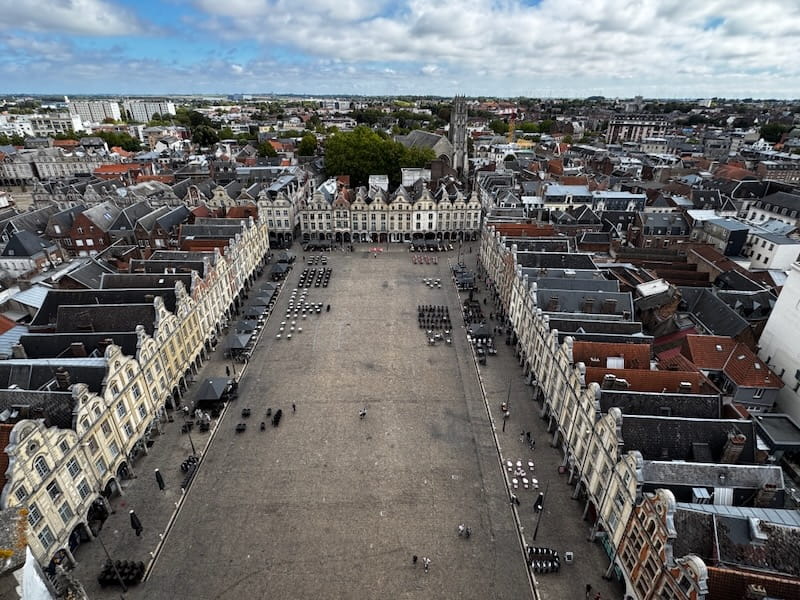 The Place des Héros as seen from the belfry, however I did not fairly catch the Grand’Place, which is simply off to the left ©️OffbeatFrance
Hôtel de Ville
The Hôtel de Ville brings a number of intervals of Arras’s structure collectively. The unique constructing dates from 1501 and is Flamboyant Gothic, whereas the Renaissance wing, added round 1572, is extra classical, with columns and carved ornament.
A Nineteenth-century wing was later added in an eclectic fashion, however it was destroyed in World Conflict I. Throughout the reconstruction, Pierre Paquet selected to return to the Sixteenth-century design, so the rebuilt Hôtel de Ville doesn’t reproduce every thing that stood right here earlier than 1914.
After I visited, the right-hand wing was beneath scaffolding, however you’ll be able to nonetheless see the distinction between the Gothic and Renaissance sections.
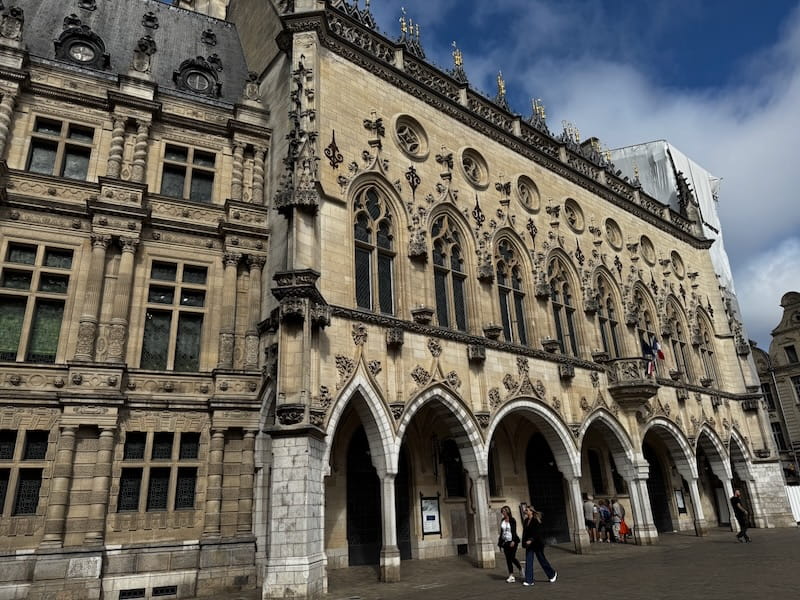 On the left is the Renaissance wing, and the big central part is the unique Flamboyant Gothic constructing. On the best, practically hidden and lined in scaffolding, is the opposite, newer Renaissance wing ©️OffbeatFrance
Go inside
The inside is the place you’ll be able to see the variations between the historic-looking exterior and the Twentieth-century reconstruction.
The Salle des Gardes incorporates Gothic parts, whereas the ceremonial rooms mix older types with Artwork Deco, the fashion that was standard on the time of reconstruction.
There are three significantly essential ceremonial rooms, in addition to toiles marouflées — massive work mounted instantly onto the partitions. These can all be visited (so long as they don’t seem to be getting used) on excursions organized by the vacationer workplace, which is contained in the constructing as you enter in your left.
It is well worth the go to as a result of this Artwork Deco redesign is one a part of Arras you can’t see from the surface.
Artwork Deco
The reconstruction occurred largely in the course of the Twenties, so the interval inevitably left its mark, and never simply within the city corridor. Search for geometric ornament, ironwork, doorways, balconies, mosaics and shopfronts.
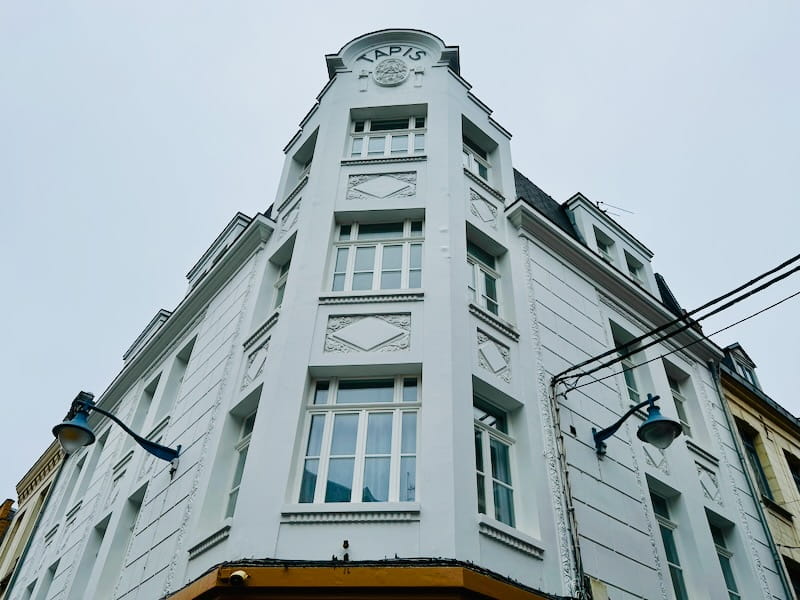
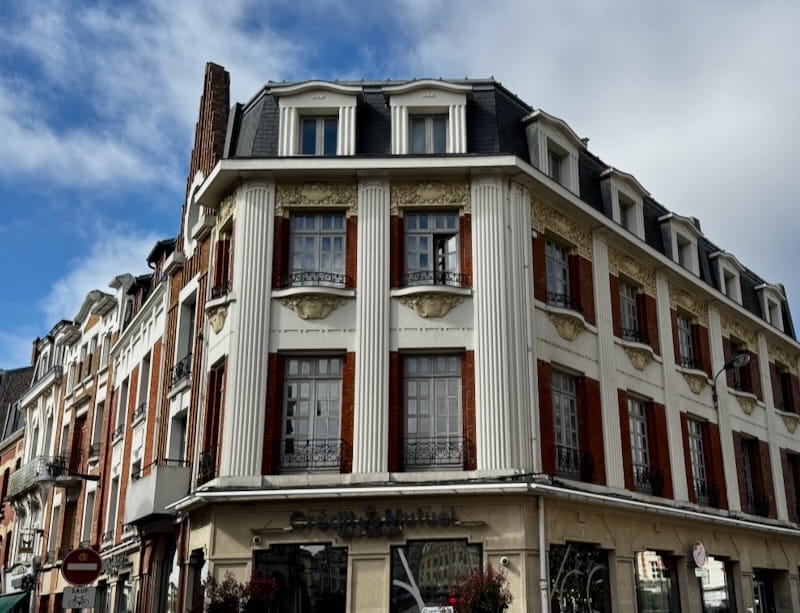 Examples of the Artwork Deco buildings you will discover scattered round Arras ©️OffbeatFrance
Arras has significantly extra Artwork Deco than guests notice, however that it is not promoted constantly outdoors the annual Printemps de l’Artwork Déco, not like the promotion given to Artwork Deco heritage in different cities of the Hauts-de-France area, like Saint-Quentin.
Saint-Vaast Abbey and the Musée des Beaux-Arts
The large former Saint-Vaast Abbey is one other essential cease, significantly if you wish to see how a lot of Arras’s monumental structure extends past the 2 nice squares.
Though it was based within the seventh century, the Benedictine abbey you see at this time dates largely from the 18th century, when the abbey was rebuilt in a grand classical fashion. It was badly broken throughout World Conflict I and reconstructed afterward, with Pierre Paquet overseeing the work.
Neither is this simply one other previous French abbey. At round 20,000 sq. meters (practically 5 acres), it’s described by the French Ministry of Tradition as the most important ensemble of 18th-century non secular structure in France.
At the moment the complicated homes the Musée des Beaux-Arts, whose collections vary from medieval sculpture to Flemish and Dutch portray, in addition to the previous monks’ refectory, cloister and different historic areas.
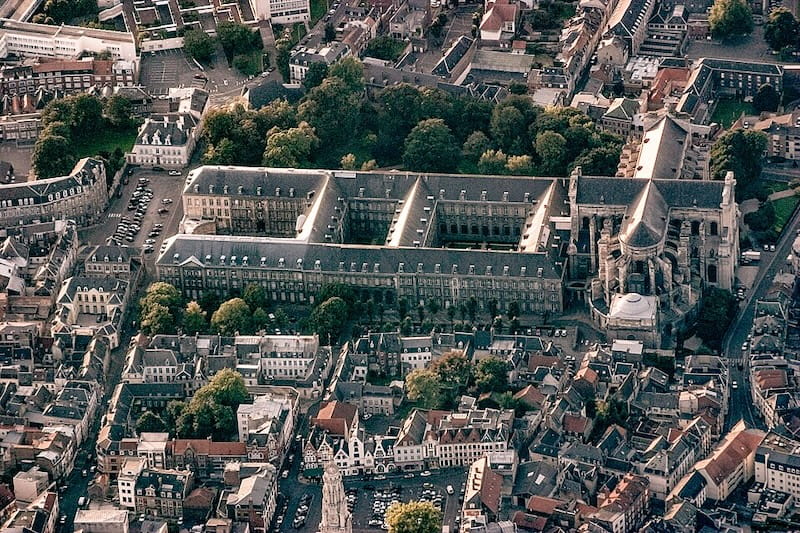 St Vaast Abbey as seen from above. Photograph posted by Pir6mon, CC BY-SA 1.0, through Wikimedia Commons
The Citadel: Arras’s navy facet
The Arras Citadel is a very completely different expertise from the squares and the historic and civic middle.
A nice 15-minute stroll from the grand squares will lead you from the world of retailers and markets to the Arras of Louis XIV.
Arras’s Citadel was constructed by Vauban, the king’s navy engineer, within the seventeenth century as a part of the defensive pré carré, the fortified belt defending France’s northern frontier.
Be sure to go to the Mur des Fusillés, the wall in opposition to which 218 Resistance members have been shot (the Place des Héros is known as of their honor). Additionally value visiting are the Place d’Armes, the Arsenal and the chapel.
At the moment the Citadel is a UNESCO World Heritage Web site and an uncommon place to discover as a result of the navy occupation ended solely in 2010: a lot of the unique complicated survives, however barracks and different navy buildings have been transformed to civilian makes use of. You possibly can even dwell there.
Go underground: the Boves and Wellington Quarry
Arras has one other metropolis beneath its streets. The Boves are a community of underground quarries and passages created by centuries of quarrying beneath town middle.
Many homes historically had a number of ranges of cellars. The primary two have been roughly 4 and eight meters beneath avenue stage and have been used to retailer items for the companies above. Under them, the Boves may prolong to round 12 meters (40 toes) beneath the streets.
As you stroll round Arras, search for small openings at sidewalk stage or round older buildings. These hatches lead down into the cellars and, in some locations, finally to the Boves. A few of the underground areas have since been transformed into eating places and bars, so you’ll be able to have one enterprise at avenue stage and one other working instantly beneath it.
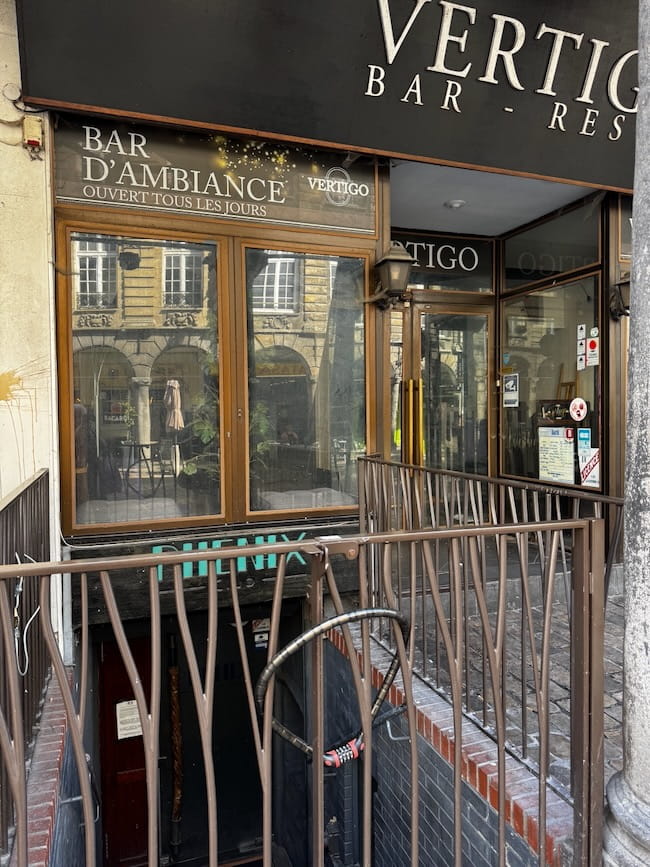 That is an instance of how basements are reused for companies as of late – a restaurant bar upstairs, and one other one on the stage beneath ©OffbeatFrance
Then there’s Wellington Quarry, which is the wartime counterpart to the older Boves: an underground area created when the prevailing quarries have been tailored for navy functions throughout World Conflict I.
New Zealand tunnellers related the quarries to create an underground barracks for as much as 24,000 troopers, who waited there earlier than rising near the German traces on the morning of 9 April 1917.
Collectively, the Boves and Wellington reveal what is usually referred to as Underground Arras, the hidden metropolis beneath Arras, the place centuries of quarrying left a community of areas that was repeatedly given new functions.
BEYOND ARRAS
Arras makes a helpful base for exploring the broader Artois area. Vimy Ridge and Notre-Dame-de-Lorette are pure additions for anybody following the World Conflict I story; Lens and the Louvre-Lens present a distinct time out. You probably have a automobile, you’ll be able to mix a number of of the world’s battlefield websites in a single outing.TIP
A couple of extra issues to search for
Strolling round city, you would possibly miss a couple of particulars as you progress round, particulars like…
The rat
It is town’s unlikely image.
The rat has been related to Arras for hundreds of years, partly as a result of town’s title as soon as appeared like à rats — “with rats” — in French. Rats have been already showing on town’s seals within the 14th century.
The story grew to become extra elaborate in the course of the siege of 1640, when French forces captured Arras from the Spanish. In keeping with native custom, the departing Spanish left a taunt: “When the French take Arras, the mice will eat the rats.” The French supposedly responded by erasing a single letter from the verb, altering the that means to “When the French quit Arras, the mice will eat the rats.” Arras stayed French, and the rat remained.
You will discover rats all through town’s imagery — together with on the Hôtel de Ville and even on the cathedral — and in native chocolate retailers, the place chocolatiers have turned town’s unlikely mascot right into a slightly extra appetizing memento.
Victor Hugo quarter
Another place value including to your strolling map is the Victor Hugo quarter, beside the previous Schramm navy district. This 18th-century neighborhood survived World Conflict I and is helpful for comparability: right here you’ll be able to really see what an Arras avenue seemed like earlier than the Twentieth-century rebuilding. There’s an octagonal sq. with an obelisk at its middle and a number of other restrained, classical buildings.
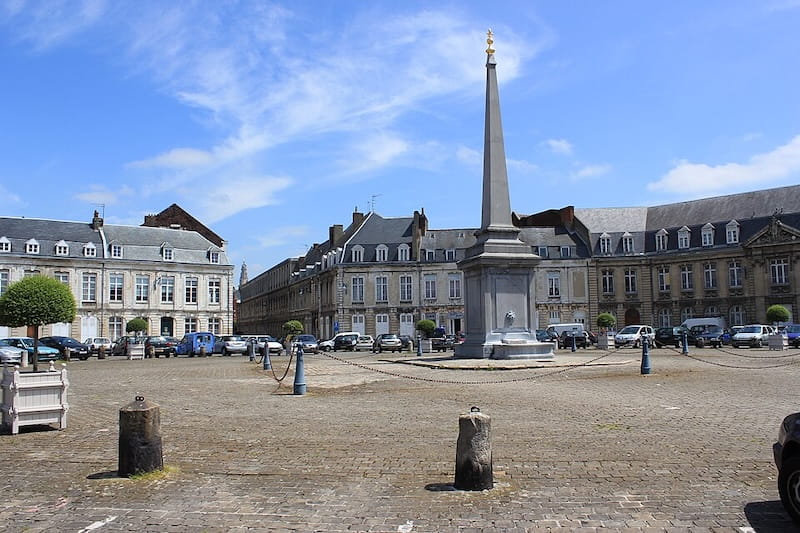 Victor Hugo Sq., one among Arras’s surviving 18th-century neighborhoods. Photograph by Devisme.alain, CC BY-SA 3.0, through Wikimedia Commons
The quarter can also be the place you will discover the Maison Robespierre, the 18th-century home the place Maximilien Robespierre lived together with his sister Charlotte and brother Augustin from 1787 till he left for Versailles in 1789.
Robespierre was born in Arras and labored right here as a lawyer earlier than turning into one of the crucial outstanding — and controversial — figures of the French Revolution. He grew to become a deputy to the Estates-Basic and later a number one member of the Committee of Public Security in the course of the Terror, the interval of revolutionary repression and mass executions in 1793–94.
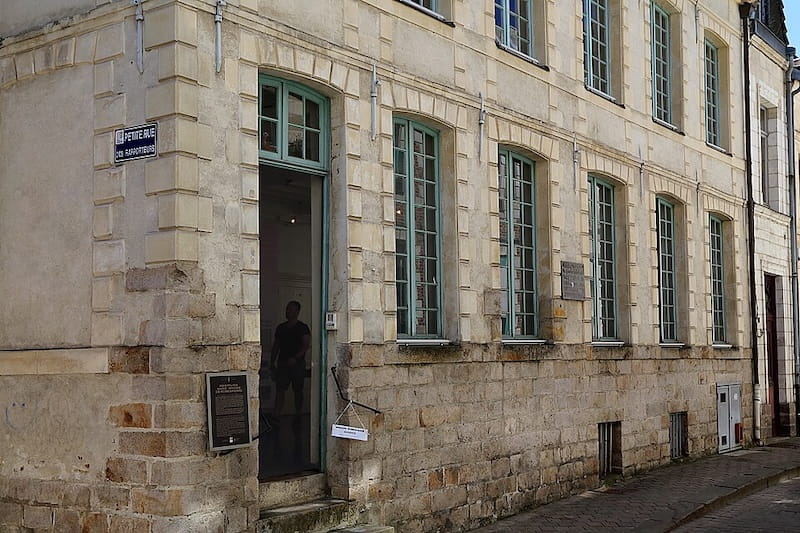 Maison Robespierre at 9 rue Maximilien-Robespierre. It is closed to the general public as of late however test with the vacationer workplace since there are sporadic ideas about reopening it. Photograph by Jamain, CC BY-SA 4.0, through Wikimedia Commons
The home has been restored, and its important room incorporates panels and paperwork about his youth in Arras and his profession as a lawyer. It hasn’t been open shortly so test with the vacationer workplace earlier than making a particular journey.
Reverse the home is the late-18th-century Neoclassical theater, one other reminder that this was an essential and cultured metropolis lengthy earlier than World Conflict I.
PRACTICAL INFORMATION
- Getting there: Arras, the Pas-de-Calais division of the Hauts-de-France area, is lower than an hour on the high-speed TGV line from Paris Gare du Nord. It is a ten-minute stroll downtown however it’s also possible to hop on the free shuttle, La Citadine.
- How lengthy to remain? You possibly can see the primary sights within the historic middle in a day, however a second day would additionally provide you with an opportunity to go to among the much less traditional venues, particularly these underground or these outdoors city, just like the Canadian memorial at Vimy.
- The place to remain: I stayed on the very welcoming Mercure throughout from the practice station (I arrived on the finish of an extended day) however you will additionally discover loads of lodging within the historic middle.
- The place I ate: Throughout the Place des Héros. There are many eating places with terraces proper on the sq. and you will get your fill of regional meals. I had a scrumptious lunch at Le Silex – positively a cease for meat-lovers (I had a yummy however extremely perfumed andouillette d’Arras in mustard sauce).
- Greatest for: vacationers thinking about navy historical past and structure, city renewal, UNESCO websites, WWII and the Résistance.
Earlier than you go…
As you have most likely seen by now, in Arras, issues usually are not at all times what they appear. The town middle appears as if it survived World Conflict I unscathed, but it was rebuilt, virtually from scratch, fastidiously and with loads of analysis.
The city corridor is a pastiche of types the place Gothic, Renaissance and Artwork Deco coexist, and the Citadel, as soon as navy, is now geared to the citizenry of Arras. Under town streets, Arras continues enjoying tips on us, with underground tunnels extending town removed from the floor.
So once you go to, look twice – as soon as for that first impression, and once more for what hides behind it.
If that type of historic sleight of hand appeals to you, you will love the Château de Pierrefonds, one other French landmark the place issues usually are not fairly what they appear.
Did you take pleasure in this text? I might love should you shared it!

