



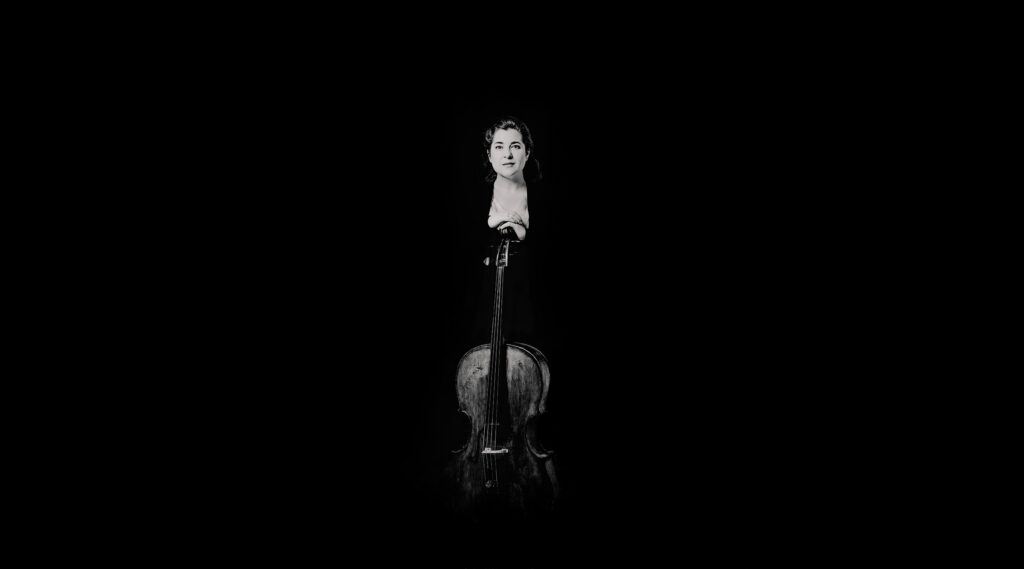
{Photograph} by Marco Borggreve. Courtesy of Alisa Weilerstein.
It didn’t eat, didn’t drink, didn’t sleep. It definitely didn’t cough and sneeze throughout performances. It made no calls for. Quiescently it languished in its carbon-fiber carrying case, helpless, hidden, and bare because the day it was born. Braced inside velvet and Velcro, suspended in a cradle like a child all unknowing, the cello was propelled up and down escalators and into elevators, automobiles, buses, bars, cafés, eating places, and restrooms, by way of crowds of individuals utterly oblivious to the factor of magnificence of their midst. It had its personal transit papers, its personal seat on the airplane, and was accompanied on each jaunt by 4 loosened bows and varied spare strings of intestine or metal. In a single facet pocket lay a tiny forest inexperienced canister of peg dope; within the different, a disc of rosin with a well-worn central groove nestled in a sq. of brown felt.
Shunted this manner and that, pushed, pulled, humped, bumped, and generally by accident thumped, the cello made no grievance. When allowed out of its case, it was cosseted, tuned, and gently dusted to take away rosin buildup. It was often dropped off at a famend luthier’s for checkups and fiddly repairs: crack discount, peg tightening, sharpening, and adjustment of the sound put up. And on planes and trains, within the automobile, in lodge rooms, dressing rooms, follow rooms, airport lounges, auditoriums, even the White Home, the cello was granted, every time doable, its most well-liked temperature and humidity.
However, suspended in its vaguely cello-shaped cocoon, it was at all times ready, poised for motion: a factor so taut, so energetic as to be roused by each contact, each jolt. It hummed to itself therapeutically within the gloom, unheard. Its endurance and docility have been however a pose, and arrival at any live performance corridor was liberation. The cello burst from its bonds spruced, glittering, and strong, and roamed energetically by way of concerti, sonatas, trios, and quartets. It might sort out something: Beethoven, Brahms, Schoenberg, Elgar, Dvořák. It wasn’t shy. It chimed in with any member of the orchestra, even the seemingly alien, like piccolos and timpani. Who wanted them, although, when the cello produced excessive notes and percussive results aplenty? It might noticed, rattle, whine, trill, and blast to beat the band. Generally in its pleasure it regressed to being a clean plank of wooden, a blighted log, walloped by the again of the bow.
The cello resonated most with different string devices. It had tried it on as soon as with a violin, however the bodily discrepancies proved insurmountable. One thing could possibly be improvised with a viola maybe, not a violin. Simply too dinky. However when it acquired close to one other cello, they’d neck. Their scrolls would knock collectively and their pegs turn into so entwined, they now not knew whose have been whose. Their hips started to sway and, as their strings brushed in opposition to each other, the celli emitted convulsive, staccato sounds from their depths. They stored their tailpins withdrawn, after all, all through.
But by midnight the cello was normally again inside its case, bestilled and staring both blankly forward or checking for chinks of sunshine that may point out a free buckle alongside the skin edge. Every time, by probability, the case was left open, and everybody abed, there was nothing to cease the cello leaping out the window and doing superhero issues. This cello might fly. It might actually go! It startled pigeons in air pockets, however when the wind strummed its strings, the pigeons purred again, mollified and curious. Many an evening was spent migrating with birds, butterflies, buffalo, eels, or salmon. Geese readily flew in a V formation behind the cello, trusting its sense of route over their very own. It might honk at them, if pressed.
The cello made itself helpful throughout these nocturnal escapades, releasing livestock from vans certain for slaughterhouses, chickens from manufacturing unit farms, fish from fish farms, claustrophobic beluga whales from aquarium tanks, and cataleptic rhinos and elephants from zoos. Winging it with species-appropriate lullabies to calm their fears, the cello caught its neck out to nudge deer, wild ponies, cougars, wolves, raccoons, prairie canines, and prairie hens towards safer routes round, over, or beneath highways, making use of wildlife bridges and tunnels. (In alternate, it’d steal a couple of selection hairs from the horses’ tails to make use of on a tattered bow sometime.) Practising pizzicato out at sea, relishing the sound of the ocean gusts whistling by way of its f-holes, it plucked flying fish from the jaws of sharks. However, born of wooden, the cello felt most at residence amongst timber. It sought out forests and jungles, the few that remained, the place it swung from vines like Tarzan and delivered meals to orphaned squirrel and fox kits.
Being man-made, the cello naturally felt some allegiance to the human race too. It attended the odd four-alarm fireplace right here, or carjacking there. It helped battered ladies escape abusive companions. It stood bravely between muggers and their marks, however prevented gun battles, as puncture wounds may need affected its tone. The cello nimbly interceded in rapes, too, turning its scroll right into a battering ram in opposition to assailants, or poking them with its spike—by no means sufficient to pierce the flesh, however ample to elicit a loud “OUCH!” from the surprised miscreant.
The spike may be inserted into the spokes of dashing e-bikes; or wielded as an ice axe when the cello, unfazed by the windchill issue, was scooping individuals out of glacial mudslides and avalanches and carrying the maimed strapped to its shoulders, because it slithered downhill on its curvy hip. It might helicopter victims to security too—it resembled a helicopter, in spite of everything, when seen from beneath. And water rescues got here straightforward. A cello is born to drift.
Wounds, it handled. Tears, it wiped. The blind, it led throughout the road—they by no means realized they’d been escorted by a cello. It took over the milk rounds of weary milkmen and introduced bathroom paper to individuals caught on the john with none. It accomplished equations that had baffled mathematicians for 3 thousand years. Utilizing a pressure discipline of sound waves to guard its delicate factors and planes from hurt, it positioned itself between colliding trains and elevated sinking ferries, saving many a life. It learnt to yank tornadoes away from built-up areas, and flew into the eyes of storms, placating them with music. One night time it even managed to shut down each airport, completely, to cut back international warming, coral-reef bleaching, and the inanities of mass tourism. It dragged nuclear waste deposits into outer house and dumped them into black holes, hoping for the perfect. It did the identical with navy drones, battle being anathema to a cello.
In spare moments, it passed over to Carnegie Corridor, the place it hung from the chandeliers and twirled on its spike onstage, jewelry-box ballerina type, earlier than zooming again up into the stratosphere. “It’s a hen, it’s a airplane!” individuals cried. No, only a cello on a moonlit flit.
By these experiences—scenic, sordid, earthly, and galactic—the cello got here to know of issues, all issues. It had a lot to ponder because it squeezed again into its case by daybreak, simply in time to renew its heavy live performance and recording schedule. Music offered all of the thrills of self-expression, but the cello more and more pined for the solo repertoire: it wanted no accompaniment and wished to be heard alone. When confronted by Kodály’s solo cello sonata, it plunged in headlong, on the threat of life, limb, and dignity. And there was Bach: enmeshed within the solo preludes, gigues, and sarabandes, the cello’s slight body magically expanded. There was singing, a lot singing, mellifluous tune. By Bach the cello advised of Amazonian valleys, redwoods, and Tyrolean mountains lined with flowers; of milk, fogs, thriller, the clatter of plates, lapis lazuli; of Michelangelo and Rabelais; of damselfish darting, of mosquitoes buzzing, crickets clicking, fireflies blinking. Cascades, cataclysms, purple moons, eclipses. The vibrato wails of girls in labor. Earth and unearthly stirrings. A snatch of folks music. Lightsome triplets, a tapping foot. Marching, too, and moping, and unpretty mud, grunge, growls, barks, roars. Dissonance, despair, want, bliss. Electrical zings and zaps. Lengthy, low scrapes from the frog of the bow alongside the C string, gruff and plaintive. Flickering lights on the A string. Riots of coloration on the G and D, turning into an actual riot, an rebellion. Whipped to a frenzy, the cello produced its personal harmonics, its personal innovations. They rose from the warmed wooden, whirled round inside its core, tripped gaily alongside the fingerboard, leapt off the bridge, and reached all corners of the room, the corridor, the rooftop, the backyard, or the seashore.
There’s quiet too in Bach, and tragedy. It’s a tragic scenario, in spite of everything, for a chunk of wooden to need to plead with us for decency, love, and justice. It was the cello’s purest act of superheroism, to play Bach’s solo suites to a civilization sunk into depravity. It railed in opposition to the apocalyptic urge in us, our propensity for unforgiveable acts. It raised as an alternative the concept of communion—with nature and one another—and the continuity of previous and future, connections now so lazily discounted. A modest, curvy, hole picket field, burnished and mellowed over time, caught along with historical glue, adorned with two elegant serpentine holes and 4 ornate pegs, and stirred by the friction of horsehair rubbed forwards and backwards throughout its stomach, poured disgrace upon us all.
The land and the forests are burning! Like grumpy gods, we have now set all of them alight and brought about nice floods. We’ve got poisoned the earth and now dwell merely to drive automobiles, make use of plastic, construct information facilities, share viruses, amass debt, commit genocide, and watch crime dramas. Potatoes bake within the floor earlier than they are often dug! We will’t even save sifaka lemurs, dugongs, numbats, and monarch butterflies—or our personal kids, riddled with surprising cancers. We’ve made the place unfit for cats, even bugs.
The excellent news is that, after we’ve all disappeared, exterminated by our nukes, lab leaks, and homicidal robots, there’ll nonetheless be tropical sunsets and peachy mackerel clouds, although nobody left to see them. Westerly winds will shift eastward, and so forth. Hurricanes will kind within the Atlantic, typhoons within the Pacific, rain on the plain in Spain. Handkerchief timber will drop their hankies each autumn; Kazak pear timber will blossom into popcorn each spring. Streams will gurgle, waterfalls hurtle, unseen. Huge pancake mushrooms will reign for per week or two, right here and there, earlier than collapsing. You hope so anyway. And hyacinth macaws? Hopefully, there should be hyacinth macaws, the final on earth to talk.
The moon will wax and wane and go gibbous, to the leisure and mystification of no person. The solar will rise and sink, unremarked and unloved—in spite of everything it did for us! Saturn will stay the perfect trying of our planets, Venus a disappointment. Mars, shouldering its two moons, will sit adrift, sulky, barren, and purple. And one comet will proceed to go our photo voltaic system each 160,000 years, common as clockwork.
Nobody can be left to mourn the burnt libraries, the blanched Mona Lisa, the tattered Giottos, Giorgiones, Rembrandts, and Bonnards, Calder’s mobiles, the Bayeux Tapestry, Burkina Faso textiles, Kuba cloths, Shaker quilts, Persian carpets, Roman mosaics, the pyramids, Machu Picchu, and Neolithic stone circles. Nor the discount to mud of each final copy of Jane Austen and Shakespeare, the obliteration for all eternity of King Lear, Miss Bates, Micawber, Emma Bovary, Leopold Bloom, Holden Caulfield, Casablanca, the Marx Brothers, Simone Signoret, Ella Fitzgerald, Billie Vacation, Verdi, Puccini, Scarlatti, Schubert, and Bach. It’s maybe hardest to imagine that Bach might ever disappear: he appears so important to the universe. However he’ll, he’ll—due to our catastrophic failure to insurgent.
We should make music! Stroll, swim, fuck, make jam, drink wine, and butter our bread with abandon. Learn books. Admire fuchsias. Sculpt, paint, sew, knit, cook dinner, write on paper. The human hand.
Lucy Ellmann’s most up-to-date novel is Geese, Newburyport. Her story “MT” appeared in our Summer time concern, no. 256.

