


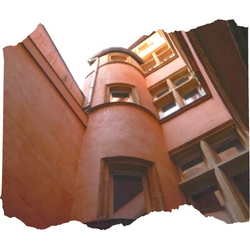
The northern French metropolis of Arras has streets, buildings, retailers and monuments like every other metropolis. But it surely additionally has an underground world you may go to, from medieval chalk quarries often called the Boves to the Wellington Tunnels, utilized by Allied troopers throughout World Conflict I.
Arras has a secret that’s simple to overlook.
Above floor, it’s a good-looking northern French metropolis recognized for its Flemish-style squares and monumental belfry. However beneath its streets is one other Arras: a community of underground tunnels and caves whose use has modified over the centuries.
Two very totally different elements of Arras’s underground historical past are open to guests. Beneath the historic heart, the Boves reveal how medieval quarrymen extracted the chalk used to construct town. Farther southeast, the Wellington Quarry exhibits how New Zealand tunnellers tailored different deserted chalk quarries to shelter 1000’s of Allied troopers throughout World Conflict I.
The 2 websites aren’t a part of the identical customer community, however they share a standard origin: the chalk beneath Arras.
KEEN ON UNDERGROUND ATTRACTIONS?
DEEP UNDER ARRAS
It might sound to the informal customer that there is a Swiss cheese under Arras – three ranges of it, in actual fact:
- the primary is 4 meters (13 ft) under floor and was used for storage; as of late, that stage has usually been remodeled right into a enterprise, comparable to a restaurant or a bar
- the second stage is 8 meters under floor – undoubtedly storage amenities
- after which you may have the Boves, at 12 meters (40 ft), the previous chalk quarries
Wellington Tunnels, from quarry to army metropolis
Arras was close to the Western Entrance and was the location of a lot preventing throughout World Conflict I. By 1916, as British troopers deliberate their main offensive round Arras, they wanted to convey 1000’s of males near the German traces with out the Germans discovering out.
The reply could be discovered beneath their ft: the chalk quarries within the southeastern a part of Arras had been excavated for hundreds of years however have been now deserted. The British realized that these tunnels could possibly be related and changed into an enormous underground army advanced.
They introduced in expert New Zealand tunnellers for the duty, about 500 of whom – together with 43 Māori pioneers – labored on the mission. Many had been miners or railway staff and have been notably suited to the job.
Arras was already underneath bombardment once they arrived and commenced turning the outdated Arras tunnels right into a hid army base which might come to be often called the Wellington Quarries.
Not solely was the operation enormous, however it was dealt with with lightning velocity.
Over roughly six months, the tunnellers excavated and related about 20 kilometers (12 miles) of galleries, all by hand. The work was carried out with picks and different handheld instruments, working across the clock in eight-hour shifts, in groups of three.
At its peak, the New Zealanders have been excavating roughly 80 meters (260 ft) of tunnel a day.
The present quarries got names to assist the lads navigate the underground maze: Wellington, Auckland, Nelson and Blenheim have been all names from New Zealand, a reminder of the tunnellers’ houses.
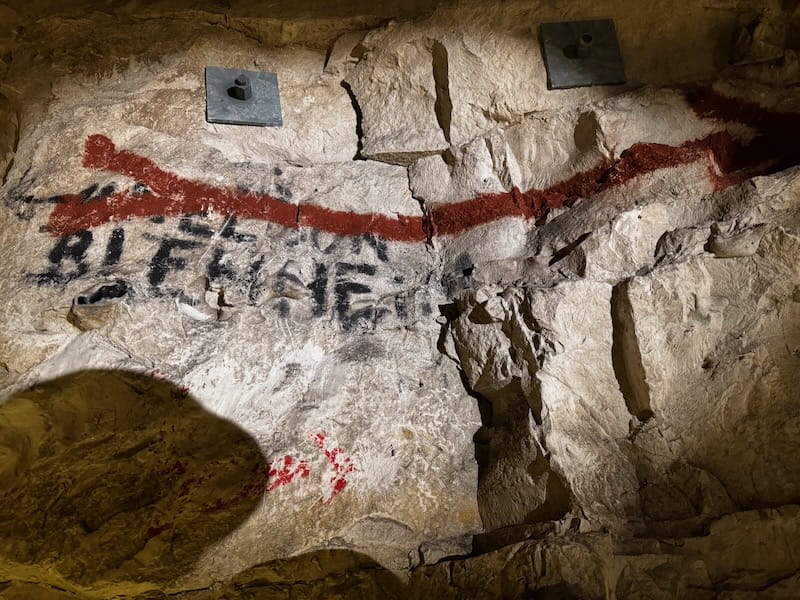 The New Zealanders referred to as their underground quarters acquainted names to remind them of house – like Blenheim, a city on New Zealand’s South Island ©OffbeatFrance
A metropolis inside a metropolis
This wasn’t your fundamental hiding place for troopers, it was an underground advanced designed for a whole military to stay – a functioning army headquarters with electrical energy, sanitation and communications. There have been sleeping areas, showers, workplaces, storage areas and locations to eat. There was additionally a hospital with 700 beds, and a nicely that supplied water. Railway tracks helped transfer provides by way of the underground tunnels.
The numbers have been staggering: this may be house to about 24,000 troopers, who would spend roughly per week underground earlier than the assault, sleeping and consuming, with the streets of Arras some 20 meters (65 ft) above their heads.
However in contrast to the medieval quarrymen who first dug down under Arras, the lads who constructed this underground world have been working towards deadline of life or dying.
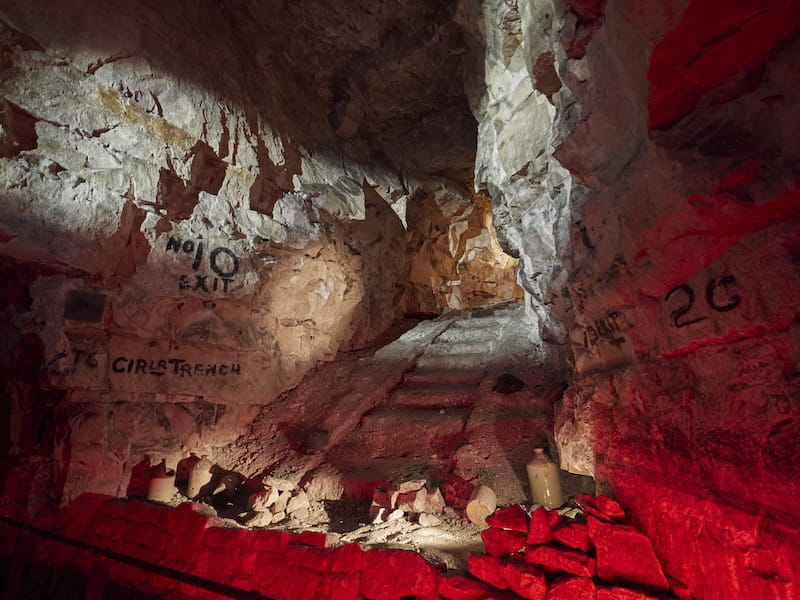 Memorial of the Battle of Arras within the Welllington Quarry ©Hauts-de-France tourisme Frédérik Astier
The hazard underground
Whereas the Wellington caves have been deep, the British couldn’t assume they have been protected.
The Germans knew there was digging round Arras, and the British had to verify their very own tunnellers might detect an approaching enemy.
They used listening gadgets referred to as geophones, which might choose up sounds of digging by way of the chalk, serving to them work out whether or not Germans have been excavating close by.
The purpose wasn’t to battle an underground battle however to shelter and transfer troops secretly: as soon as the Battle of Arras started, 1000’s of troopers would emerge from the tunnels and head in the direction of the battlefield with out having needed to assemble in full view of the Germans.
Twenty-four thousand males ready underground
For a couple of week earlier than the assault, 24,000 troopers lived underground. The galleries have been crowded, and each obtainable area had for use. As the lads slept and ate within the chalk tunnels, their provides and messages moved by way of the damp and crowded community.
The information’s explanations instructed us how the lads strived to keep up some semblance of peculiar life: even underground, they nonetheless anticipated their tea and snacks.
The lads additionally left bodily proof of their presence.
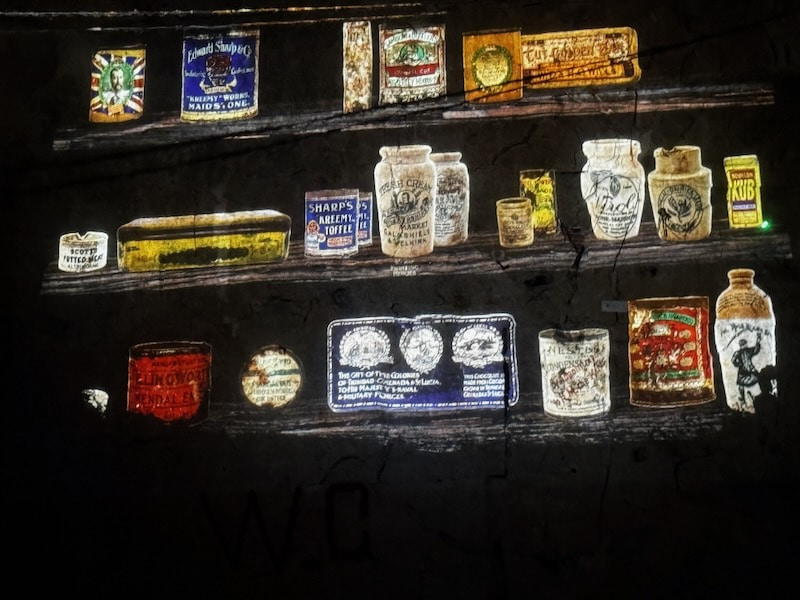 Reminders of the forms of meals the lads under have been consuming ©OffbeatFrance
As you stroll round, you will see names and drawings on the chalk partitions. Some are easy graffiti; others join the tunnels to specific males and items. The New Zealand presence is very seen, making the underground areas really feel much less like an nameless army set up and extra like a spot occupied by specific individuals for a really brief, very intense interval.
Among the many names recorded within the tunnels are Toi Karini, who was Māori, and two Cook dinner Islanders from the identical battalion, Angene Angene and Solomon Isaacs.
The ultimate climb to the floor
At 5:30 on the morning of 9 April 1917, the ready ended.
The troopers emerged from the Arras underground tunnels and superior in the direction of the German positions. The community had carried out its job: it had hidden the motion and focus of an enormous Allied drive till the final potential second.
Whereas the Battle of Arras started with a serious Allied advance, the offensive would finally stall at monumental human price.
THE BATTLE OF ARRAS
The Battle of Arras started on 9 April 1917, when British and Canadian forces, with Australian and South African items additionally participating, launched a serious offensive towards German positions across the metropolis. The assault was preceded by weeks of artillery preparation and by the key building of the underground community beneath Arras, which allowed 1000’s of troops to maneuver into place with out being seen.
The opening assault made vital good points, however the offensive quickly stalled. Combating continued till 16 Could, with roughly 285,000 casualties on the Allied and German sides mixed. The battle achieved some vital tactical successes however failed to provide the decisive breakthrough the Allies had hoped for.
For the lads who had spent the earlier week underground, the transition will need to have been extraordinary. That they had gone to sleep and eaten beneath town, surrounded by chalk partitions and synthetic gentle. Then they emerged right into a battle zone.
That transition remains to be a part of the Wellington expertise at this time. Guests go down into the quarry and observe the underground galleries earlier than finally retracing the troopers’ route towards the floor and the violence ready above it.
It began with chalk
The Wellington Quarry wasn’t the one place the place Arras’s inhabitants had dug beneath the streets. For hundreds of years, quarrymen had been extracting chalk in numerous elements of town, abandoning underground areas that may finally discover new makes use of.
The Boves beneath the historic heart are one other instance, though their historical past took a special flip.
The smooth chalk discovered underground was simple to excavate, and other people had been quarrying it since a minimum of the ninth century for stone to construct spiritual buildings and town’s first defensive partitions. As Arras expanded, extra quarries have been opened, making a rising community of underground galleries and chambers.
Then town modified, and so did the aim of the area under it.
Within the historic heart, quarrying step by step gave method to different makes use of. By the twelfth century, as Arras grew to become an vital industrial heart, different sources of constructing stone have been discovered and most of the outdated quarries have been deserted. The areas did not simply disappear – retailers started utilizing them as storage cellars, making the most of the cool, steady circumstances underground. The temperature within the chalk quarries, referred to as Boves, stays round 11°C (52℉) year-round.
WHY ARE THEY CALLED BOVES?
Bove is an outdated regional phrase for an underground cavity, cave or passage. It’s regarded as related with the outdated French bover, that means to dig or excavate. The phrase was utilized in northern France and notably in Artois for the underground areas created by quarrying.
The Boves might have began as quarries, however as soon as chalk was not important, these underground areas managed to search out one other objective.
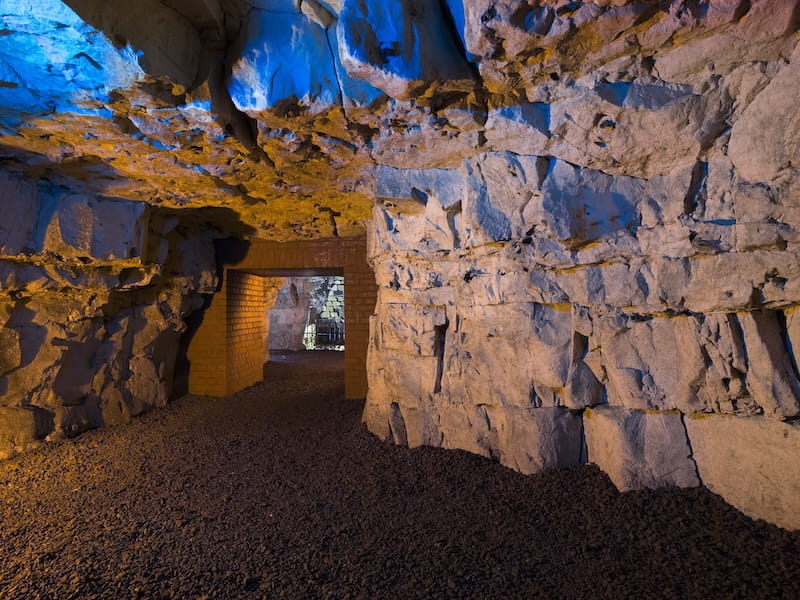
Taking place for a go to, you will nonetheless discover proof of how the realm’s use advanced over time – extraction shafts, area for later storage of barrels, and far later, stays {of electrical} installations from World Conflict II.
The go to itself is intriguing, with passage after passage of stone main additional in, or again to the place we began from. I did not really feel it was potential to get misplaced however there have been loads of nooks and crannies to discover.
 ©Hauts-de-France tourisme / Frederik Astier
Two quarries, two very totally different histories
The Boves and Wellington Quarry are separate underground websites, created by quarrying in numerous elements of Arras.
Their histories diverged as soon as the stone was not wanted. Beneath the historic heart, the outdated quarries grew to become storage cellars for retailers. Farther southeast, different deserted quarries have been related and tailored by New Zealand tunnellers right into a army advanced for 1000’s of troopers.
Visiting each offers you two very totally different views of the identical metropolis’s previous: one formed by medieval commerce, the opposite by the calls for of contemporary warfare.
PRACTICAL INFORMATION
- The Boves: Visits begin from the basement of the Vacationer Workplace within the City Corridor, Place des Héros and final 45 minutes. The location is closed for a lot of January so examine with the Vacationer Workplace. There are stairs and uneven surfaces. Purchase your tickets right here.
- Wellington Quarry: Much less central than the Boves, about 25min stroll from the historic heart. There are buses as nicely – ask on the vacationer workplace as a result of there have been transportation enhancements afoot once I was visiting. Purchase your tickets right here.
- NOTE: Reserve in case you can as a result of the variety of individuals on every tour is restricted.
- Language: Each websites have to be visited on a guided tour, so ask about language. Some excursions are totally bilingual or in English or French.
- Apparel: You may be supplied with onerous hats for each visits. Put on heat clothes as a result of it’s all the time cool and humid. Footwear with a little bit of grip may help if the bottom will get slippery with the humidity.
Earlier than you go…
Visiting the Boves and the Wellington tunnels are among the many important sights of Arras however when you have time, add the Citadel of Arras to your itinerary. It offers you the above-ground facet of Arras’s army historical past and, just like the underground websites, exhibits how Arras has repeatedly put outdated locations to new makes use of.
Did you take pleasure in this text? I would love in case you shared it!

