


What do historic spiritual objects, Napoleon’s armies, paper dolls and Warhammer characters have in frequent? They’re all a part of the surprisingly different world of collectible figurines displayed in Compiègne’s Musée de la Figurine.
I went to the Musée de la Figurine in Compiègne anticipating troopers, as you’d to a museum that boasts practically 155,000 collectible figurines.
And sure, there have been troopers and several other spectacular army scenes, together with an infinite reconstruction of Waterloo. In case you like army historical past, you’ll have lots to have a look at.
However what if army historical past makes your eyelids droop?
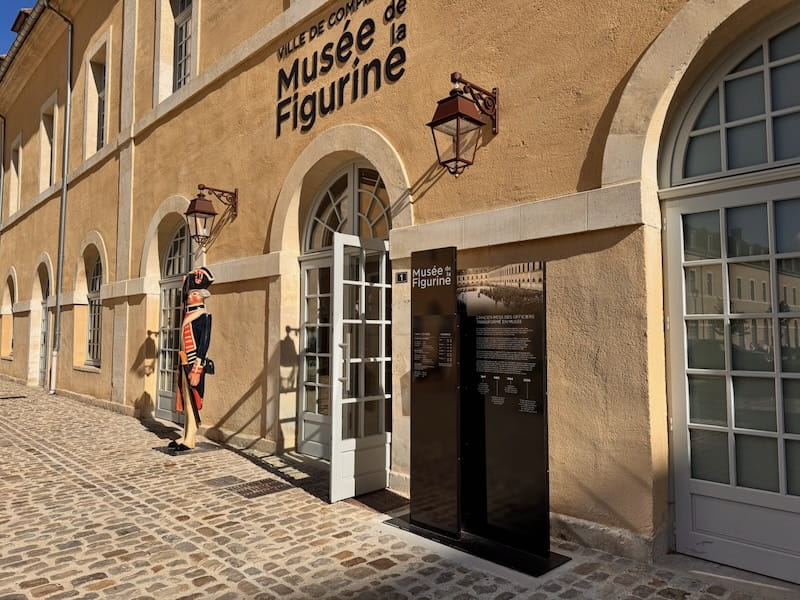 The Musée de la Figurine opened in Might 2026 in Compiègne’s former École d’état-major, a brief stroll from the historic heart ©OffbeatFrance
Because it seems, troopers are solely a part of the figurine story. In keeping with the specialists at this distinctive museum within the city of Compiègne, within the Oise division, a figurine could be a spiritual object, a toy, a chess piece, a murals and even an promoting gimmick.
You may add to the listing such gadgets as Provençal santons, the tiny laborious bean hidden inside a galette des rois, or the fantasy creatures utilized in fashionable tabletop video games.
A figurine’s solely requirement is dimension – it should measure lower than 25 centimeters, or 10 inches in peak.
With this definition, you will understand you’ve got most likely been surrounded by collectible figurines all of your life.
NOTE: Pages on this website could comprise affiliate hyperlinks, which assist this website. See full Privateness Coverage right here.
A museum that’s about rather more than toy troopers
What on earth has compelled individuals to make these miniature objects for hundreds of years?
Relying on the century, the reply modifications.
Among the many oldest objects within the museum is a fraction of a prehistoric feminine figurine discovered at close by Thourotte. Such figures have been as soon as routinely described as fertility symbols, however archaeologists now admit that we do not actually know what they represented.
In historic Egypt, small figures known as ushabtis have been positioned in tombs to work on behalf of the deceased within the afterlife. Within the historic Mediterranean world, individuals left collectible figurines in sanctuaries as spiritual choices.
Medieval pilgrims even purchased small lead or tin badges depicting spiritual figures. These cheap souvenirs have been additionally objects of devotion, believed to supply safety throughout their journeys. The custom continued for hundreds of years.
Even chess items have a narrative. The rook, which seems to be like a citadel tower in European chess units, developed from a bit related to a chariot within the sport’s earlier Asian types. As chess traveled westward, its items modified to replicate the cultures that adopted it.
Then there have been the paper figures that kids might lower out and shade. Some represented well-known girls, together with the empresses Joséphine and Eugénie whereas others, in fact, represented troopers. Earlier than expertise took over, kids might create their very own miniature worlds with cardboard and a little bit of creativeness.
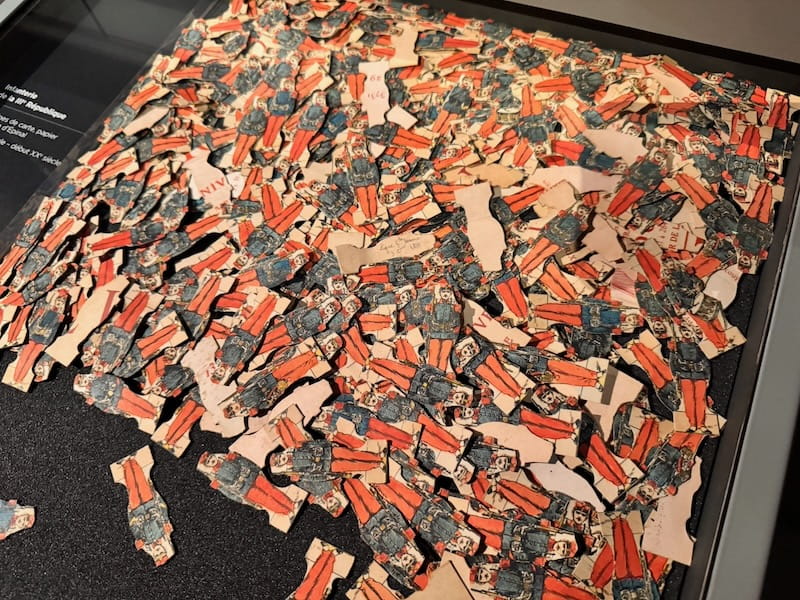 Earlier than plastic toy troopers, there have been paper and cardboard ones. These brightly coloured troopers have been printed and lower out, a far cheaper different to steel collectible figurines ©OffbeatFrance
So go searching you now, in case you’re at dwelling: can you notice a figurine?
The individuals behind the tiny figures
The Museum of Collectible figurines additionally offers loads of consideration to the figurinistes, the artists and craftspeople who created these miniature worlds.
Take Vladimir Douchkine, a Ukrainian-born artist who grew to become identified for portray flat tin figures. Utilizing tiny touches of shade, he created the phantasm of depth on surfaces barely thicker than a hair. Have a look at his horses and flags and you might nearly consider they have been three-dimensional.
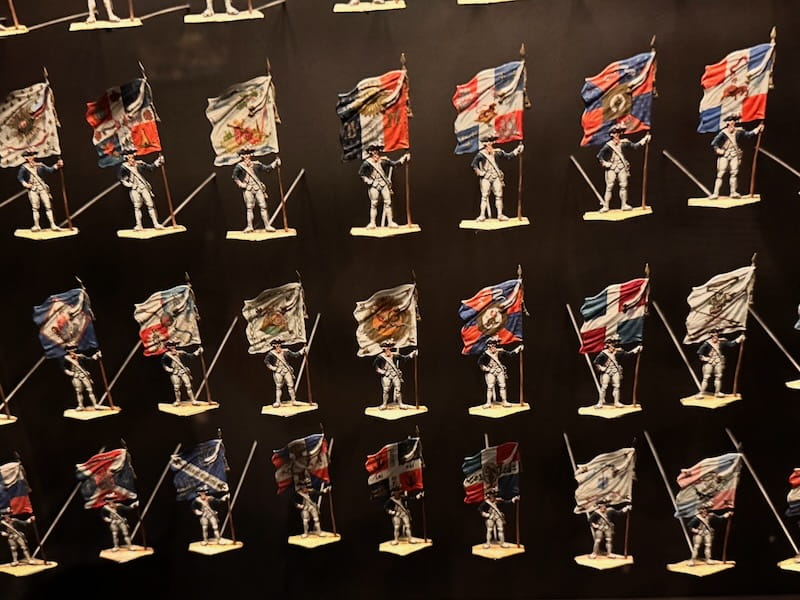 Ukrainian-born Vladimir Douchkine (1900–1989) arrived in Paris penniless in 1926 and went on to develop into a grasp of portray flat tin collectible figurines. Impressed by the Impressionists, he used tiny brushstrokes and touches of shade to create exceptional illusions of depth and motion ©OffbeatFrance
The museum additionally showcases the supplies and strategies used to make collectible figurines. Some artists work with terribly advantageous brushes, portray particulars so small that you just want a magnifying glass to understand them.
And never all the pieces requires costly supplies. One artist used peculiar vermicelli to create icicles on a miniature winter panorama.
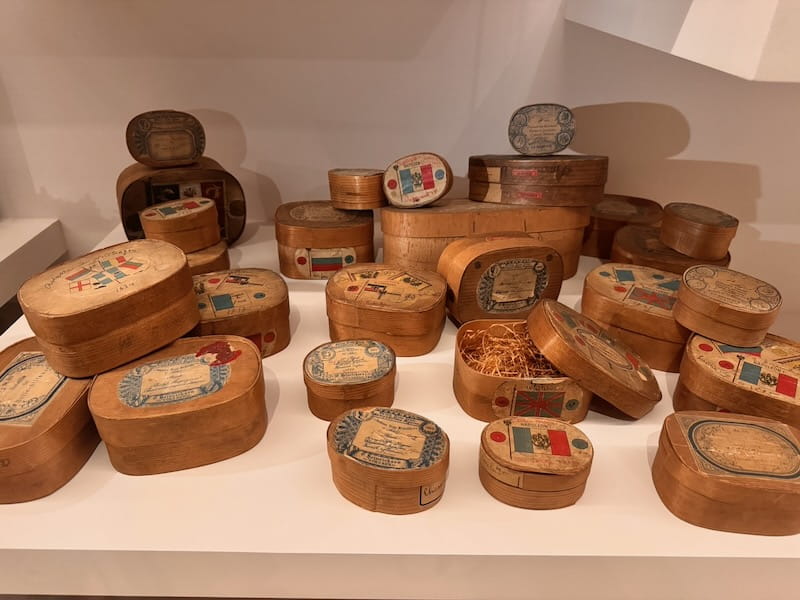 From the 18th century onward, collectible figurines have been bought in packing containers that doubled as miniature phases. These usually recreated historic occasions and on a regular basis life, and typically even imaginary worlds ©OffbeatFrance
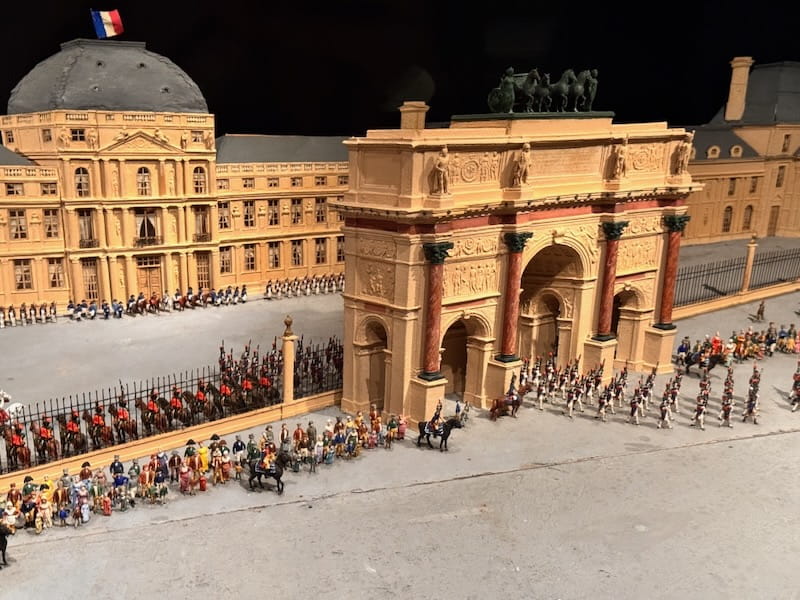 Paris because it as soon as seemed: a miniature army parade passes beneath the Arc de Triomphe du Carrousel, with the Tuileries Palace behind it. The arch nonetheless stands beside the Louvre, however the palace was burned down in the course of the Paris Commune in 1871 and by no means rebuilt ©OffbeatFrance
Waterloo, however not as you’ve got seen it earlier than
Discuss collectible figurines and, ultimately, you will circle again to army scenes – not simply toy troopers, however full-blown and traditionally correct battle scenes, as is the case with the museum’s Waterloo diorama.
In case you recall, Waterloo, fought in present-day Belgium in 1815, was the battle by which Napoleon suffered his ultimate defeat (towards the British and the Prussians), bringing his transient return to energy to an finish.
The scene’s creator, Charles Laurent, spent practically 20 years constructing a reproduction of the battle. Protecting some 21 sq. meters (226 sq ft), it comprises round 12,000 figures, with every of these collectible figurines representing ten males.
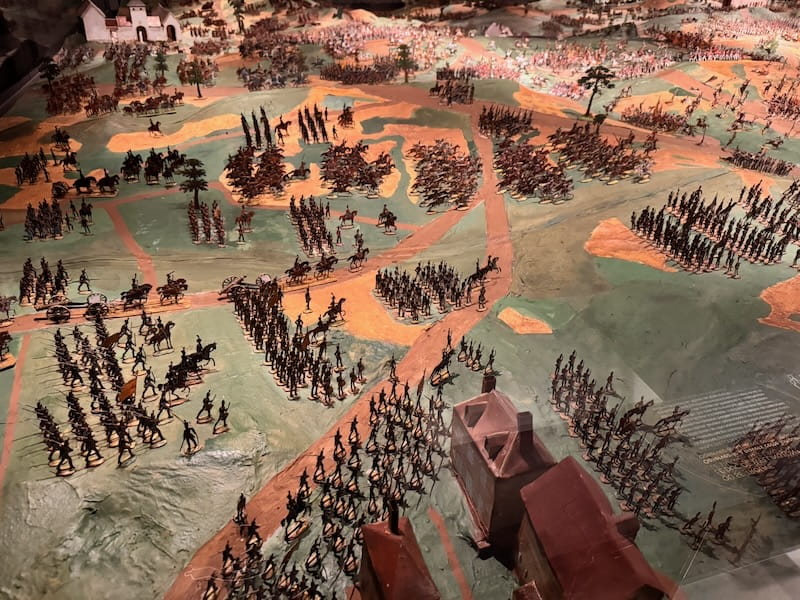 The Battle of Waterloo, 18 June 1815: Napoleon’s ultimate defeat, reconstructed in miniature. The scene captures the battlefield at exactly 4:30 p.m., with terrain so rigorously reproduced that Laurent personally surveyed the location in Belgium ©OffbeatFrance
Laurent researched the battlefield and even traveled to Waterloo. When he wanted to breed its uneven terrain, he soaked and formed items of cardboard earlier than portray them, a bit like papier maché.
The result’s a rare piece of expertise. You may stroll across the battlefield and study the formations intimately. Extra to the purpose, you possibly can recognize the huge quantity of labor concerned in creating hundreds of individually painted figures.
And there is a problem for guests: can you discover the Duke of Wellington amongst these 12,000 tiny figures? A telescope helps you search the battlefield.
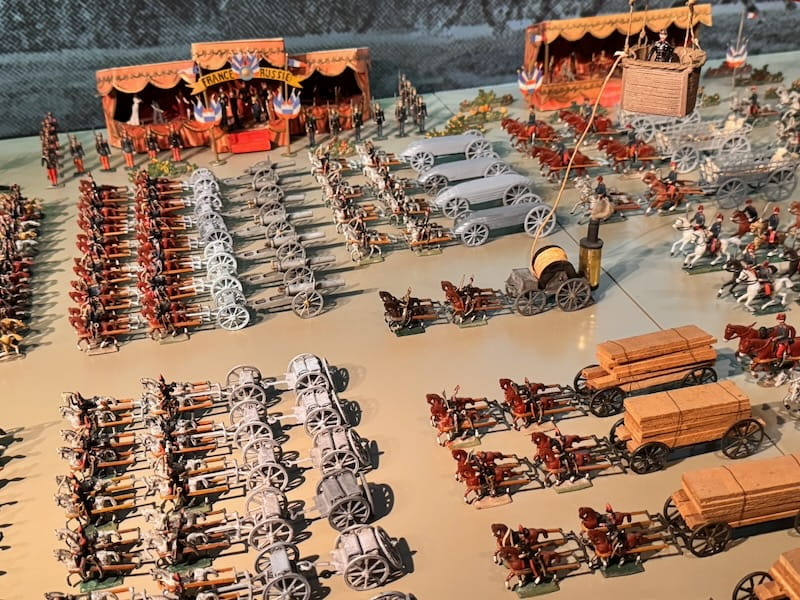 In 1901, Tsar Nicholas II and Tsarina Alexandra of Russia visited France to have a good time the Franco-Russian alliance. Their go to included a spectacular army assessment at Bétheny, close to Reims, attended by practically 100,000 spectators. This miniature scene recreates the event ©OffbeatFrance
From childhood toys to collector treasures
In case you grew up gathering little figures from cereal packing containers or different merchandise, one other part of the museum could convey again recollections.
Producers found way back {that a} small collectible might encourage clients to purchase their merchandise (do not we all know it!). Espresso corporations, breakfast makers, sweet producers and even detergent manufacturers supplied collectible figurines.
This being France, the museum consists of such fashionable European-born characters as Tintin, Astérix and the Smurfs, but additionally the extra worldwide Harry Potter and Star Wars, together with promoting collectibles and acquainted childhood toys.
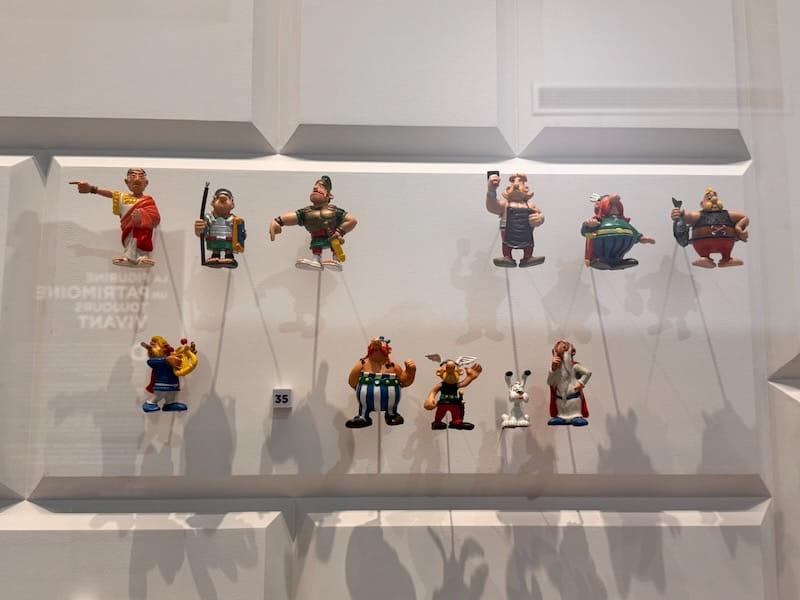 Astérix and his associates have joined the miniature world, too, an instance of how collectible figurines have moved into fashionable tradition ©OffbeatFrance
Telephones could have changed quite a lot of leisure types, however collectible figurines aren’t going wherever.
Nowadays, fashionable fanatics nonetheless paint their very own characters and construct imaginary landscapes. Some even compete in worldwide Warhammer tournaments (Warhammer is a tabletop technique sport by which gamers command miniature armies in fantasy or science-fiction battles). The museum has a show dedicated to this elaborate sport, of which I used to be blissfully unaware earlier than visiting the museum.
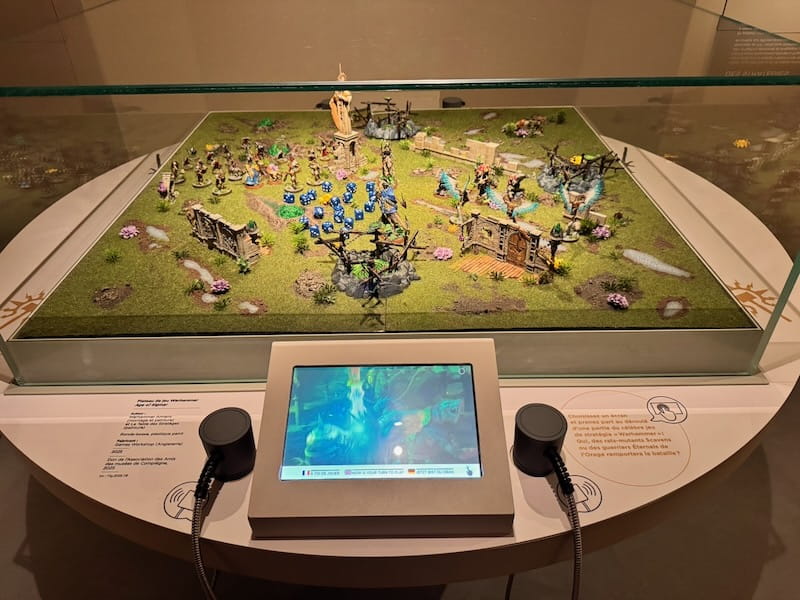 Warhammer brings collectible figurines into the trendy age. Gamers acquire and paint miniature armies, then use them in tabletop battles set in elaborate fantasy and science-fiction worlds. Portray the figures is an artwork in itself, with fanatics collaborating in worldwide competitions ©OffbeatFrance
WHY DO WE LOVE MINIATURE WORLDS?
From Gulliver’s Travels to Honey, I Shrunk the Children, we have been fascinated by the concept of adjusting dimension. What would the world seem like if we have been tiny? Or enormous?
Miniatures allow us to play with that concept. We will study a complete battlefield at a look with out resorting to a drone, or we will peer right into a room smaller than a shoebox, full of individuals main lives identical to ours. Locations just like the Museum of Miniatures in Lyon could have us spending hours gazing at mini-worlds that someway really feel vastly extra attention-grabbing than bigger ones.
Then there’s our urge to gather. Folks acquire all the pieces from stamps and cash to dolls and toy troopers. In keeping with psychologists, gathering can fulfill a number of wants, comparable to organizing our world, preserving recollections, expressing our private pursuits, or just having fun with the problem of discovering the following lacking piece (as a former stamp collector, I get that).
Why go to the Musée de la Figurine?
The museum’s assortment started with donations from non-public collectors, together with picket troopers made within the late 18th century. Over time, it grew into considered one of Europe’s main collections of collectible figurines.
The museum is quite enjoyable. Sure, it has hundreds of objects in show circumstances, nevertheless it additionally makes use of different strategies – historic scenes, audiovisual shows, interactive installations and demonstrations of expertise to elucidate the relationships between individuals and their collectible figurines.
I got here anticipating toy troopers. I left having discovered about all the pieces from Egyptian funerary customs to Warhammer (however no, I nonetheless could not let you know learn how to play the sport).
PRACTICAL INFORMATION
- Getting there: The museum is at 1 place d’Orléans in Compiègne, a brief stroll from the historic heart. Yow will discover extra info on their web site (website in French).
- How lengthy do I want? The go to may be completed in an hour, two if you would like to linger and reap the benefits of the interactive shows.
- Greatest for: curious vacationers, historical past buffs, collectors, and followers of miniature worlds.
Earlier than you go…
I admit I’ve a ardour for uncommon museums, so this one matches completely.
However do not rush away from Compiègne as soon as you’ve got seen the collectible figurines. This city has been dwelling to kings and emperors, witnessed a few of France’s most essential historic occasions, and has loads of surprises of its personal.
Whereas in Compiègne, do go to the Château de Compiègne, and if in any respect doable, the historic Armistice Wagon situated outdoors city.
Did you take pleasure in this text? I might love in case you shared it!

