


Bonjour mes amis!
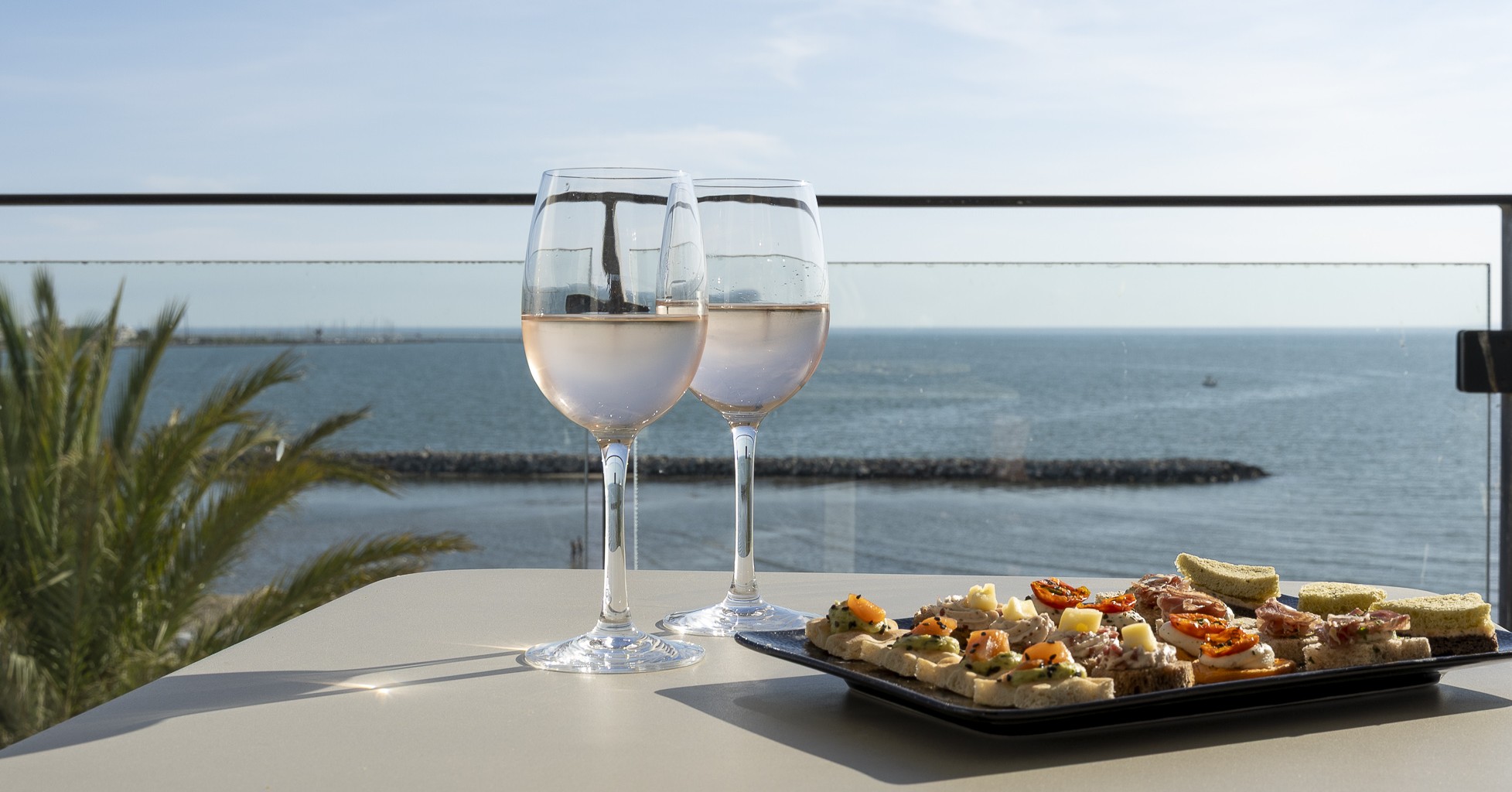
In our nook of France, in summer time, a relaxing bottle of rosé on the desk is as strange as bread. But our American vacationers all the time ask us the identical factor. Why does it style so significantly better right here?
A part of the reply is the setting, in fact. Nevertheless, a lot of it’s actual. It comes all the way down to solar, wind, stone and a couple of,600 years of follow. In Provence, rosé will not be a facet mission. It’s the most important occasion.
In our publish on the wines of the Camargue, we explored the pale vin gris of our dwelling base. Right now we journey slightly farther east and north to fulfill the names each rosé lover ought to know: Côtes de Provence, Coteaux d’Aix-en-Provence, Coteaux Varois, and Bandol, together with smaller appellations like Cassis, Palette, and Les Baux-de-Provence. We additionally make room for just a few neighbors, Tavel, Luberon and Ventoux. They’re formally classed with the Rhône Valley relatively than Provence, however their rosés belong in any dialog concerning the pink wines of the South.
How Is Rosé Made?
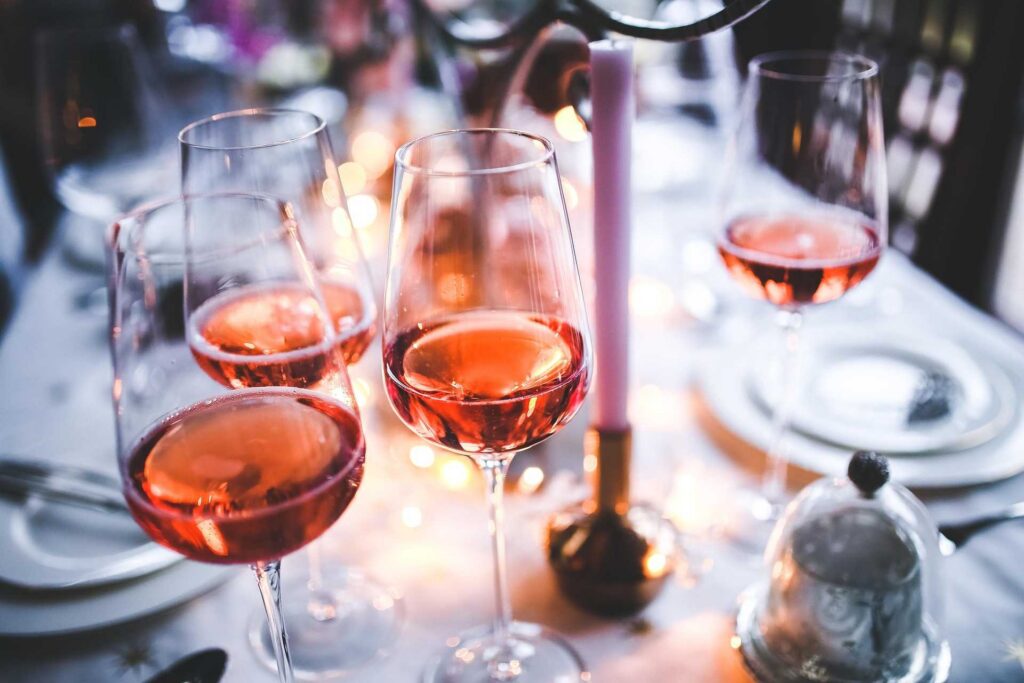
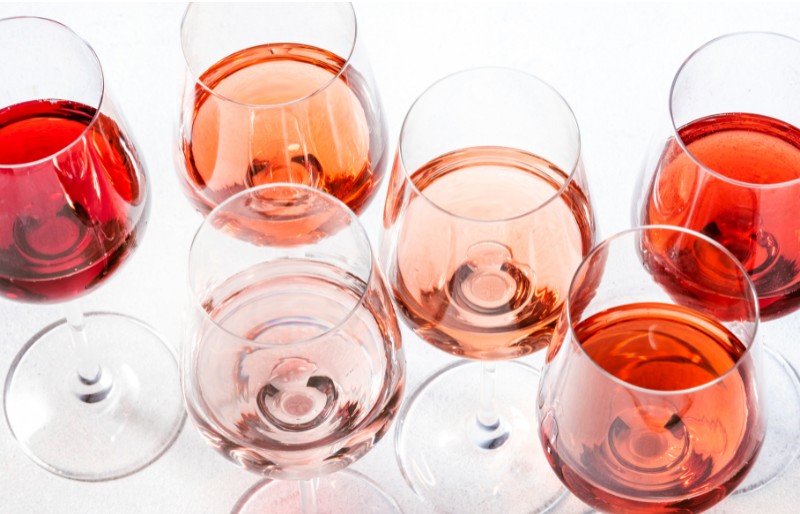
Here’s a little secret: the juice of virtually each crimson grape is evident. All the colour in a wine comes from the skins. So the shade of a rosé is dependent upon two issues. First, which grapes the winemaker makes use of. Second, how lengthy the juice stays involved with the skins.
Winemakers have three most important methods to make it:
Direct urgent: The grapes go into the press as quickly as they attain the vineyard. The juice picks up only a blush of colour. That is the Provence technique, and it provides the palest wines.
Quick maceration: The crushed grapes relaxation of their juice for just a few hours, generally a day or two, earlier than urgent. The longer they wait, the deeper the pink. Tavel is the basic instance.
Saignée (bleeding): Whereas making a crimson wine, the winemaker attracts off a few of the pink juice early. That juice is then fermented by itself as rosé.
Which Grapes Make Provence Rosé?
Past timing, the grape issues simply as a lot. Skinny-skinned varieties like Grenache and Cinsault give a fragile, pale pink. Thicker-skinned grapes like Syrah and Mourvèdre give extra colour and construction, even with the identical timing.
The truth is, rosé will be constructed from nearly any crimson grape. Within the Loire Valley, winemakers use Cabernet Franc and Pinot Noir. Spain makes its rosado from Tempranillo and Garnacha, and California is known for White Zinfandel. Provence has merely made rosé its specialty. Right here, the basic mix begins with Grenache and Cinsault. Syrah and Mourvèdre add colour and construction, the native Tibouren brings a savory be aware, and a splash of white Rolle (Vermentino) provides freshness.
One factor rosé will not be, at the least in Europe: a mixture of crimson and white wine. The principles forbid mixing completed crimson and white wines to make nonetheless rosé. Rosé Champagne is the well-known exception.
Provence Rosé at a Look
| Title | Provence Appellation Wine | The place | Shade | Fundamental grape | Model | Attempt it with |
|---|---|---|---|---|---|---|
| Côtes de Provence | Sure | The Var, from Aix-en-Provence towards the Riviera | Pale pink to peach | Grenache and Cinsault | Dry, recent and fruity | Aperitifs, salads, grilled fish |
| Coteaux d’Aix-en-Provence | Sure | Western Provence, from the Durance River to the ocean | Salmon-pink to peach | Grenache and Cinsault | Brilliant and zesty, with citrus notes | Aperitifs, goat cheese, grilled greens |
| Coteaux Varois en Provence | Sure | Hills round Brignoles, within the coronary heart of the Var | Very pale pink to salmon | Grenache and Cinsault | Contemporary and chic, from the best vineyards | Salads, seafood, roast rooster |
| Bandol | Sure | Terraced hills above the port of Bandol | Pale salmon | Mourvèdre | Fuller and spicy; can age | Bouillabaisse, aïoli |
| Luberon and Ventoux | No (Rhône Valley) | Vaucluse hills, from the Luberon to Mont Ventoux | Pale to vivid pink | Grenache and Syrah | Contemporary and fruity, from cool hillsides | Picnics, market lunches, tapenade |
| Tavel | No (Rhône Valley) | The Gard, simply throughout the Rhône from Avignon | Deep pink to mild ruby | Grenache and Cinsault | Full and structured, with spice | Grilled lamb, sausages, spicy meals |
Need to attempt the native wines & meals specialties?
Be part of us on a South of France small-group tour.
Why Provence Rosé Tastes Completely different Right here
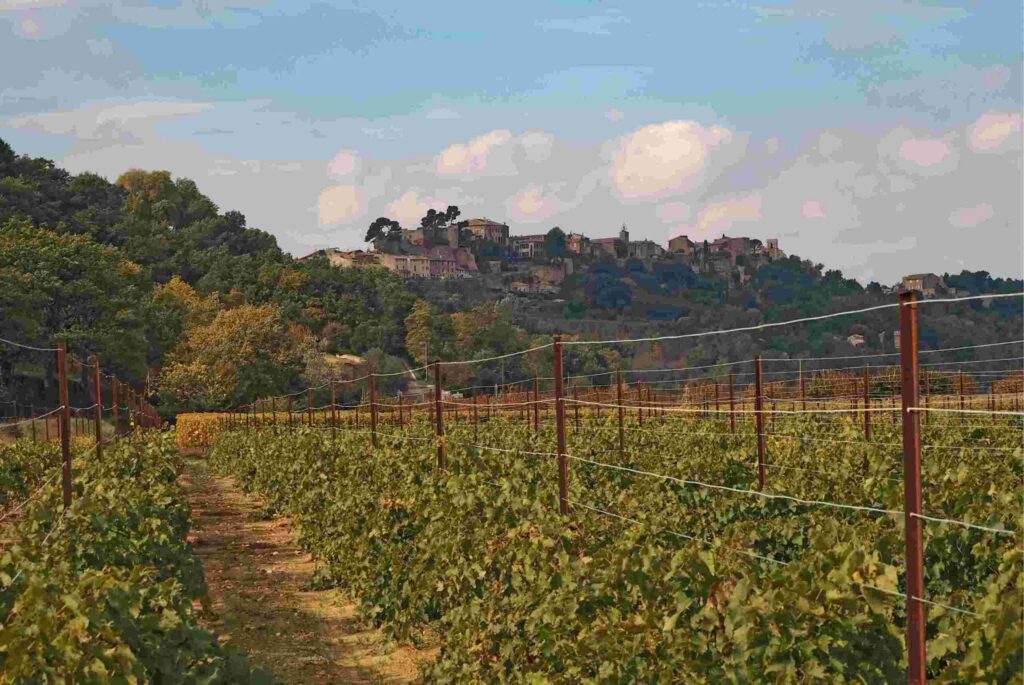
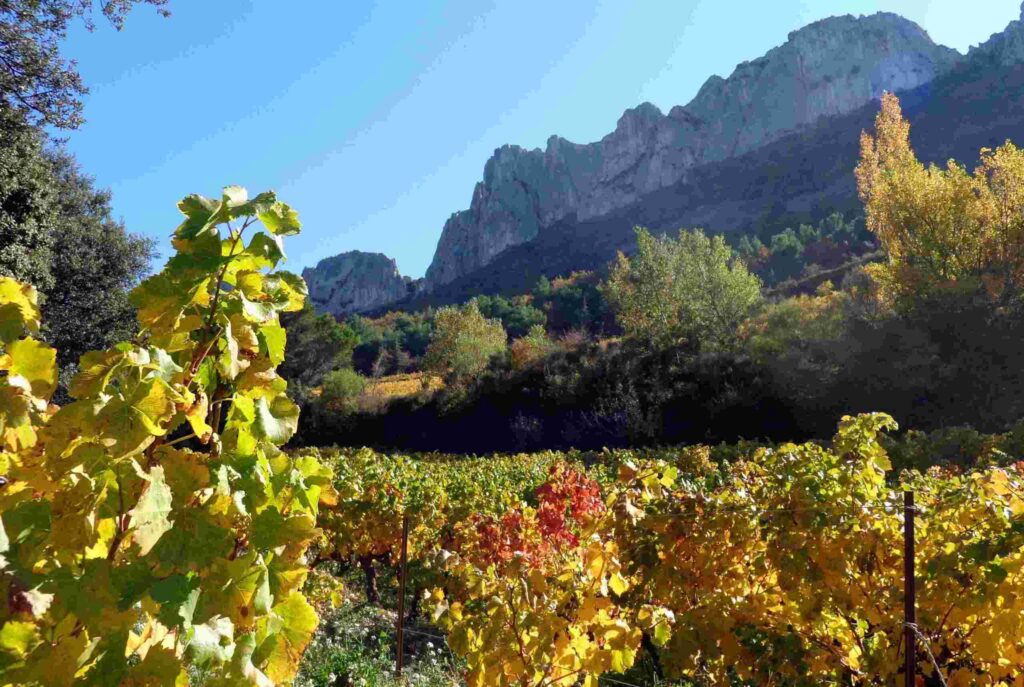
Rosé has deep roots in Provence. Greek sailors planted the primary vines right here some 2,600 years in the past, after they based Marseille. In these days, winemakers not often left the juice on the grape skins for lengthy, so most wine was pale. In a way, Provence rosé is the unique wine of France’s oldest wine area.
Right now the area nonetheless lives for Provence rosé. About 90% of the wine made within the three most important Provence appellations is rosé. In 2024 alone, that added as much as round 134 million bottles. So what provides it that particular style?
Solar and wind: Lengthy, dry summers ripen the grapes totally. In the meantime, the mistral (the chilly north wind that sweeps down the Rhône Valley) retains the vines dry and wholesome.
Stone and sea: Vines develop in poor, rocky soils, usually nearby of the Mediterranean. Poor soil provides small grapes with concentrated taste.
Picked within the cool of evening: Many estates harvest at evening or at daybreak, whereas the grapes are nonetheless chilly. This protects their freshness and vivid acidity.
A delicate press: Most Provence rosé is made by pressurage direct (direct urgent). The grapes go straight into the press, so the juice touches the skins solely briefly. That’s the place the well-known pale colour comes from.
Made to be rosé: Right here, rosé will not be a by-product of crimson wine. Winemakers select their grapes, vineyards and harvest dates for rosé from the very begin.
Why It By no means Tastes Fairly the Similar Again Dwelling
There’s another reason, and it has much less to do with the winery than with the journey. Rosé is a fragile wine. It’s made to be loved younger, whereas its fruit is recent and vivid.
To start with, solely a part of it ever leaves France. About 4 in ten bottles of Provence rosé are exported, and the USA buys greater than a 3rd of these. The bottles on American cabinets have a tendency to return from estates massive sufficient to export. Many small household wineries promote most of their wine on the cellar door and to native eating places. So sure, in a manner, we maintain just a few treasures for ourselves.
Then there may be the journey itself. A bottle might spend weeks crossing the Atlantic, then extra time in warehouses and on retailer cabinets. Warmth is wine’s worst enemy, and a delivery container can get highly regarded. Cautious importers use refrigerated containers, however not all of them do. By the point a bottle reaches your desk, it might be months older and slightly drained.
What about preservatives? You’ll have heard that exported wines get additional sulfites. The truth is, nearly all wines include some sulfites, which shield them from spoiling. European guidelines cap how a lot a winemaker might use. The “accommodates sulfites” line on American labels comes from a U.S. labeling legislation. By itself, it doesn’t imply your bottle was handled otherwise from one bought in France.
So drink your rosé in Provence: this 12 months’s classic, just a few miles from the place it was made, with meals grown in the identical solar. That may be a style no importer can ship.
Côtes de Provence: The Pale Pink Traditional
When most People image Provence rosé, they’re picturing Côtes de Provence. It’s the largest appellation within the area, with round 20,000 hectares (almost 50,000 acres) of vines. They stretch throughout the Var, from the sting of Aix-en-Provence to the hills behind the Riviera.
The wine is dry, pale and delicate, the colour of a peach or an onion pores and skin. Count on notes of strawberry, white peach, citrus and a touch of garrigue (the wild herbs of the Provençal hills). Tibouren, the previous native grape, is a specialty right here, particularly within the vineyards close to the coast.
That is the rosé for lengthy lunches and sundown aperitifs. Serve it effectively chilled with tapenade, summer time salads, grilled fish or petits farcis (Provençal stuffed greens).
Bandol: Provence’s Most Severe Rosé
Bandol is a small fishing port between Marseille and Toulon. Behind it, vineyards climb the hills in a pure amphitheater dealing with the ocean. Generations of farmers constructed stone terraces referred to as restanques to carry the soil on the slopes. Right here the vines absorb shut to three,000 hours of sunshine a 12 months.
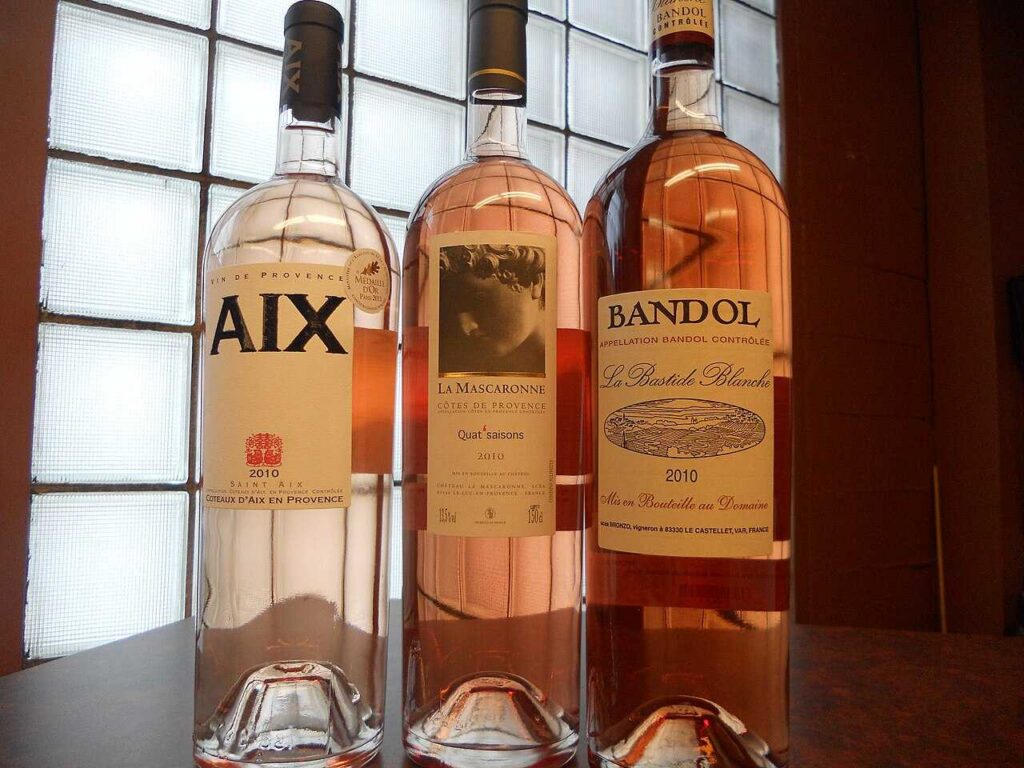
The key is Mourvèdre, a late-ripening grape that wants warmth and sea air to thrive. By legislation, each Bandol rosé should include at the least 20% Mourvèdre, and plenty of estates use way more. All grapes should be picked by hand. The appellation dates again to 1941, which makes it one of many oldest in Provence.
The result’s a Provence rosé with extra physique and spice than its neighbors. It nonetheless appears to be like pale salmon within the glass. But it tastes of crimson fruit, orange peel and herbs. Unusually for a rosé, a superb Bandol can age for a number of years. We like it with bouillabaisse or an enormous platter of aïoli (garlic mayonnaise served with cod and greens).
“Unusually for a rosé, a superb Bandol can age for a number of years.”
Coteaux d’Aix-en-Provence: Rosé within the Mistral
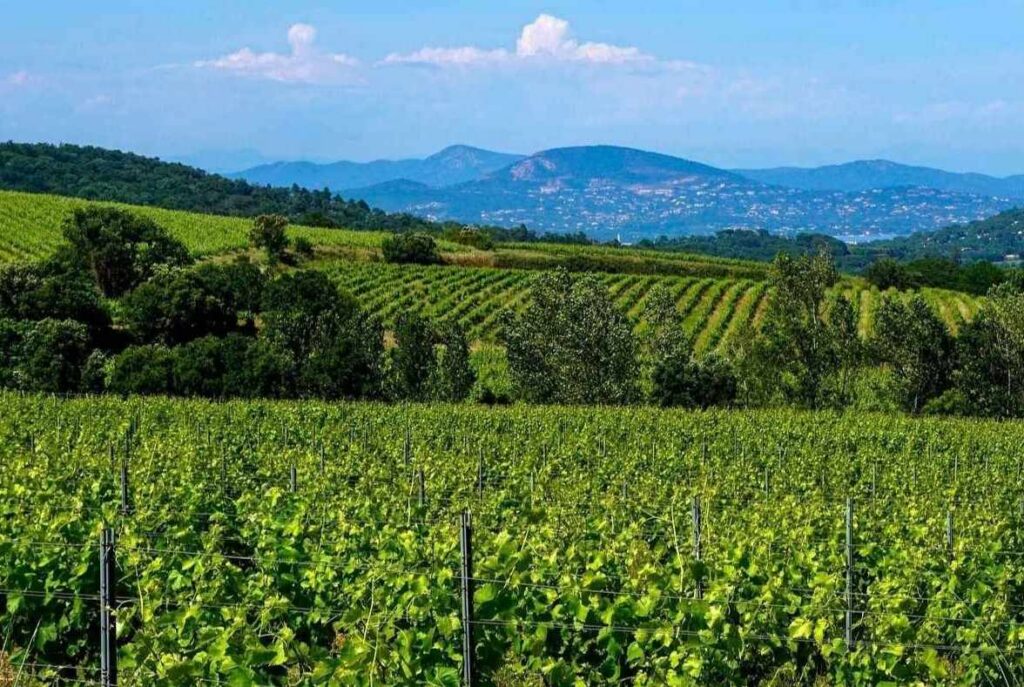
Head west from the Côtes de Provence and also you attain the Coteaux d’Aix-en-Provence. Its 4,300 hectares (about 10,600 acres) of vines stretch from the Durance River all the way down to the ocean. At its heart sits the elegant metropolis of Aix. Right here the mistral blows usually and laborious. It dries the vines after rain and helps maintain them wholesome. Right now, greater than 80% of the vineyards are licensed natural or HVE (Excessive Environmental Worth).
Winemakers mix Grenache, Cinsault and Syrah with Mourvèdre and Counoise. Some additionally use Cabernet Sauvignon, which is uncommon in Provence. The rosés are a vivid salmon-pink, with notes of citrus and crimson berries and a vigorous, thirst-quenching end. Each our South of France and Lavender excursions spend a day in Aix, proper within the coronary heart of this appellation.
Coteaux Varois en Provence: Rosé From the Hills
Inland, within the coronary heart of the Var, lie the Coteaux Varois en Provence. The vineyards encompass the market city of Brignoles and canopy almost 3,000 hectares (about 7,400 acres). That makes this the smallest of the three most important appellations. It’s also the best, with most vines rising at 300 to 400 meters (1,000 to 1,300 toes). The Sainte-Baume mountains shelter the vines from the ocean, so winters are chilly and summers are scorching.
Rosé makes up greater than 90% of the wine right here. It pours a really pale pink to salmon. Count on floral and fruity aromas, with a stunning stability of roundness and freshness.
Tavel: The Rosé That Thinks It Is a Pink
Tavel will not be a Provence wine, but it surely sits so shut that no rosé journey by means of the South could be full with out it. The village lies simply throughout the Rhône River within the Gard, just a few miles from each Avignon and the Pont du Gard. Its wine is formally classed as a Rhône Valley appellation, one of many area’s top-ranked crus alongside Châteauneuf-du-Pape.
Tavel was among the many very first French appellations, created in 1936, and the primary devoted completely to rosé. (Our Camargue neighbor, Sable de Camargue, joined that membership in 2023.) Its vines develop on sand, limestone and the rounded river stones the southern Rhône is known for.
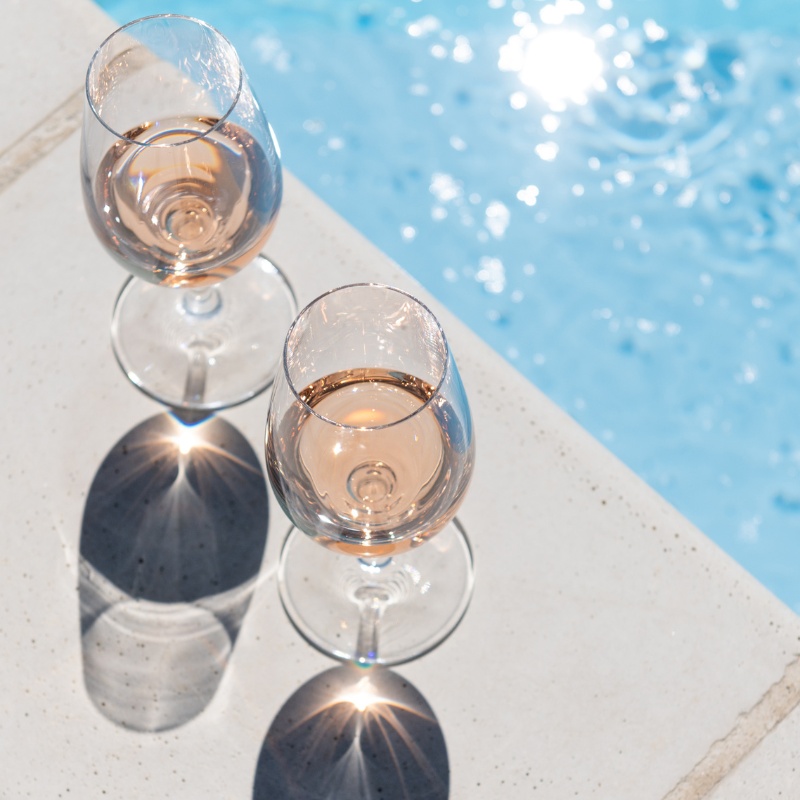
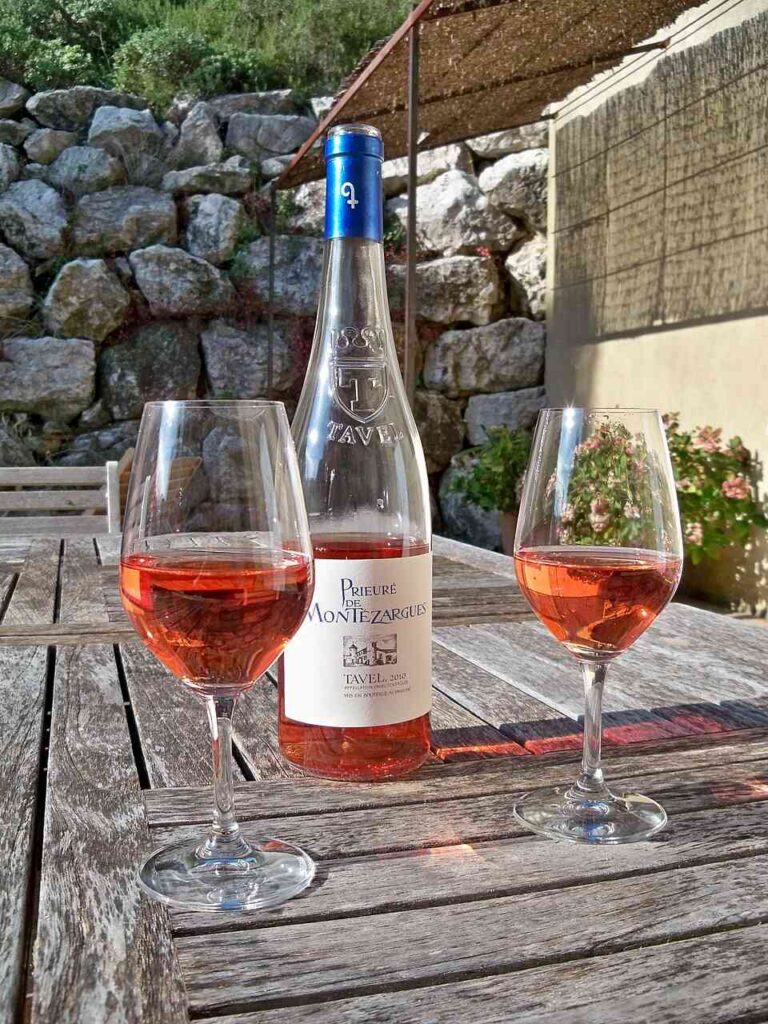
What makes Tavel completely different is time. As a substitute of urgent the grapes immediately, winemakers depart the juice on the skins, usually for a day or extra. In consequence, the wine comes out deep pink, generally near ruby. It tastes of cherry, raspberry, almond and spice. As a result of it has actual construction, it pairs fortunately with grilled lamb, sausages and even spicy meals.
Ernest Hemingway was a well-known fan. Because the story goes, he wouldn’t begin lunch in New York with no glass of Tavel. Fittingly, he additionally spent his honeymoon in Le Grau-du-Roi, the seaside city the place our 8-Day South of France tour relies.
“Tavel is the rosé that thinks it’s a crimson.”
Extra Rosés to Uncover
Provence additionally has just a few smaller appellations price a detour. Cassis, beside the Calanques, is known for its white wine however makes pretty rosés too. Palette, simply exterior Aix, covers barely 45 hectares (about 110 acres). Les Baux-de-Provence surrounds the hilltop village we go to on each our South of France and Lavender excursions. In 2023, it turned one of many very first 100% natural appellations in France.
Two extra names deserve a spot on the desk. Like Tavel, the Luberon and Ventoux appellations formally belong to the Rhône Valley. But with their lavender fields, hilltop villages and markets, they really feel like Provence by means of and thru. Within the Luberon, rosé is the most-produced colour, grown on cool hillsides between 200 and 450 meters (650 to 1,500 toes). Farther north, the Ventoux vineyards climb the decrease slopes of Mont Ventoux, the “Big of Provence.”
Here’s a enjoyable element. Roussillon, the place our 8-Day Particular Lavender Tour spends three nights, sits contained in the Luberon Regional Nature Park. But its vineyards belong to the Ventoux appellation.
Does Paler Imply Higher?
In no way. The colour of a rosé is dependent upon the grapes and on how lengthy the juice touches the skins. It says nothing about high quality. A pale Côtes de Provence and a deep Tavel can each be wonderful.
The truth is, the pale Provence rosé look is now copied around the globe. So select by fashion relatively than shade. Search for recent acidity, clear fruit and a dry end. These are the marks of a superb rosé, no matter its colour.
How you can Drink Rosé Like a Provençal Native
Drink the youngest classic: Most Provence rosé is finest inside a 12 months or two of the harvest. Bandol and Tavel are the exceptions.
Hold it cool, not icy: Serve it round 50°F (10°C). Whether it is too chilly, you lose the aromas.
Attempt a piscine: On highly regarded days, locals generally pour rosé over ice cubes. They name it a piscine (swimming pool), and no person will choose you.
Order the home carafe: In village eating places, rosé en pichet (in a small jug) is usually native, scrumptious and a superb worth.
Go to a cave coopérative: These village wine cooperatives promote native wine at truthful costs. You’ll be able to often style before you purchase.
Pair it with the South: Rosé loves olive oil, garlic, tomatoes, herbs and seafood. In different phrases, it loves Provençal meals.
Carry some dwelling: Wrap bottles effectively and pack them in checked baggage. Past one liter per grownup, U.S. Customs costs a modest obligation.
Style the South of France With Us
Our 8-Day South of France Tour relies in Le Grau-du-Roi, a couple of minutes from the sandy vineyards of the Camargue. Wine is a part of on daily basis of the journey. We go to native estates to fulfill the individuals who make it, and regional wines are poured with our group meals. You’ll style rosé precisely the place it belongs: near the vines, within the Provençal solar.
Touring in June? Our Particular Lavender Tour pairs the lavender fields with the identical love of native meals and wine. Each excursions journey in small teams, a relaxed and private strategy to style the South.
Discover the 8-Day South of France Tour →
Hold Studying
À bientôt, mes amis
Julia

