


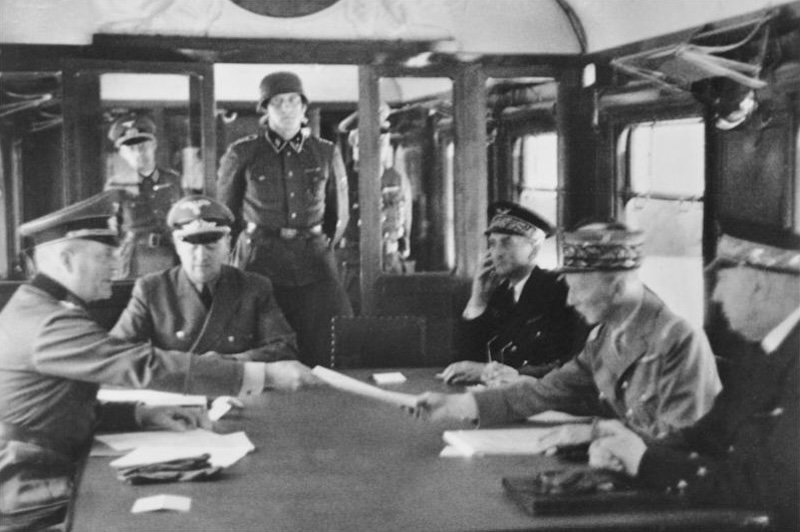
The Armistice Wagon at Compiègne has a historical past far stranger than its quiet setting within the Forest of Compiègne suggests. Two armistices had been signed right here, and your entire clearing, not simply the museum, is a part of the story.
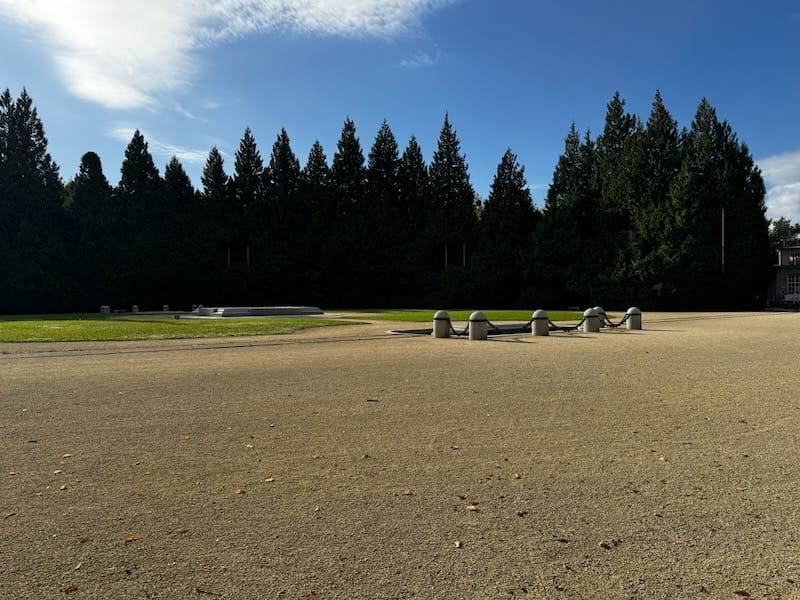
There’s something unusual about arriving on the Clairière de l’Armistice, a clearing set within the center of the historic forest of Compiègne, surrounded by bushes and serenity and some monuments from the final century.
It’s gone now however in 1918, a railway carriage additionally stood right here. Inside it, Germany signed an armistice with the Allies ending World Conflict I.
And 22 years later, Germany got here again to the identical carriage to signal one other armistice — this time with a defeated France.
DISCOVERING NORTHERN FRANCE
The railway automotive ended up right here as a result of Marshal Ferdinand Foch, the Allied commander-in-chief on the Western Entrance, needed someplace quiet and remoted for the negotiations to finish World Conflict I. He additionally wanted two railway strains: one for his personal prepare and one other for the German delegation.
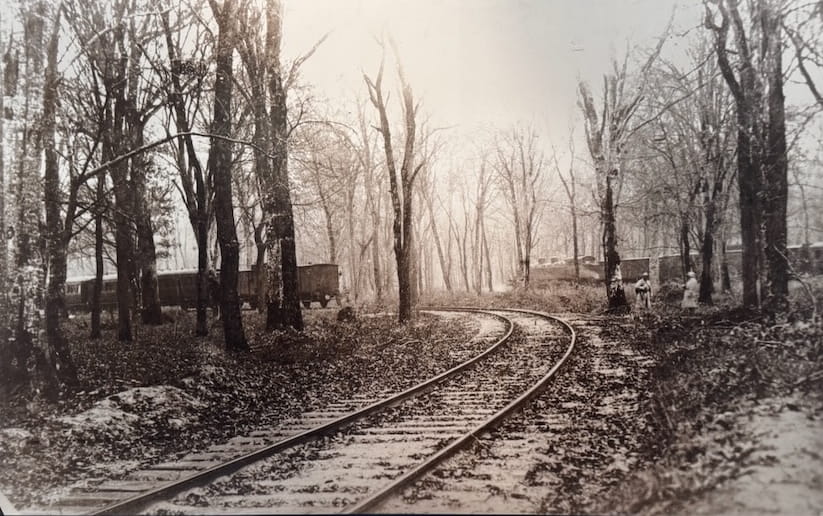
The prepare tracks had been already there as a result of they’d been used through the battle to maneuver heavy artillery in direction of the entrance, so the alternative was sensible slightly than picturesque.
There was no grand constructing or ceremonial corridor and no monument or clearing again then. Only a forest, the tracks, and a railway carriage which had unceremoniously begun life as a eating automotive.
The Armistice of 1918
November 8 was not a peace convention between equals. Germany needed an finish to the preventing, whereas the Allies had been able of energy to dictate the army phrases that may drive Germany to withdraw and give up its weapons.
These phrases had been itemized over 13 pages, every of which needed to be learn and translated by these across the desk. The ambiance would have been heavy, and the talks could be met with long-lasting bitterness on the a part of the Germans.
After three stable days, within the early hours of 11 November, the armistice was signed: it was 5:15 within the morning.
The ceasefire would take impact at 11 a.m.
Throughout that six-hour hole, the information must attain troops alongside tons of of kilometers of entrance. Communications had been nonetheless painfully sluggish by trendy requirements, with the clairon — the army bugle — one of many devices used to transmit orders.
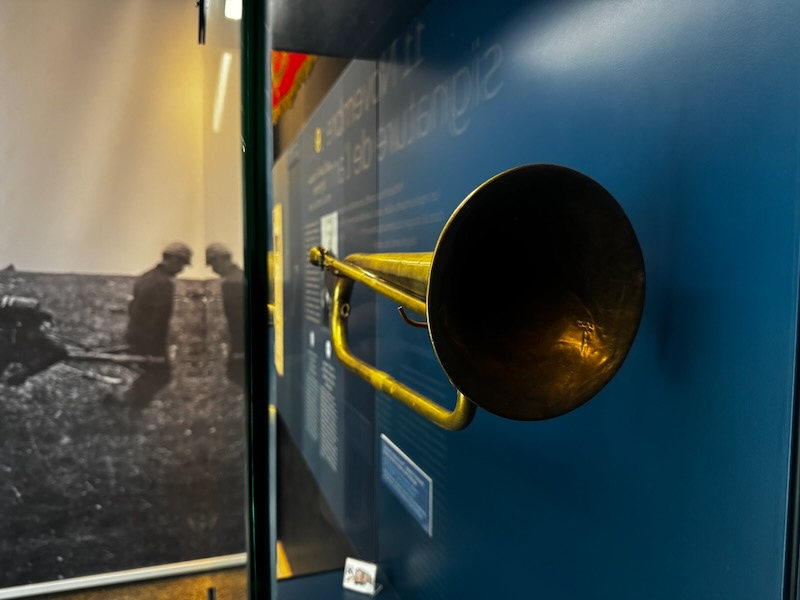 A far cry from immediately’s communications, this bugle, or “clairon”, was used to speak main information throughout World Conflict I. Held on the Armistice Museum in Compiègne ©OffbeatFrance
Armistice or not, the battle nonetheless killed individuals. Augustin Trébuchon, a 40-year-old French soldier serving as a army messenger, was carrying a last message to his captain when he was killed at 10:50 that morning, ten minutes earlier than the armistice took impact.
THE ARMISTICE IN PICTURES
Marshal Foch had banned journalists from the clearing and allowed just one official photographer. However railway official Pierre Toubeau apparently determined the order didn’t apply to him. He took his personal pictures and, after Foch’s dying, deposited six of them on the Compiègne city corridor. You possibly can see all of them within the museum.
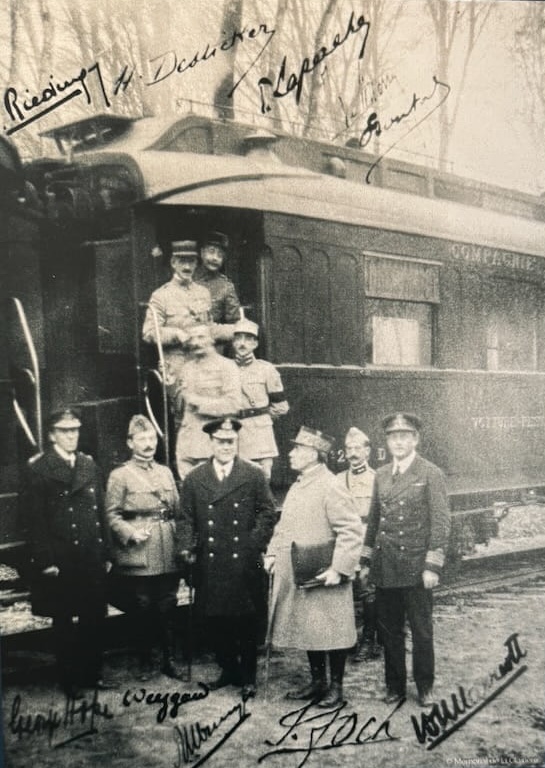 One official {photograph} comprises a small shock: the cook dinner might be seen among the many dignitaries (second from the proper). Maybe he needed to be included as a result of he knew he was witnessing historical past.
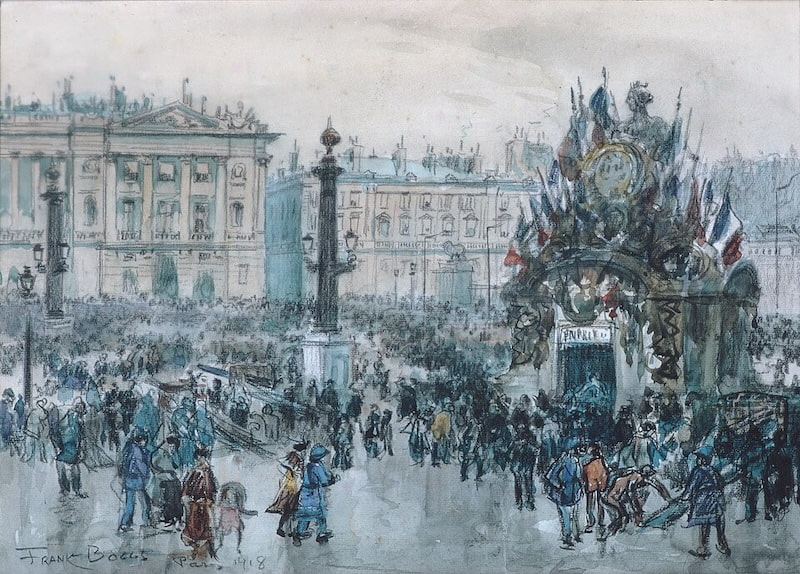 Armistice Day 1918 in Paris as painted by Frank Myers Boggs, CC0, through Wikimedia Commons
The wagon turns into a memorial
After the 1918 armistice, the railway carriage was taken to Paris and displayed on the Invalides, the army museum and complicated in central Paris. However the wagon was product of teak and though it was lined with a tarp, years of publicity to the climate started to take their toll. Water seeped in, and journalists started elevating issues about its situation.
The answer was to restore it and convey it again to Compiègne.
The mayor of Compiègne discovered an American benefactor, Arthur Henry Fleming of Pasadena, California, who financed a shelter for the historic carriage. It returned to the clearing in 1927.
The forest had already been cleared in 1922 to create the nice round house you see immediately, inaugurated that 12 months with the central stone slab and the monument to the troopers of Alsace-Lorraine.
This may now not be a railway siding in a forest however a significant memorial.
Hitler returns to Compiègne
Then got here 1940.
Germany invaded France on 10 Could, and inside weeks the French authorities was retreating south. Prime Minister Paul Reynaud resigned on 16 June, and Marshal Philippe Pétain turned head of presidency. Pétain’s authorities requested an armistice, and a French delegation was despatched to Compiègne.
Hitler had chosen the situation: he ordered the historic railway carriage out of its shelter and had it positioned on the location the place the 1918 negotiations had taken place.
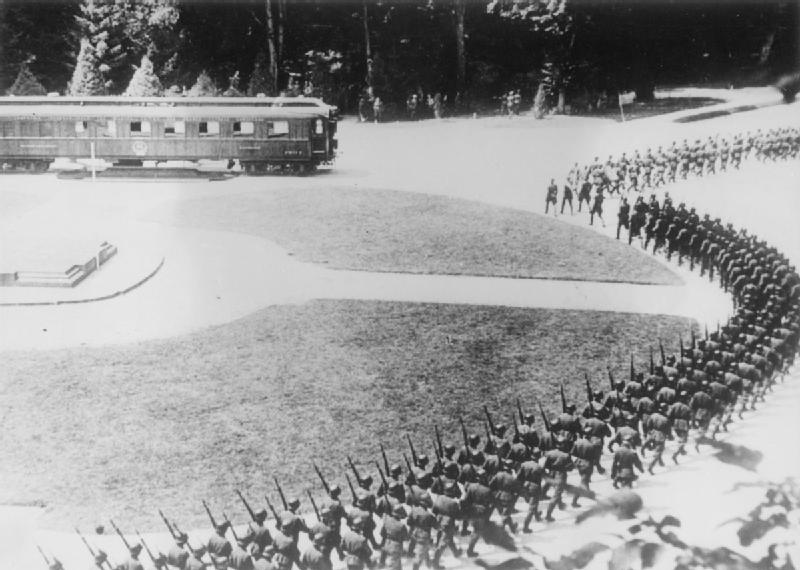 The historic railway carriage at Compiegne the place Petain’s authorities signed Armistice Phrases in June 1940. A German guard of honor is seen marching around the carriage
When Hitler arrived together with his entourage, he entered the carriage and intentionally sat the place Foch had sat for the primary armistice. In 1918, Germany had come to this forest to simply accept the phrases of the victorious Allies. In 1940, France had come to the identical forest to simply accept Germany’s phrases.
These had been learn to the French delegation, and the armistice was signed on 22 June. France was required to demobilize and disarm most of its armed forces, whereas a restricted military was permitted to keep up order. Germany occupied the northern half and the Atlantic coast of France, whereas the French authorities retained sovereignty within the unoccupied south. France additionally needed to pay the prices of the German occupation.
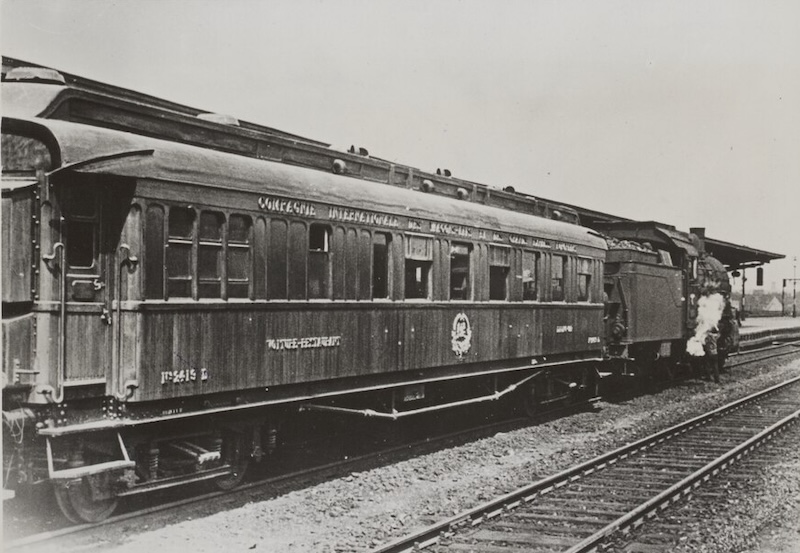 The railway carriage from Compiègne is transferred to Berlin on Adolf Hitler’s orders. A visit Hamm railway station Atlantic Picture, CC0, through Wikimedia Commons
After utilizing the unique wagon for the second armistice, Hitler then ordered your entire memorial dismantled.
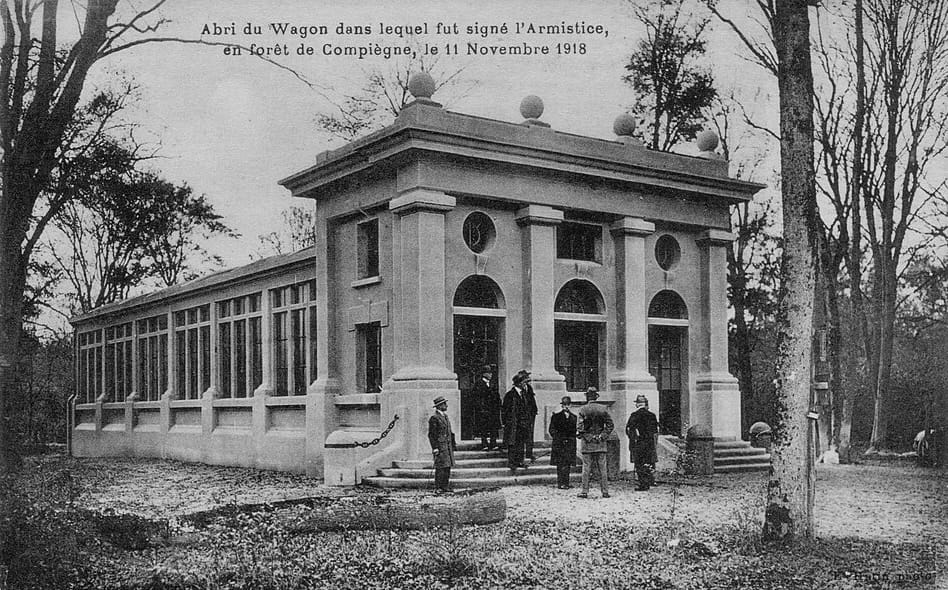 The unique shelter, which held the unique railway automotive. It will be dismantled by Germany after the 1940 armistice
The monuments had been numbered and transported to Berlin, the shelter was dynamited and the clearing plowed. The wagon itself was transported by street to Crépy-en-Valois, the place it was put again on the railway and despatched to Germany. Solely the statue of Foch survived, though why it was left standing has by no means been actually defined.
By the tip of the battle, the unique memorial was gone, as was the unique wagon, which might be finally destroyed in a fireplace in Germany.
The carriage you see immediately
After the Allied victory in World Conflict II, France set about rebuilding what had been destroyed.
A alternative wagon from the identical sequence was discovered. Utilizing the plans of the unique, it was tailored to breed the signatories’ room and guarded by a brand new shelter. The reconstructed Musée de l’Armistice 14-18 was inaugurated on 11 November 1950.
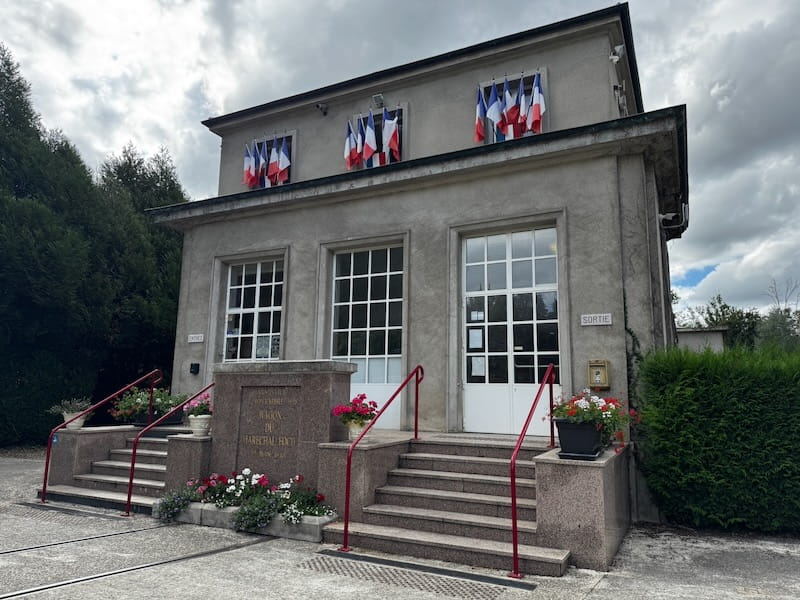 The brand new museum that changed the one destroyed after the second armistice ©OffbeatFrance
In the present day, the carriage is a part of a a lot bigger memorial. The museum by which it’s housed comprises round 20 rooms with paperwork, newspapers, pictures, maps and uniforms, organized across the historical past of the 2 armistices.
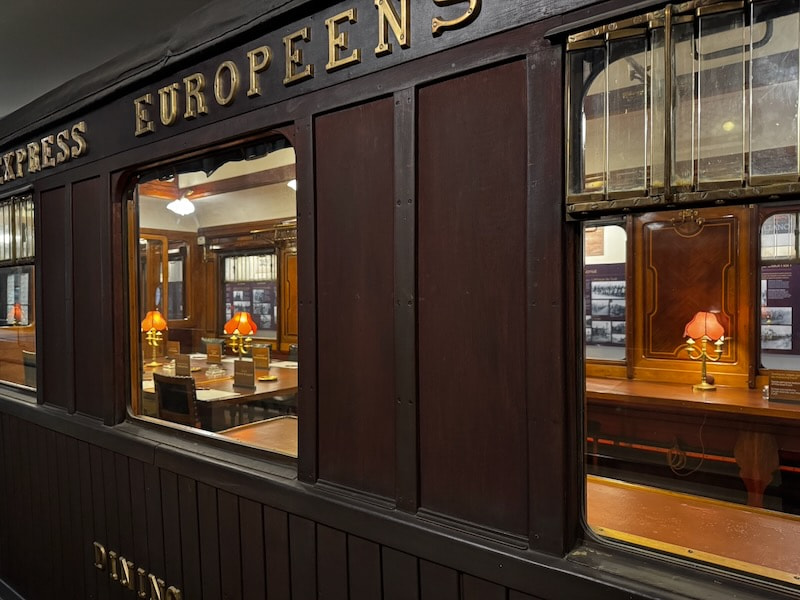 The railway carriage contained in the Musée de l’Armistice 14-18 shouldn’t be the unique. The historic carriage, No. 2419D, by which the 1918 and 1940 armistices had been signed, was taken to Germany and destroyed in 1945. The carriage on show immediately is No. 2439D, from the identical sequence, put in right here in 1950 and fitted out to match the unique ©OffbeatFrance
Outdoors, two stone markers present the positions of the 2 wartime trains. On the heart is a big stone slab with a intentionally triumphant inscription: “Right here, on 11 November 1918, the felony pleasure of the German Empire, defeated by the free peoples it sought to enslave, succumbed.”
A monument to the troopers of Alsace-Lorraine was additionally added on the finish of the principle avenue, and on the facet we are able to see the statue of Marshal Foch, displaying him as he appeared after signing the 1918 armistice, the conference in its satchel.
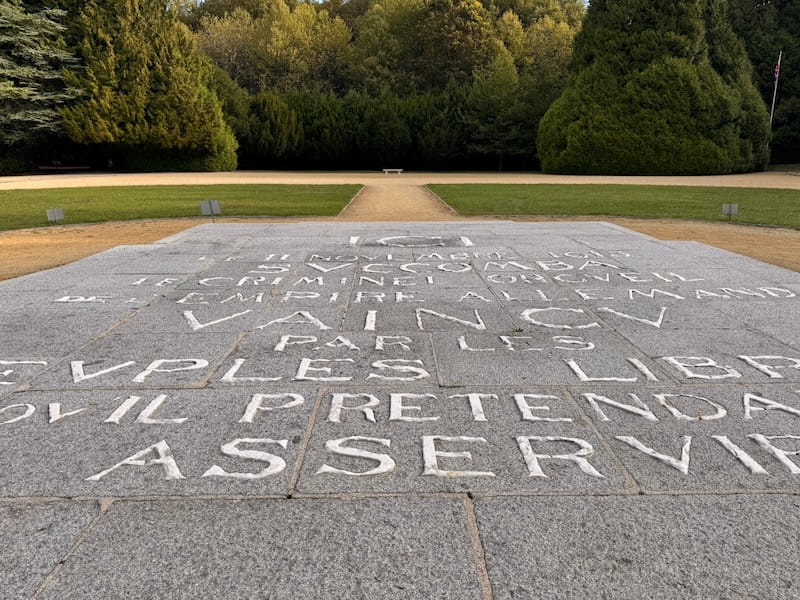 The central stone within the clearing bears the inscription commemorating Germany’s defeat in 1918 ©OffbeatFrance
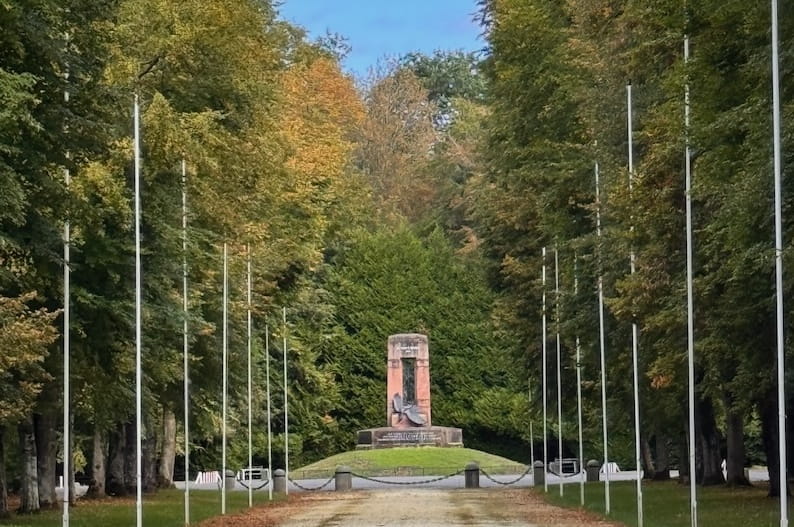 On the finish of an extended well-kept alley within the forest of Compiègne is the monument to the World Conflict I troopers of Alsace-Lorraine ©OffbeatFrance
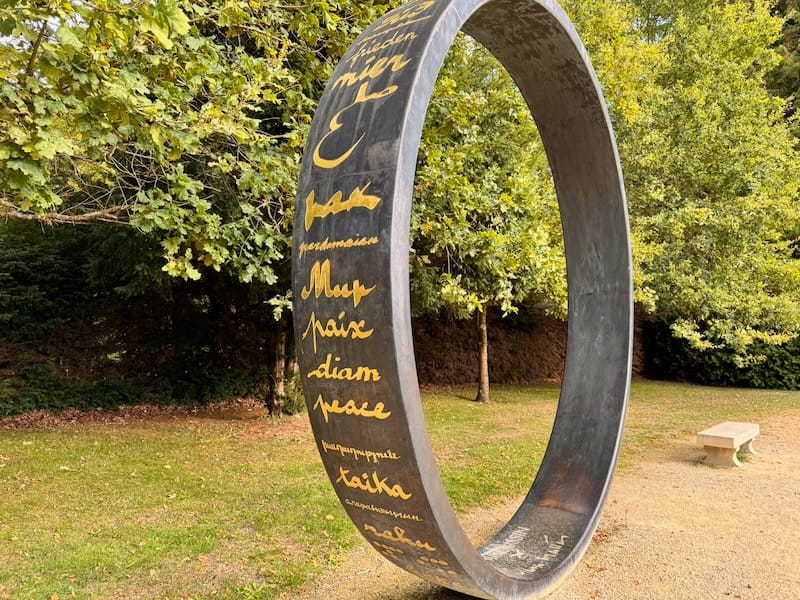 Close by is the Alliance de la Paix, a big bronze ring by artist Clara Halter, with the phrase “Peace” written in 52 languages ©OffbeatFrance
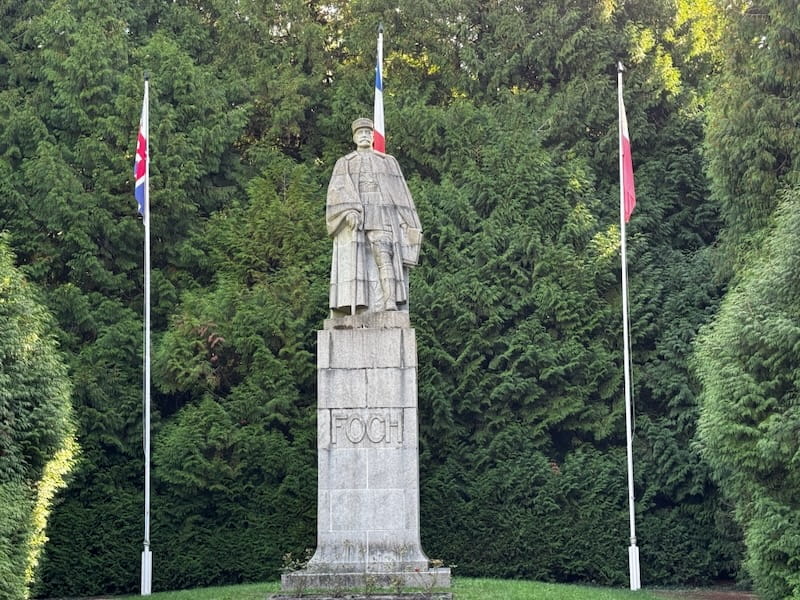 The one monument that survived the second armistice was that of Marshal Foch ©OffbeatFrance
The unusual story of the unique wagon
Years after the occasions, as soon as the Berlin Wall had fallen, a younger history-geography instructor started investigating what had occurred to the wagon and requested his pupils to gather native recollections. Their analysis finally uncovered witnesses who had seen the wagon after it was destroyed so he invited a French delegation to satisfy a few of them.
Basic Gamache, who led the delegation, requested a sure Claire Pagura to come back with them.
“You converse German,” he instructed her. “You are coming with us. You may translate.”
In October 1992, the French delegation traveled to Thuringia, in central Germany, the place it met two aged males who had been youngsters after they seen an enormous plume rising above the forest close to them. Investigating, they discovered a railway carriage on hearth.
As soon as the hearth died down, they acquired nearer however there was little left. The wood carriage had burned, leaving its framework and different items of steel scattered across the web site. Among the many particles had been an emblem and a number of other giant brass letters that had as soon as been mounted to the wagon’s teak sides to spell out Compagnie Internationale des Wagons-Lits et des Grands Categorical Européens.
The younger males stored among the items and because the years handed, by marriages and household life, they by no means imagined that at some point somebody would come searching for them.
By the point the French delegation arrived in 1992, the 2 males had been of their eighties. One was very frail, and his grandson introduced out the items the household had preserved.
For Claire Pagura, the story didn’t finish with the objects’ restoration. She made the household a promise: when she instructed guests concerning the surviving items, she would additionally keep in mind those that had helped protect them.
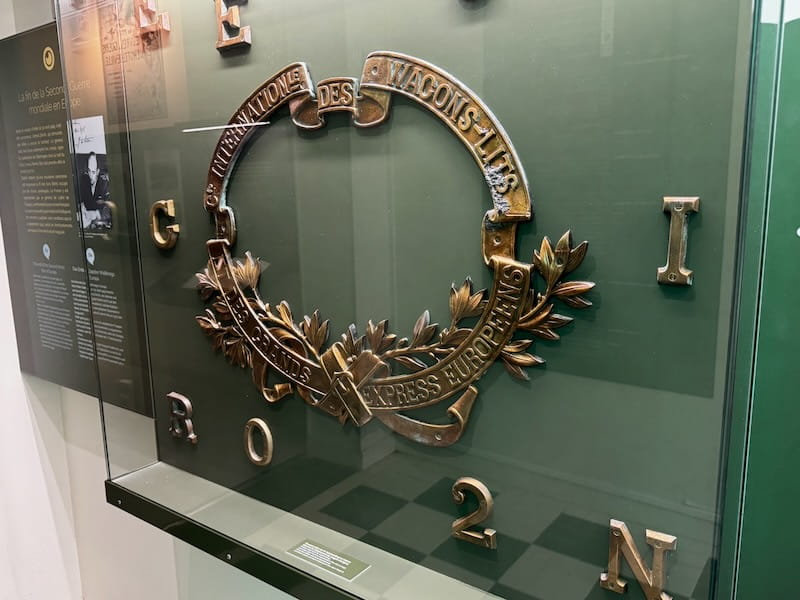 These few steel items had been present in Thuringia, in Germany, after the unique armistice railway wagon was destroyed. In opposition to all odds they survived many years and are actually within the Armistice Museum 14-18 ©OffbeatFrance
Almost 35 years later, in an odd accident, I met Claire as she guided me across the Armistice Memorial, sharing each her encyclopedic data and her personal extraordinary first-hand story. She identified the title of Monsieur Kummerling beneath the museum casing, preserving her promise.
PRACTICAL INFORMATION
- Getting there: The clearing is a 10-minute drive from Compiègne or a 10km (6mi) bike journey alongside the flat forest. There may be additionally a bus, Line 106, however you may nonetheless have a stroll of at the least half an hour whenever you arrive, and the schedule is sporadic. Finest to ask on the vacationer workplace in Compiègne.
- How lengthy to remain? Two hours ought to see you thru the museum and the clearing itself. You probably have your personal transportation, you possibly can proceed on to Pierrefonds Citadel.
- The place to remain: In Compiègne. Alfred Motels is among the many finest, and proper downtown, however Compiègne has loads of guesthouses and short-term leases.
- Extra data: Museum web site. It’s closed Tuesdays. All data panels are translated into English and German.
- Finest for: vacationers within the historical past of the 2 World Wars and the armistices signed at Compiègne.
Earlier than you go…
Touring by northern France, the toll World Conflict I took on the nation remains to be seen, despite the fact that France has labored arduous to erase it.
Finally, the Clairière de l’Armistice is a spot the place the historical past of the Western Entrance might be traced by the sober clearing that remembers what occurred right here, and the museum that fills within the story.
If you would like to pursue your explorations of World Conflict I in northern France, the battlefields of the Somme mislead the north, the place the dimensions and price of the battle can nonetheless be seen within the trenches and craters that scar the panorama, so attribute of what the French name La Grande Guerre, the Nice Conflict.
Did you get pleasure from this text? I would love in case you shared it!

